Category Archives: Thoughts on the World

Scarily Good

My new phone (I upgraded to a Galaxy Note 2 as I was running up against memory limitations on the Note 1) has a potentially useful but also quite scary feature. There’s a service running on it called “Google Now”. This has no direct user interface, but just pops occasional reminders into the notification bar.

This afternoon I had an appointment, which I had recorded in Outlook simply as “Sally” with the location “Strada Cobham”. At about 2.40 a reminder popped up which said not just “you have an appointment at 3”, but “leave by 2.54 to be on time” , quite an accurate estimate of the required driving and parking time!

I’m impressed, but also slightly concerned. What other information is Google mining from tiny bits of data of mine?

Posted in Thoughts on the World | Leave a comment

Getting Ahead of the Curve – Update

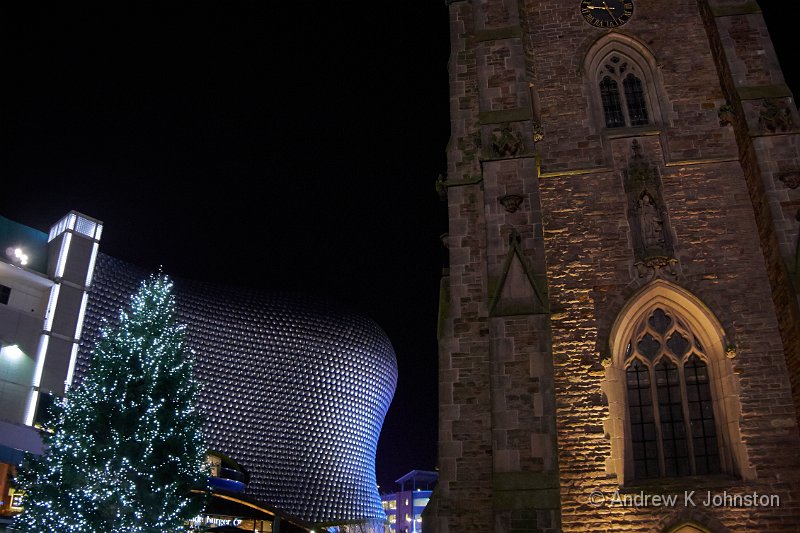
Birmingham Bull Ring and St. Martin's Church - ISO 3200
Camera: Panasonic DMC-GX7 | Date: 10-12-2013 21:25 | Resolution: 4523 x 3016 | ISO: 3200 | Exp. bias: -1 EV | Exp. Time: 1/20s | Aperture: 5.0 | Focal Length: 14.0mm | Lens: LUMIX G VARIO PZ 14-42/F3.5-5.6

When I bought the Panasonic GX7 on the day of release I realised there might be a short delay before it was fully supported by third party software. A few weeks on and there was support from Adobe and some unexpected sources, but no sign from Phase One. Fortunately the in-camera JPEGs are absolutely excellent and I cheerfully blazed away in Morocco while waiting patiently.

Come December my patience was wearing thinner, with three months’ RAW files ready and others stacking up. I took to checking daily for new Capture One updates, and was finally rewarded on Monday by the release of v7.1.6. That was the first good news.

To my frustration, the release notes stated that the GX7 support was “provisional”, although Phase One had managed to deliver full support for pretty much every other recent new camera. The primary limitation seems to be the lack of any lens correction, even manual, which is a rather substantial issue for a micro four thirds camera. Any shots taken with the wide ends of my zooms will have to wait… That’s the bad news.

</moan>

There is, however, some really good news. The image quality is simply superb, much better than I have been able to achieve with Adobe Camera Raw, and a dramatic improvement on all my other cameras at high ISO. Images are essentially noise-free at ISO 1600, and not much worse at ISO 3200, suggesting I was unnecessarily pessimistic limiting myself to 1600 in Morocco. At ISO 6400 there’s a bit of noise, but essentially correctable. I would probably choose to use a lower sensitivity for something critical, but for general use it’s absolutely fine, as long as I don’t try to pull the shadow exposure too far. I might even be brave enough to use 12800 in a pinch.

So my Christmas present from Phase One may be arriving in instalments, but it’s looking really good for the latest compact system cameras.

The above shot gives you an idea of what can be achieved, and is also suitably seasonal. My very best wishes to all my readers, and hope that we all have a successful and satisfying 2014.

View featured image in Album
Posted in Photography, Thoughts on the World | Leave a comment

Morocco – What Worked and What Didn’t

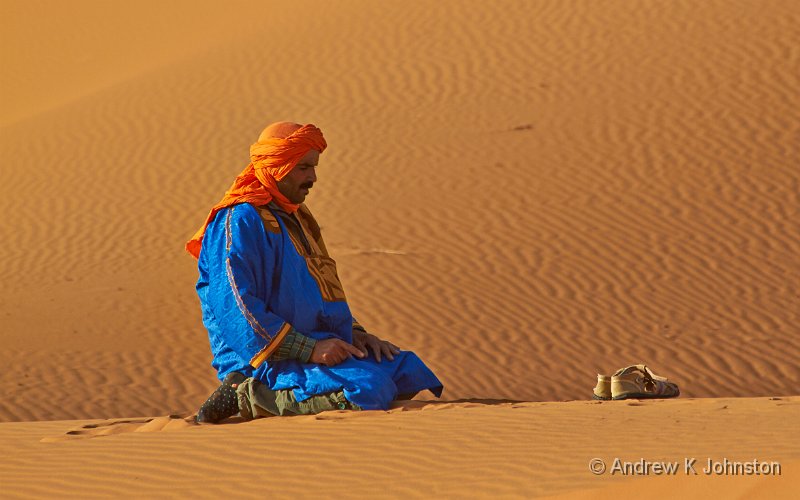
Berber at prayer, Erg Chebbi
Camera: Canon EOS 7D | Lens: EF70-300mm f/4-5.6 IS USM | Date: 17-11-2013 15:50 | Resolution: 4700 x 2938 | ISO: 200 | Exp. bias: 0 EV | Exp. Time: 1/250s | Aperture: 8.0 | Focal Length: 300.0mm (~486.0mm) | See map | Lens: Canon EF 70-300mm f/4-5.6 IS USM

As a tail piece to my Morocco blog, and as a service to anyone else considering a photo trip there, here are a few notes on what worked, what didn’t, and how you might increase your own chance of a successful outcome.

What Worked…

This was the second trip I have done with Lee Frost of Photo Adventures (who also ran my Cuba expedition). He works hard to make sure you have a good time, with a balanced itinerary which gets you and your camera in front of lots of great subjects with a good chance of decent light. He’s also a fun and inspiring group leader and tutor. You just have to learn that he will always want “just one more shot” when the customers have all had their fill! Highly recommended.

Lee partners with someone who manages the local logistics, and on this occasion it was his regular co-leader in Morocco, Carolyn Hunt of Journeys Elite. Carolyn is a specialist in tailor-made Moroccan trips, and this reflected in faultless arrangements plus the ability to smoothly handle minor problems and variations. She was also a fun member of the group, and as a photographer in her own right understood our requirements well. Another strong recommendation.

Plumbing and toilets! I had some concern that toilet facilities might be a challenge, but completely needlessly. The Moroccans have a simple system that pretty much every cafe, hotel or other roadside stop has toilets which are freely available to use for a small donation from non-customers. Pretty much without exception these were in good order and spotlessly clean, often well above the standard of the British equivalent. (However, see note about showers in the “didn’t” section…)

The roads were all pretty good, well surfaced and with a capacity reasonably matched to the traffic (although I accept that I was seeing this in the low season). However it has to be observed that Moroccan drivers have a nasty habit of not worrying about which side of the road they use until an impact is imminent, and cyclists and moped riders are as much a menace as anywhere. While I would have been fairly comfortable driving outside Marrakech, I couldn’t have coped with either the poor signage in the larger towns, frequently only in Arabic, or the amazingly frequent speed traps and police checkpoints. Fortunately we had an excellent driver, Mohammed, who took all this in his stride, and was always happy to help in any way.

Morocco has very good telecoms services. My mobile worked everywhere, even in the middle of the desert. There was also free Wifi at almost every stop, although the speed varied substantially (and was not obviously correlated to distance from a major centre). I did have an odd problem that I couldn’t reliably send mail via my own SMTP server, but webmail worked fine.

It makes a welcome change to report that all my camera kit worked reliably and survived, although my Canon gear is going to need a very careful clean after the desert trek (and see note below about batteries).

I’m extremely pleased with the Panasonic GX7. This is the perfect camera for wandering around towns, whether they are packed or abandoned, and for taking high quality photos without the visible and audible imposition of a full-sized DSLR. It also makes brilliant high definition video, even in minimal light. At its limits it may not quite match the speed or the stabilisation of the Canon 7D, but I was not often left wanting. I do need to confirm its higher-ISO capabilities when Capture One support arrives, but the initial indications are good.

I’m also very pleased with the Panasonic Lumix 100-300mm lens. This fist-sized lens is pin-sharp and can pull details out of scenes which would demand major cropping with even huge lenses on full frame or APS-C cameras. It also stabilises well to cope in quite limited light. I now have hand held shots of the Moon filling half the frame, revealing detail which my eyes alone have never seen.

All that said, my Canons also had a key role. It was absolutely the right choice to take the 7D into the desert, where its heavier build and better sealing reduced worries substantially. If your trip covers a similar range you may also need a composite solution. I also used every lens except the “emergency spare” Panasonic 14-42mm zoom. I’m going to write a separate blog about how I might do a similar trip with a single camera system.

Much of the photography was in dark alleys or “open interiors”. This is very similar to outdoor photography in slot canyons and similar locations. Light is often best in the middle of the day, but changes rapidly. Inside the Kasbahs it takes on wonderful warm colours after being reflected from different surfaces. However overall light levels will often be low, and be prepared for very high dynamic ranges if you have a mixture of direct and indirect light. I got good use from my wide angle fast prime lens (f/2, 24mm-e), and took HDR bracket sets in several cases.

Morocco is dusty, and even out of the desert keeping optics clean is a challenge. My solution is a sacrificial UV filter for every lens, which I am prepared to replace after the trip. First indications are that I will have to do so for the two “standard zooms”, but the others will survive for another day. I have noticed a little vignetting on shots taken with the Canon 15-85mm when I had both UV and polarising filters in place, but this should be fairly easy to fix in the RAW processing, and it looks like the other lenses were fine. I also followed Lee’s suggestion to wrap cameras and lenses in plastic bags for the desert trip. There’s no way to tell how necessary this was, but it seems like a sensible precaution.

The food was a little repetitive and had a very high bread content (which I like but is not good for my waistline). However it was usually fresh, well cooked and tasty.

Cerberus, my invention to support multiple charging points from a single socket and cable worked very well, although I have realised that it can be further developed to also power my laptop from the same source. I have found a suitable C8 adapter for £3 on eBay, which will improve things further for the next trip.

For Geologging I now use Ultra GPS Logger by Holger Kasten. I have worked with the developer to optimise this excellent piece of software, and the results from this trip seem to be very effective.

French really is the best language with which to interact with the Moroccans. It helps to have the standard pleasantries in Arabic (yes, no, thank you etc.), and you occasionally find someone with usable English, but French is the right solution. Unfortunately mine was very rusty, and only started to work effectively at the end of the trip, but c’est la vie…

What Didn’t…

My precautions against the Caliph’s Revenge were ineffective. I avoided salads, kept my hands clean, drank only bottled water, and still suffered. My companions were fine. Go figure…

Showers – this is maybe slightly unkind, as every hotel had a device which produced a spray of water, usually at a reasonable temperature. Unfortunately almost without exception the mount on the wall was either absent, broken or, in an impressive display by the most expensive hotel, mounted so high that it both restricted the flow and ensured that what did come out flooded the entire room!

The haggling associated with some activities was unpleasant. It left a bad taste in the mouth to have a good shooting session and then end it with an argument about money. It doesn’t help that in the more popular areas some tourists and photographers are being more generous, which is pushing expectations up. Strangely this seemed to be much less of an issue south of the Atlas – whether this was due to a difference in culture or just less tourism is hard to judge.

If possible, try and agree a price for everything beforehand, and be prepared to walk away if the price is not right. I was successful in getting the price I wanted for all my souvenir purchases by this tactic.

Photographically I only had one problem. Both my spare Canon 7D battery and one I borrowed from Lee died very quickly in the cold of the desert nights. It might be significant that they were both cheap 3rd party ones – original Canon batteries and my Panasonic batteries for the GX7 seemed to fare better.

While you don’t go on a photographic holiday to lie in every morning, it would be nice to get the odd opportunity, and Lee usually obliges. However Morocco didn’t – 24×7 cockerels, mezzuins calling at 5 am and sub-zero temperatures all made their contribution! Oh well…

Conclusion

Morocco is an inspiring feast for the eyes, and a great photographic destination. With some planning, basic preparations and sensible precautions it’s not a hard one either. Enjoy it.

View featured image in Album
Posted in Micro Four Thirds, Morocco Travel Blog, Photography, Thoughts on the World, Travel | Leave a comment

Dysfunctional Hotel – Not Impressed!

Today I was working in Solihull at short notice, and couldn’t get into my regular hotel, so I’m trying the De Vere Village. This is a modern and allegedly upmarket hotel in Shirley, but I’m simply astonished how poorly it meets what I believe to be my fairly standard and relatively modest requirements.

Firstly, it’s bloody freezing! I initially wondered whether the reception area might be suffering because it connects to the outside world, and the weather is getting colder, but the room is not much warmer. Now I’m sitting in the main restaurant, within 6 feet of an open fire, and huddling inside my suede jacket to try and keep the cold at bay.

The room has a television, but there’s no access to the external inputs, so bang goes my normal practice of watching my own TV recordings. Watching them on the laptop isn’t much of an option either, because the “desk” is shoved into a corner right up against the cold window.

Working at the desk will also be impossible as although it’s at a normal height, the only chair is a low easy chair, which comes up about a foot too short. You may remember the scene in Bless This House where Robin Asquith is trying to cook a burger without his head appearing above the counter – using my laptop is rather like that…

Mood lighting. Need I say more?

Dinner was OK, with decent service, but my hope of a decent cup of coffee at the end was stymied by the coffee bar shutting rather earlier than expected. Back in my room I find my PC has shut itself down and the temperature has dropped again. Obviously when you leave it not only shuts the lights off, but also the heating and all the power sockets.

Ghastly, truly ghastly.

Addendum, Morning

It got worse!

I managed to get some heating going in the room, but the fan sounded like a water tank being dragged slowly over rough cobbles, so I was destined for a cold night. After watching some TV on my tablet (not ideal, but OK) I settled down for the night. Adjusting the bedding and turning off the multiple independent lighting switches took some time, but finally I was in bed and drifting off to sleep.

Then the fire alarm went off! It went for long enough that I started to dress and head for the cold car park, then stopped. I got back into bed. Then it went off again! Fortunately the second time was only a few seconds, but it took me a while to get back to sleep.

Now even my favourite Midlands hotel, the Chesford Grange, is not above the occasional freezing fire alarm, but at least everything else works there. I’m for an early breakfast this morning, but hopefully no early return to The Village.

Posted in Thoughts on the World | Leave a comment

Buttons Or Switches? Buttons Are Better!

My Canon 7D, like the 40D before it, has a feature I love and would find it hard to relinquish – three fully programmable custom modes, right on the mode dial. This makes it possible to sort out the myriad of settings in a flexible modern camera, and quickly get to a sensible starting point for a given type of shooting, and then, equally importantly, back to normal mode, without forgetting something important. My four main shooting modes are:

  • Normal: Aperture priority, default auto focus, single shot, auto white balance
  • C1: HDR / bracketing – like my normal mode, but with my standard two stop exposure bracketing and high frame rate multi shot on the shutter
  • C2: Action – shutter priority, tracking auto focus using the central zone, highest frame rate multi shot shutter control
  • C3: Panorama (manual everything) – manual exposure and white balance, defaulted to sensible “landscape” settings

This works brilliantly. Unfortunately in Canon’s marketing strategy it’s classified as a “professional” feature and not available (or only partially implemented) on their lower models. When I found myself a couple of weeks ago at the top of a mountain in Cortina D’Ampezzo with the 550D in “landscape” mode and then saw some interesting birds of prey I couldn’t set up quickly enough to get the shots.

Now I have two “enthusiast” cameras from Panasonic, the GH2 and the new GX7. To Panasonic’s credit, both have three custom modes. (The GX7 actually has five, but three main ones.) However, comparison of the cameras has thrown up an interesting issue. Like the Canon 7D the GX7 sets everything via buttons (and the general-purpose dials). Almost all settings are gathered up and remembered for the custom modes, and then presented back to the user via the very informative viewfinder displays.

The GH2 is different. Many of its settings are controlled on dedicated mechanical switches. While this may appeal to some photographers, it actually causes me two problems. Firstly on such a tiny camera the graphics for the switch positions are so small I can’t always read them accurately with my glasses on (my norm out of doors). Worse, it means they can’t participate in the custom modes. You end up with a situation where either the switches setting is just not memorised, or the physical position and the memorised one are in conflict. I think Panasonic default to the former, but it’s not 100% clear.

I’m not advocating putting a camera’s settings all on the menu – that doesn’t work well either except on very small or much simpler cameras. The 7D and GX7 both have enough buttons to dedicate to the main settings, and that’s correct.

So I think there are three important lessons in ergonomic design of enthusiast/professional cameras:

  1. Fully programmable custom modes are good, arguably essential,
  2. Dedicated controls for the main settings are also required, but:
  3. These should be buttons, not physical multi-position switches (see point 1)

And I suspect the GX7 is rapidly establishing itself as my preferred “carry round” camera. Now where’s the Capture One support?

Posted in Micro Four Thirds, Photography, Thoughts on the World | Leave a comment

Balloon Fiestas – The Awards

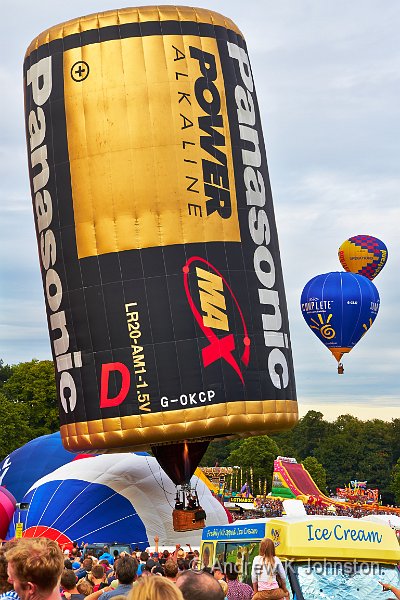
Lift off of the mass ascension at the Bristol Balloon Fiesta 2013
Camera: Canon EOS 7D | Lens: EF-S15-85mm f/3.5-5.6 IS USM | Date: 10-08-2013 19:16 | Resolution: 3076 x 4613 | ISO: 200 | Exp. bias: 2/3 EV | Exp. Time: 1/80s | Aperture: 8.0 | Focal Length: 42.0mm (~68.0mm) | Lens: Canon EF-S 15-85mm f3.5-5.6 IS USM

We are becoming quite the connoisseurs of balloon fiestas (unless fiesta is its own plural :)). Following on from Northampton 2008 (0 balloons) and Albuquerque 2012 (over 500 balloons) we’ve now added Britain’s biggest festival on Bristol, which featured a great balloon display this weekend, including a mass ascent on Saturday night of more than 100 balloons.

Bristol’s economic model is interesting. It’s a “free” festival, which means in practice that they have to pack in lots of punters eating lots of burgers and taking lots of rides on the funfair to break even on costs. The result was a relatively crowded and sparsely entertained afternoon, but capped by first a very exciting mass ascension, and then, when the balloons returned, by a beautifully choreographed synchronised inflation and evening glow set to a great soundtrack.

Balloon fiestas are all different, and to articulate the differences, here are our Balloon Fiesta Awards.

Best Mass Ascension: Albuquerque 2012. 500 balloons and we were part of it!

Best Entertainment (No Balloons): Northampton 2008. I don’t know whether they were expecting problems with the star attractions, but the organisers in Northampton put on an excellent day’s entertainment regardless, with stunt riders, motorcycle display teams, and an attempt on the YMCA mass singing record! Bristol was about aerial displays, but very patchy. The non-appearance of the spitfires left a big hole in the afternoon’s events. Interestingly the Albuquerque model is completely different – it’s about the balloons, and everything essentially shuts down after the morning events, and restarts for the evening about 4pm.

Best Balloon Packing: Bristol 2013. We couldn’t believe how many balloons inflated simultaneously from such a tiny field. I was a bit scared to see the baskets of balloons just taking off scraping across the canopies of those still inflating, but no obvious damage was done.

Best Traffic Management: Albuquerque 2012. The Albuquerque police took traffic management very seriously, closing or re-routing feeder roads onto and off the freeway, and the car parks were well marshalled going as well as coming. From the last bang of the fireworks to our hotel room on the other side of the city – 25 minutes!

Worst Traffic Management: Bristol 2013. The Bristol police and organisers did not make such a good job of it. We spent two hours waiting to exit the car park… From the last bang of the fireworks to a (closer) hotel – 2.5 hours!

Best Weather for a Mass Ascension: Albuquerque 2012. Sunny, warm, and a blue sky to provide a nice backdrop to the photos.

Worst Weather for a Mass Ascension: Albuquerque 2012. OK, the balloons didn’t actually fly on the Thursday. Balloons and wind don’t mix. Propane tanks and lightning strikes really, really don’t mix!

Best Night Glow: Bristol 2013: Credit where it’s due – this was superbly done. The balloons were inflated in synchronisation to music, and then the burns to light the balloons were also synchronised with the soundtrack. Brilliant.

They were all fun, and I recommend the experience wholeheartedly, but every experience will be different.

View featured image in Album
Posted in Thoughts on the World | Leave a comment

World War Z – One from the Ministry of Strange Coincidences…

I’ve just posted my review of World War Z – The Book. In it, I liken the book to a science fiction version of “The World At War”. Now here’s the real oddity – the book of The World at War was written by Mark Arnold-Forster. The new film is directed by Marc Forster. Co-incidence, or what???

Posted in Reviews, Thoughts on the World | Leave a comment

Review: World War Z – The Book

An Oral History of the Zombie War, By Max Brooks

"The World At War" with Zombies!

Christopher Tookey’s review of World War Z the movie made me decide two things simultaneously: I did not want to spend £20 on going to see the film, but I did want to read the book. Having done so, I’m very glad I did.

The book takes the simple concept of “a plague of zombies”, and tries to tell the story of a modern, global human struggle to first survive and then fight back and retake the world. To do this the author, Max Brooks, adopts the unusual but highly effective device of a series of interviews with key witnesses: soldiers, survivors, leaders, administrators and political or social commentators.

The book is as much about the socio-economic upheaval of such a happening as it is about how zombies behave. Given the concept of “flesh eating zombie”, the emerging story then reflects a very modern understanding of virology, military capabilities, human behaviour and geopolitics.

The interview-based structure really resonated with me, although initially I was slightly puzzled why. Then the penny dropped. This is “The World at War”, adapted for science fiction. I am a great fan of that 1970s epic documentary, told largely through interviews with soldiers, survivors, leaders… The author doesn’t explicitly acknowledge that influence, but once you see it, it’s obvious.

I haven’t seen the film yet, but based on the trailer and reviews it sounds like the screenwriters have thrown away this wonderful structure in favour of a much more simplistic linear narrative focused on a few central characters. If so, that’s an enormous shame.

For an intelligent, inspiring tale which will keep you turning the pages you won’t do much better.

Categories: Reviews and Thoughts on the World. Content Types: Adventure, Book, Fiction, and Science Fiction.
Posted in Reviews, Thoughts on the World | Leave a comment

Canon EOS 70D: Cynical, Substantial or Stepping Stone?

I am trying to work out what to make of the announcement of Canon’s new 70D. For those of you who haven’t caught up yet, Canon have finally, after four years, upgraded their APS-C sensor technology, yesterday announcing their new “prosumer” model. This will have a 20.2 MP sensor, whose main achievement is innovative autofocus technology in live view or movie mode.

In optical viewfinder mode the camera will fall back to an autofocus scheme based on (but slightly downgraded from) the 7D, and the announcements have been oddly quiet on the topics of image quality and dynamic range, arguably weak spots of the current 18MP sensors.

Now part of me says that any improvement is welcome. I had started mentally drafting a blog post worrying about whether Canon had effectively abandoned the middle ground – at least I don’t have to complete that. I had been waiting for a real upgrade to my 7D and 550D for so long I almost ordered the new camera as a reflex action. And the combination of a feature set similar to the 7D in a smaller and lighter chassis might hit a sweet spot for me in practical terms.

But apart from being lighter and newer, I’m not convinced the camera has anything to offer me. In terms of feature set, it’s still definitely a downgrade from the 7D, and a poor successor to the 40D and 50D. The new autofocus will probably be brilliant for video, but of limited value in the types of photography for which I use the 7D.

I don’t do much video, and on the rare occasion that I might my tool of choice is probably the Panasonic GH2. I do use Live View, but only really to extend my reach (e.g. shooting over crowds), for “sneaky shots” and the occasional tricky manual focus task. 90% or more of my 7D shots are through the viewfinder, ensuring visibility in all lights, and stability down to very low shutter speeds. I suspect the vast majority of stills photographers using Canon DSLRs are similar.

The new generation of Canon cameras may therefore be at best a “stopgap” upgrade, particularly if image quality is no better than now. However, I’m not completely despondent. I think the camera is actually something else altogether – it’s actually a “stepping stone” to something completely different.

Canon have “form” in this area. The 50D was a similar “stepping stone” between the excellent but relatively low-res 40D and the 7D/60D (high resolution, split by functionality). The 70D looks suspiciously like enabling technology for a whole new generation of Canon cameras.

The cameras I think, and really hope, will emerge will look like this:

  • An electronic viewfinder fully replacing the optical one
  • Body shape and size similar to the 7D/70D (which works very well), but hopefully much lighter because of all the moving parts which can be dumped. There will also be at least an XXXD version with its familar control set
  • APS-C sensor, hopefully with a step up in image quality and dynamic range from the 7D’s sensor
  • EF-S lens mount, so we can carry on with all the existing Canon glass

It’s important that the “full size” version is “full functionality” with dual axis level, multiple custom settings, built-in GPS etc. (7D replacement). If necessary for marketing purposes there can be a “reduced functionality” version like the 60D as well.

In other words, I’m now really waiting for something which looks like an APS-C, EF-S mount GH2/OMD. If they’d announced that yesterday I would have bought it sight unseen.

Posted in Photography, Thoughts on the World | Leave a comment

Improved Capture

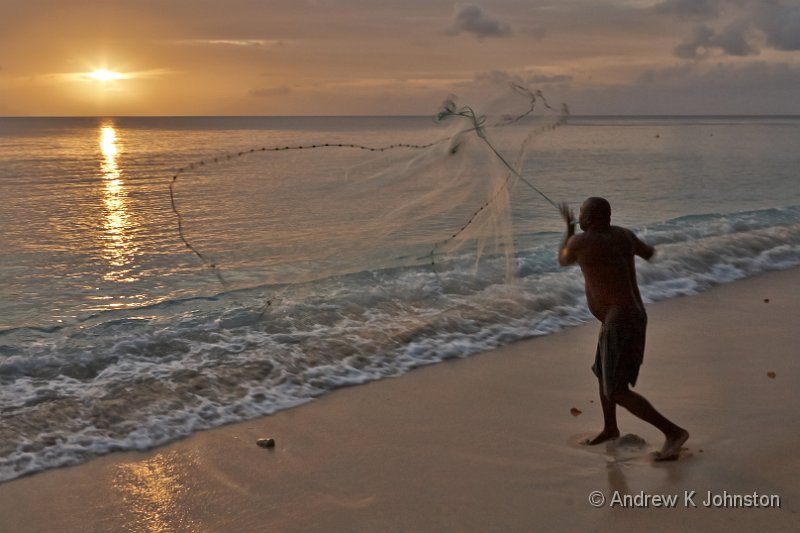
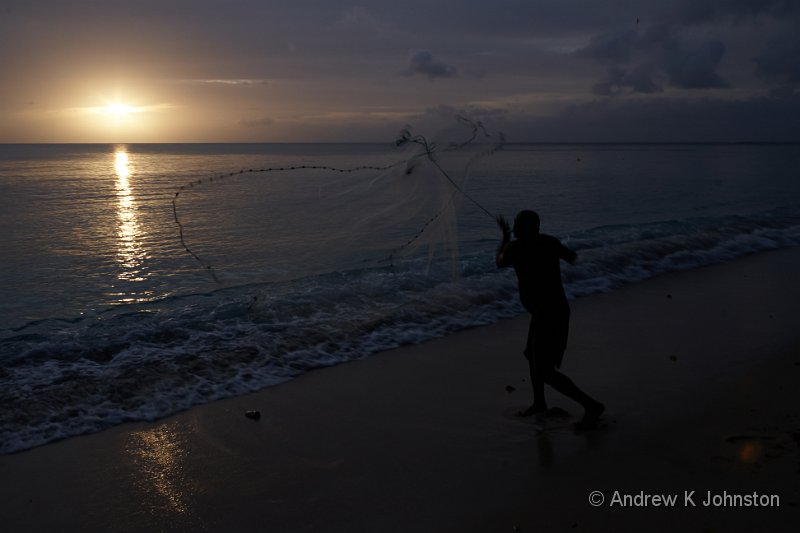
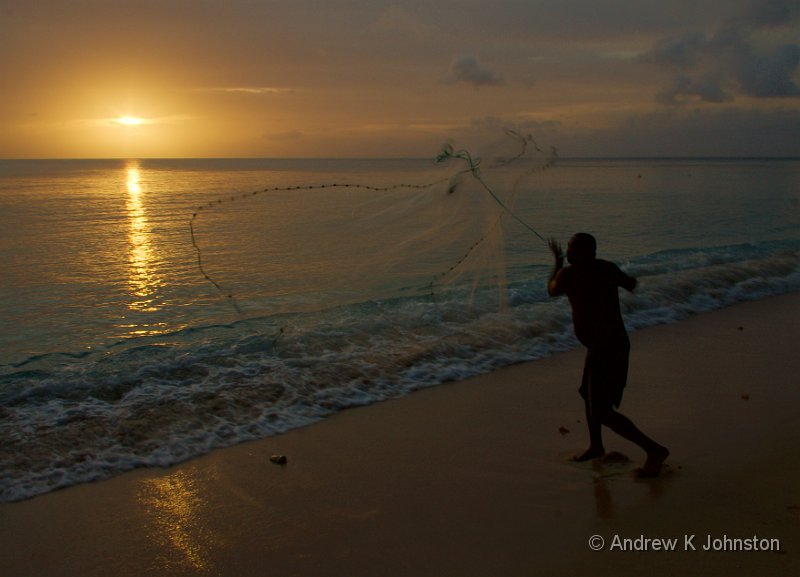
Fisherman casting net on Gibb's Beach, Barbados. Developed with Capture One 7
Camera: Canon EOS 40D | Lens: EF-S17-85mm f/4-5.6 IS USM | Date: 23-04-2008 21:58 | Resolution: 3233 x 2155 | ISO: 200 | Exp. bias: -2 EV | Exp. Time: 1/40s | Aperture: 20.0 | Focal Length: 17.0mm (~27.6mm) | Lens: Canon EF-S 17-85mm f4-5.6 IS USM

Following on from the last post, I thought I’d pop up an example to highlight the improvements possible through just the right choice and use of software. The picture above was taken back in 2008, on my old Canon 40D. As soon as I’d taken it I knew that I had a great latent image, but the very high dynamic range was a real struggle. The original in-camera JPEG is long gone, but the following version with no adjustments shows the problem: the sun and its reflections are completely blown out, and the automatic metering has substantially under-exposed the darker parts of the scene:

My original development using Bibble 4 was a partial success. I could recover some of the colour in the sky (although obviously not the sun itself), and I could reveal some of the shadow detail, although the fisherman himself was never much more than a very dark silhouette. However, this was at the cost of substantial colour noise in the mid-tones, such as the breaking waves, and some very odd banding around the sun:

Onscreen this image works fairly well, but I could never get a satisfactory print, and it was rejected for stock use because as a thumbnail it just looks like a dark splodge. Successive versions of Bibble didn’t do much better, so much so that I’ve kept the Bibble 4 version as the best compromise.

Enter Capture One, and with relatively little effort I get the results shown at the top. I much prefer this version: you can see some detail even in the darkest area of the fisherman’s body, and the overall feel is not so markedly “low key”. There’s also very little noise. I haven’t tried printing it yet, but I suspect there won’t be many problems.

Oddly when I showed these to Frances she still preferred the Bibble version, because she felt it portrayed the mood better. However, I’m definitely going for the Capture One version. Which do you prefer?

View featured image in Album
Posted in Barbados, Photography, Thoughts on the World | Leave a comment

What’s More Important: Hardware or Software?

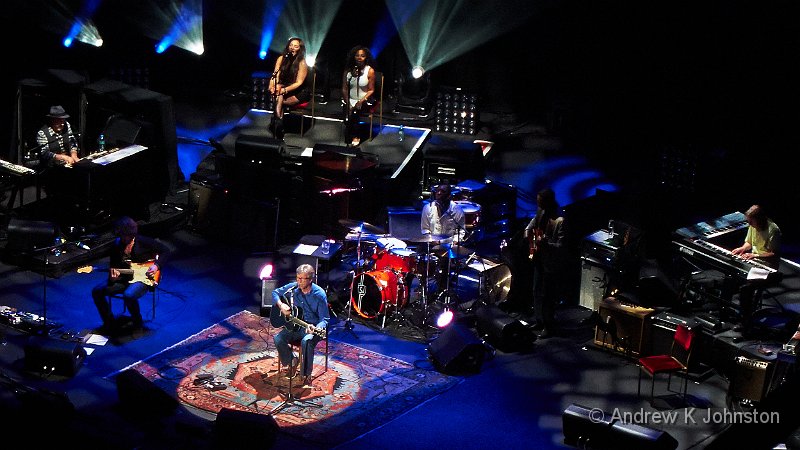
Eric Clapton at the Royal Albert Hall - May 2013
Camera: Canon PowerShot S95 | Date: 17-05-2013 21:55 | Resolution: 2498 x 1405 | ISO: 800 | Exp. bias: 0 EV | Exp. Time: 1/50s | Aperture: 4.9 | Focal Length: 22.5mm | Lens: Canon EF-S 10-22mm f/3.5-4.5 USM

We live, as some of you might have noticed, in a digital age. The displacement of older technologies by digital versions has been accompanied and largely enabled by rapid, substantial advances in technology. Yet a couple of recent experiences suggest to me that we may be reaching a point in many areas where further hardware change is of less importance than improvements to the supporting software.

This has most clearly been brought home to me in respect of cameras. My older, larger, cameras and lenses work by delivering high quality optics coupled with relatively straightforward processing of the captured image from the sensor. The newer, smaller cameras make some dramatic compromises on optical accuracy, and then correct the errors in software. This works surprisingly well, but introduces the challenge that if you want to shoot in RAW format and develop the shots yourself, you need RAW processing software capable of reproducing the same, or better, corrections.

That’s been a problem for me, as the software I was using (the former Bibble, now Aftershot Pro) didn’t have adequate support for my new Panasonic GH2 and its diminutive lenses. Also new owners Corel seem to be determined to kill the software through negligence, which makes the prospect of improvements unlikely. (That’s another story, to follow…)

This week I got a bit disheartened, fearing that I was becoming “locked out” of both new cameras and fully developing my work with the GH2, and finally bit the bullet. I didn’t buy a new camera, I started evaluating alternative RAW processors. After a couple of false starts I have settled on Capture One from Phase One. The results so far are very promising: it not only corrects the distortions of my Micro Four Thirds lenses, but it delivers silky smooth output from my larger Canons at ISO 3200, and does a remarkable job of highlight recovery. The shot above was taken at ISO 800 from the back of the Royal Albert Hall with my tiny Canon S95. (BTW, Eric Clapton was excellent!)

But the big surprise has been applying Capture One to some of my older images. The following was taken on our 2007 visit to the Southwest USA, using my original Canon 350D. I was never really happy with the Bibble version, which struggled both to recover the blown highlights and to pull some usable shadow detail without excessive noise. The difference using Capture One is dramatic. It’s almost like revisiting the scene with a new camera.

Getting back to the original topic of this post, I’ve also seen the same software-led effect elsewhere. Support for a proper stylus aside, there’s not much in hardware terms between an iPad and my 10″ Galaxy Note, and some might prefer the Apple hardware. However the dramatic differences in software capabilities are a real differentiator. (See my various reports for details.)

I don’t want to belittle the impressive work of digital hardware engineers, and we’ll continue to take the benefits of further advances, but we need to recognise that the efforts of frequently unsung software engineers may be just as, or sometimes even more key to the hardware’s exploitation.

View featured image in Album
Posted in Micro Four Thirds, Photography, Thoughts on the World | Leave a comment

Back to the ‘Fray

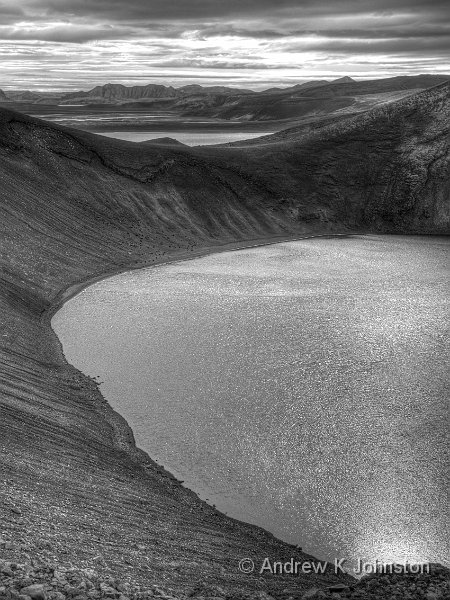
Monochrome HDR shot of the "Ugly Pond" and stormy sky beyond
Camera: Canon EOS 7D | Lens: EF-S17-85mm f/4-5.6 IS USM | Date: 24-08-2011 10:43 | ISO: 100 | Exp. Time: 1/250s | Aperture: 10.0 | Focal Length: 30.0mm (~48.6mm) | Location: Einbúi | State/Province: South | See map | Lens: Canon EF-S 17-85mm f4-5.6 IS USM

Oh well… The annual pilgrimage to the sun has come and gone, and it’s back to the ´fray. (I assume that “fray” is a contraction of “affray” – is that correct?)

Updates to my web site are almost complete. As a salutary lesson to others in a similar position, what I had hoped would be a few weeks’ work turned into something which chewed up most of my “development” time for over three months. However I now have a site which works well on almost all devices (although there are a couple of outstanding oddities and the style sheets still need tweaking for phones with relatively low resolution screens, such as older iPhones). I’m hoping my “lessons learned” will make interesting reading to anyone with a similar challenge, and I’m also confident that future changes will be easier to achieve.

I’m also hoping to get back to blogging on other topics, which have been neglected a bit in recent times. If you have any preference on topics then please let me know.

Most of my recent posts have been book reviews, and I thought the blog needed a picture at the top, hence the above. I’ve been processing some outstanding photos from my Iceland trip, and I was rather taken with this one, which is another HDR monochrome development from three originals processed using Photomatix. What do you think?

View featured image in Album
Posted in Iceland Travel Blog, Thoughts on the World, Website & Blog | Leave a comment