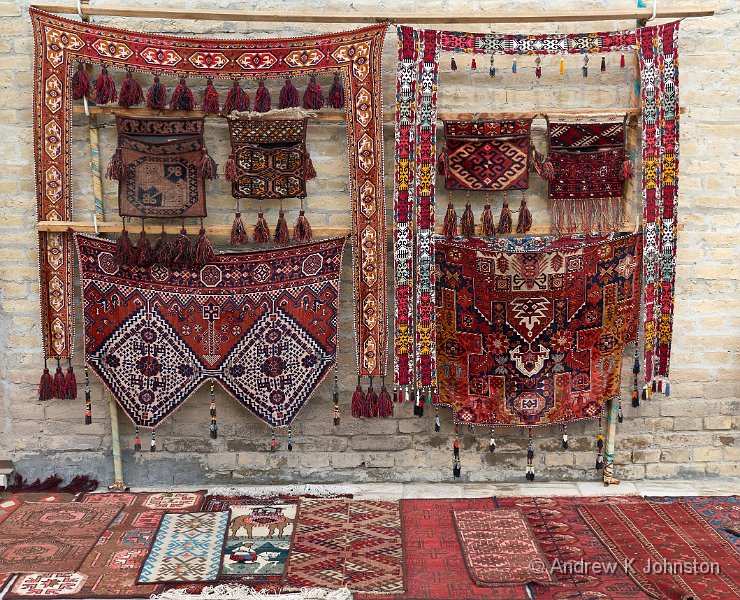
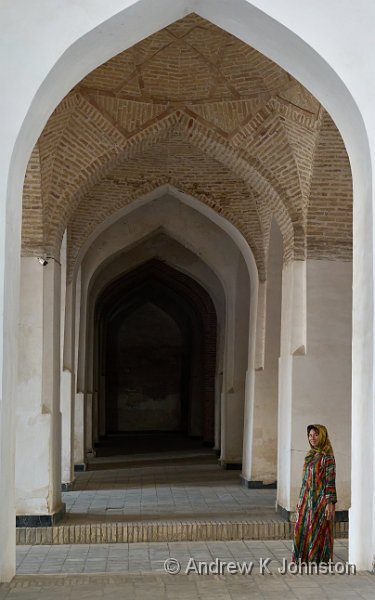
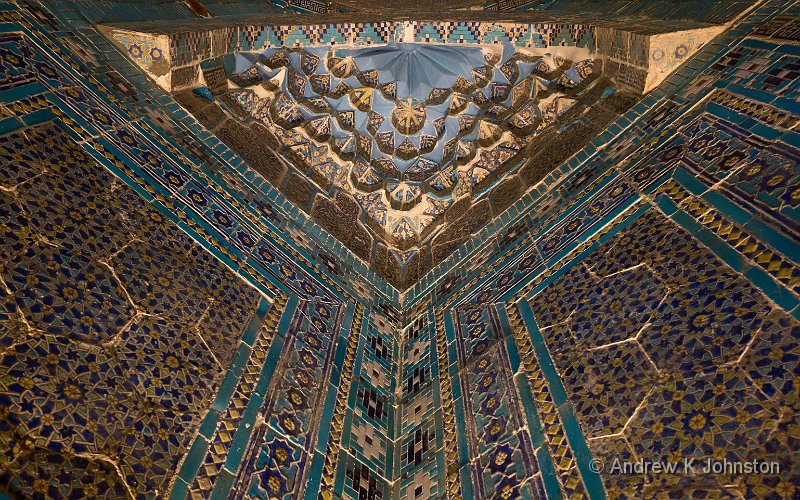
Author Archives: Andrew

Picturing Uzbekistan – Advice for Photographers

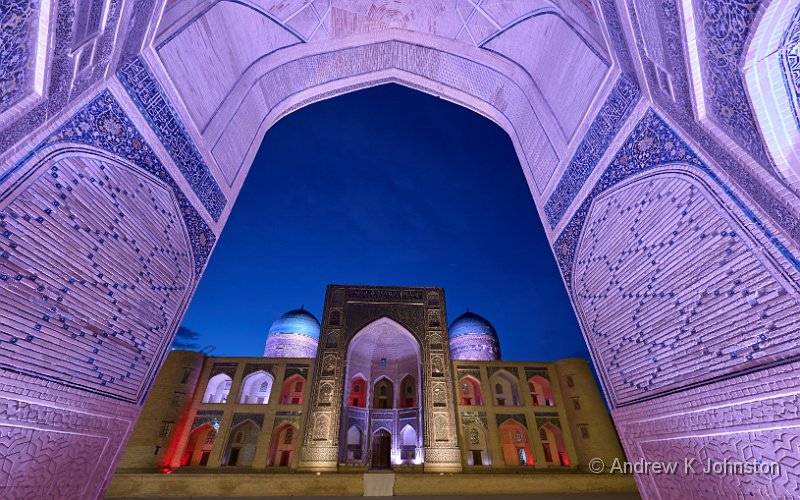
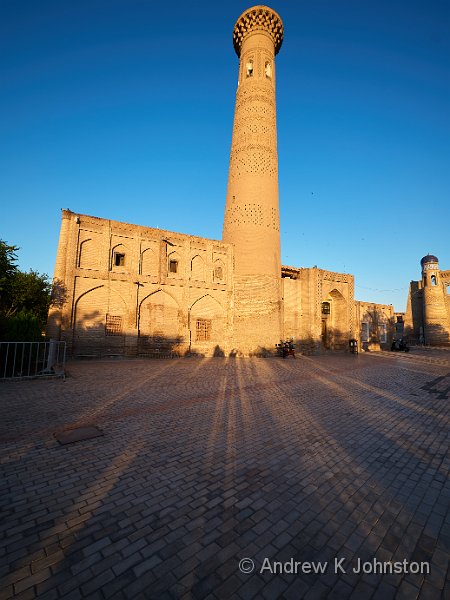
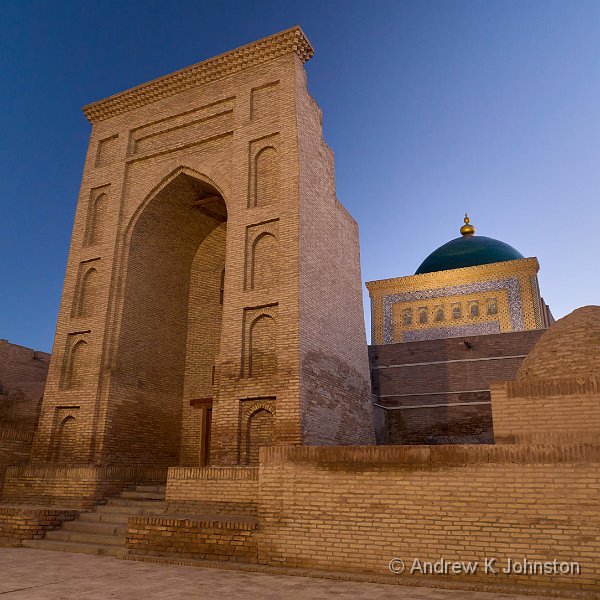
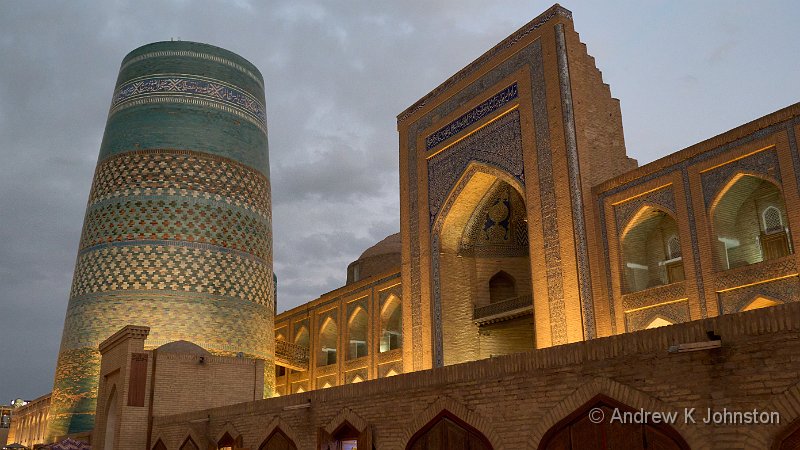
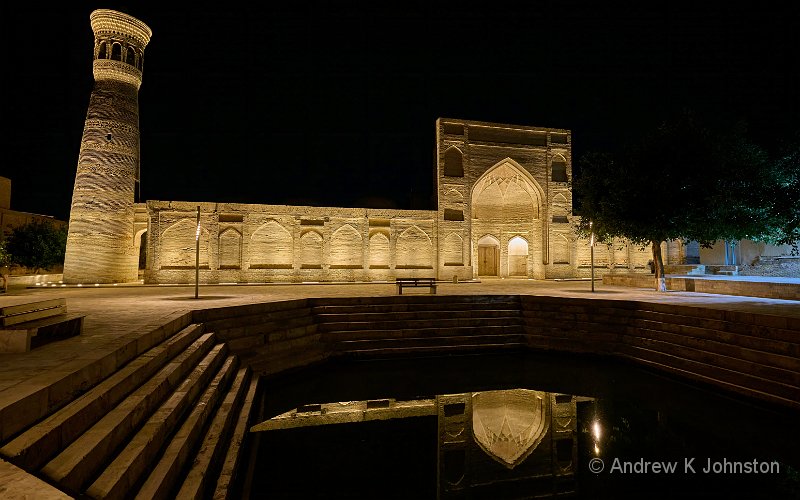
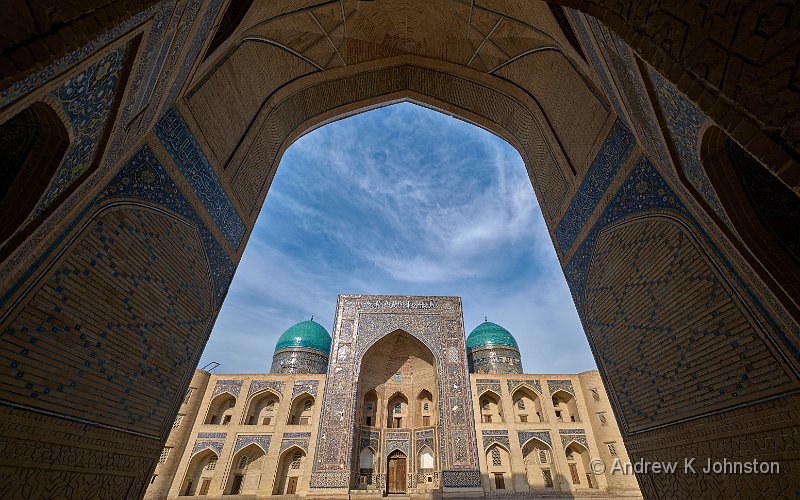
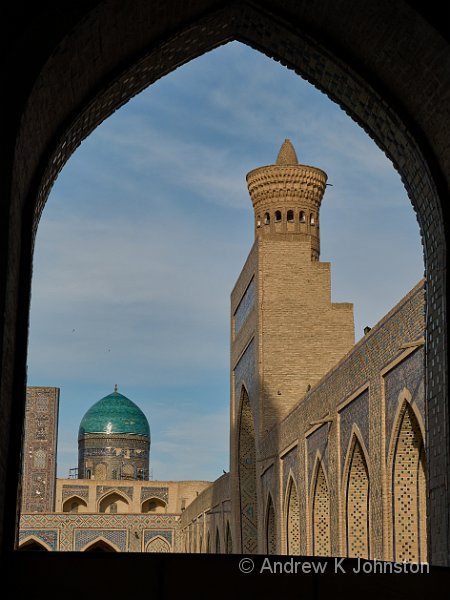
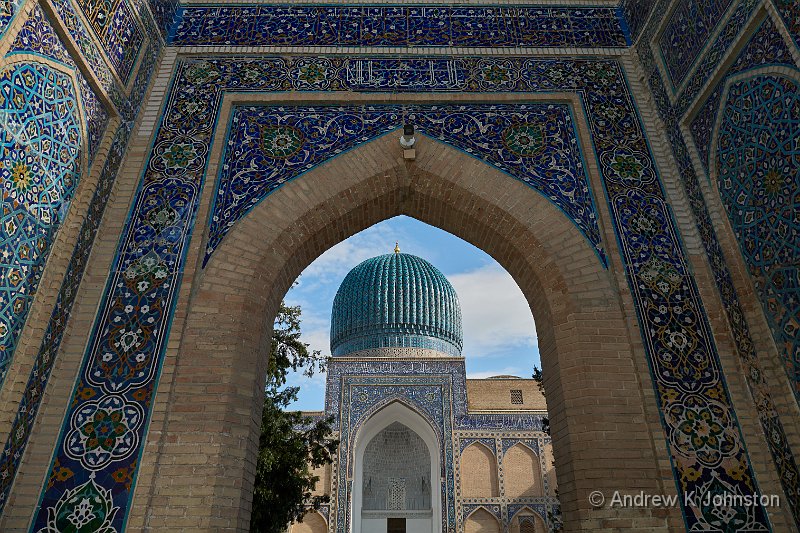
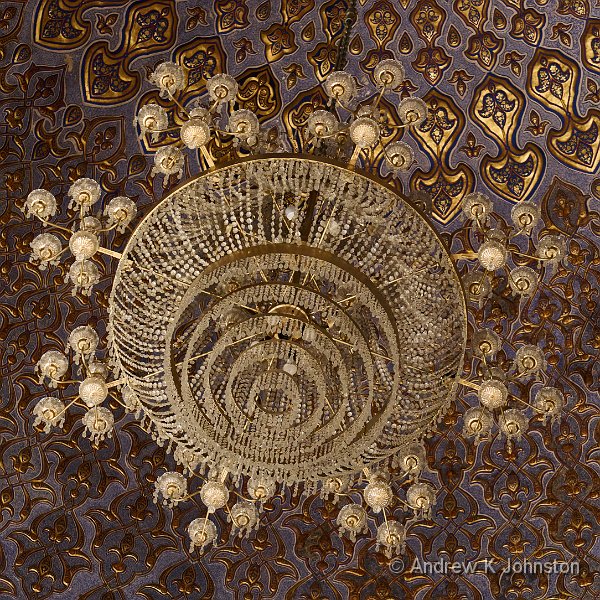
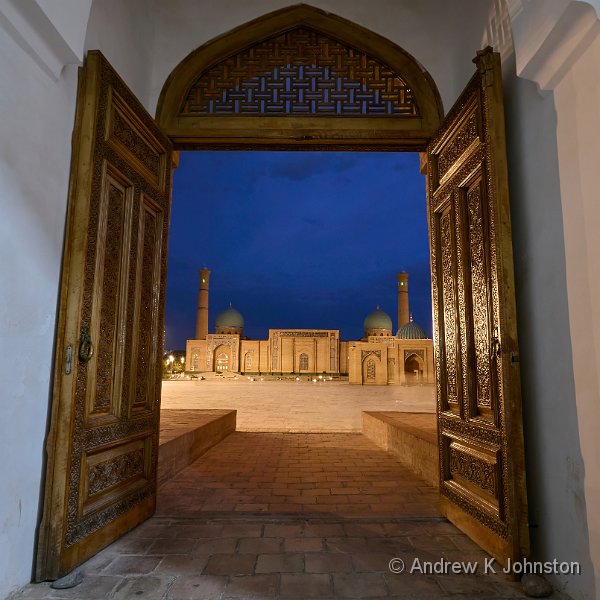
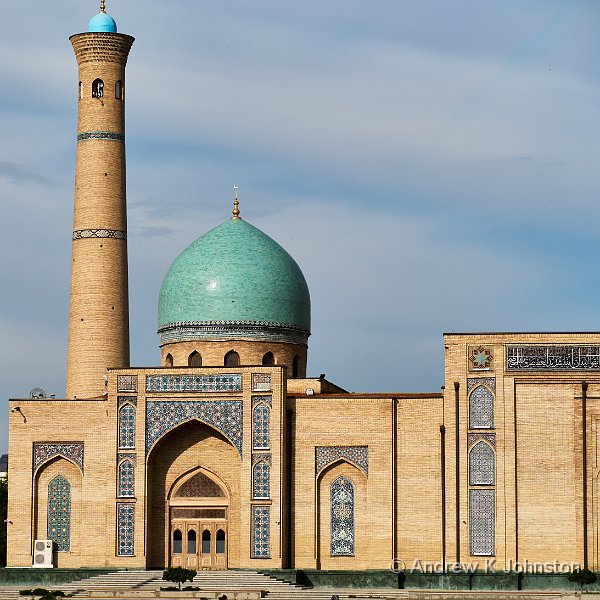
Poy Kalan Complex
Camera: Panasonic DC-S5 | Date: 26-05-2026 04:40 | Resolution: 6523 x 4077 | ISO: 6400 | Exp. bias: -33/100 EV | Exp. Time: 1/10s | Aperture: 9.0 | Focal Length: 14.0mm | Location: Poy Kalan Complex | State/Province: Bukhara, Bukhara | See map | Lens: LUMIX S 14-28/F4-5.6

If you’re thinking of visiting Uzbekistan, especially for photography, I hope this article will be of use to you. It’s distilled from a longer series of blogs. If you want details of the locations I visited and things I saw, please read the full blog at www.andrewj.com/blog/uzbekistan.

Uzbekistan is a former Soviet republic, independent since the 1990s, south of Russia, north of Iran and Afghanistan. It’s one of only two "double land-locked" countries in the world – completely surrounded by countries which are themselves also land-locked. (If you need it for a pub quiz the only other is Lichtenstein, a tiny principality within Switzerland, about the size of a small British town.)

Uzbekistan is famous for its spectacular architecture. You probably have a mental picture of "somewhere in central Asia" with large Islamic buildings covered in blue tiles. That’s Uzbekistan. I was also expecting to photograph the people and their activities, but I’ll confess it’s the blue tiled buildings which were the initial draw.

My trip was organised by Light and Land, the excellent Hayley Greenall of Travel Counsellors organised the international travel, and Mehmet Ozbalci was the tour leader.

Over 8 days we visited 4 cities along Uzbekistan’s section of the Silk Road: Tashkent, Samarkand, Bukhara and Khiva. The internal travel consumed at least two days overall, giving us a day and a half in each city. If you do have the opportunity to spend a bit more time that would probably be beneficial.
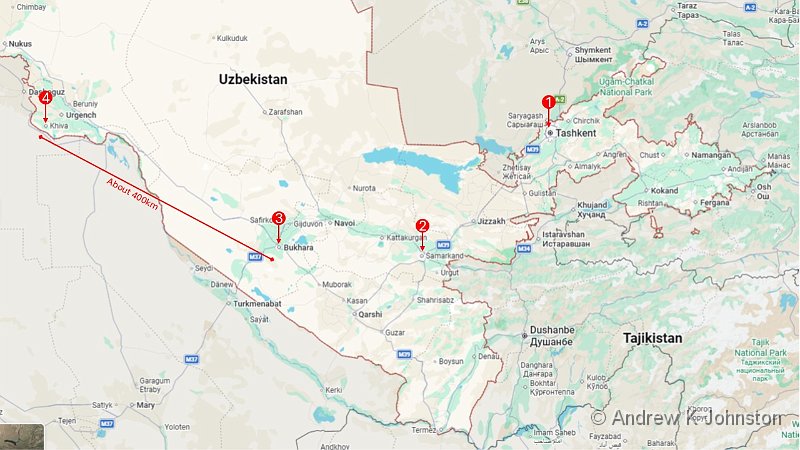
Uzbekistan Trip Map (Show Details)

Trains, Planes, and Automobiles

Tick, tick, tick. We travelled from Tashkent to Samarkand by train. This wasn’t the poetic journey the name conjures, but a modern, fast, efficient and comfortable express service taking only a little over two hours.

Around the towns we used a mixture of our minibus for longer journeys, and the readily-available electric carts for shorter hops in the tourist centres.

The roads are mainly very good, but bumpy in places. However the Uzbek approach to road safety takes a bit of getting used to. For a start our nine-seater minibus only had three seat belts, and we were unconvinced by two of those. Then there’s the approach to navigating traffic. If you listen to an elderly soldier talking about firing an anti-aircraft gun, they say something like "you don’t aim at the plane, you aim at where the plane is going to be". Uzbek drivers use a variant, they don’t aim for where a gap is , they aim for where a space is going to be. Sometimes it isn’t. Brace!

The long drive from Samarkand to Bukhara was along a modern, divided multi-lane highway. There were no craters (so a distinct notch up on Mongolia) although in many places the surface has been repaired badly and bouncy progress meant I had to abandon typing my blog. The road is open to all traffic, which means fast electric cars mixing with donkey carts. Direction of travel is observed, but not necessarily lane control and it’s a bit disconcerting to see the fast cars and large trucks all moving to the right to pass a donkey cart, or lad on a bike, in what would normally be the "fast" lane.

We had another, even longer (480km) drive from Bukhara to Khiva. The first 400km or so passed very quickly and smoothly on an excellent highway, noticeably newer and in better condition than that from Samarkand. We did have to stop for some goats crossing, which doesn’t often happen on the M25.
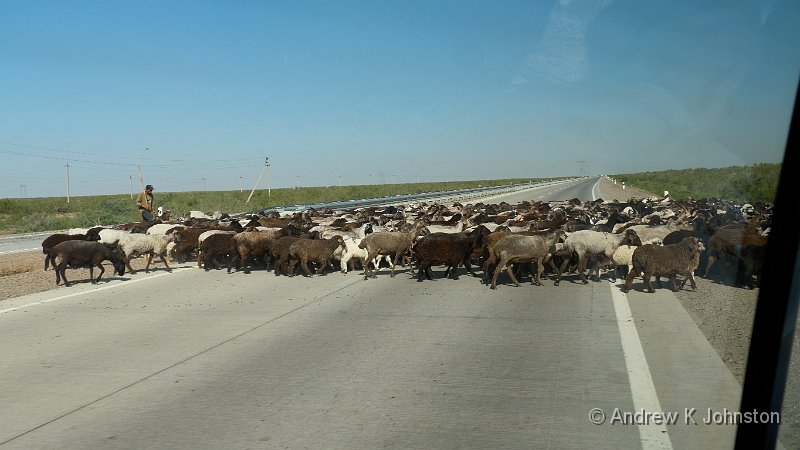
Don’t try this on the M25! (Show Details)

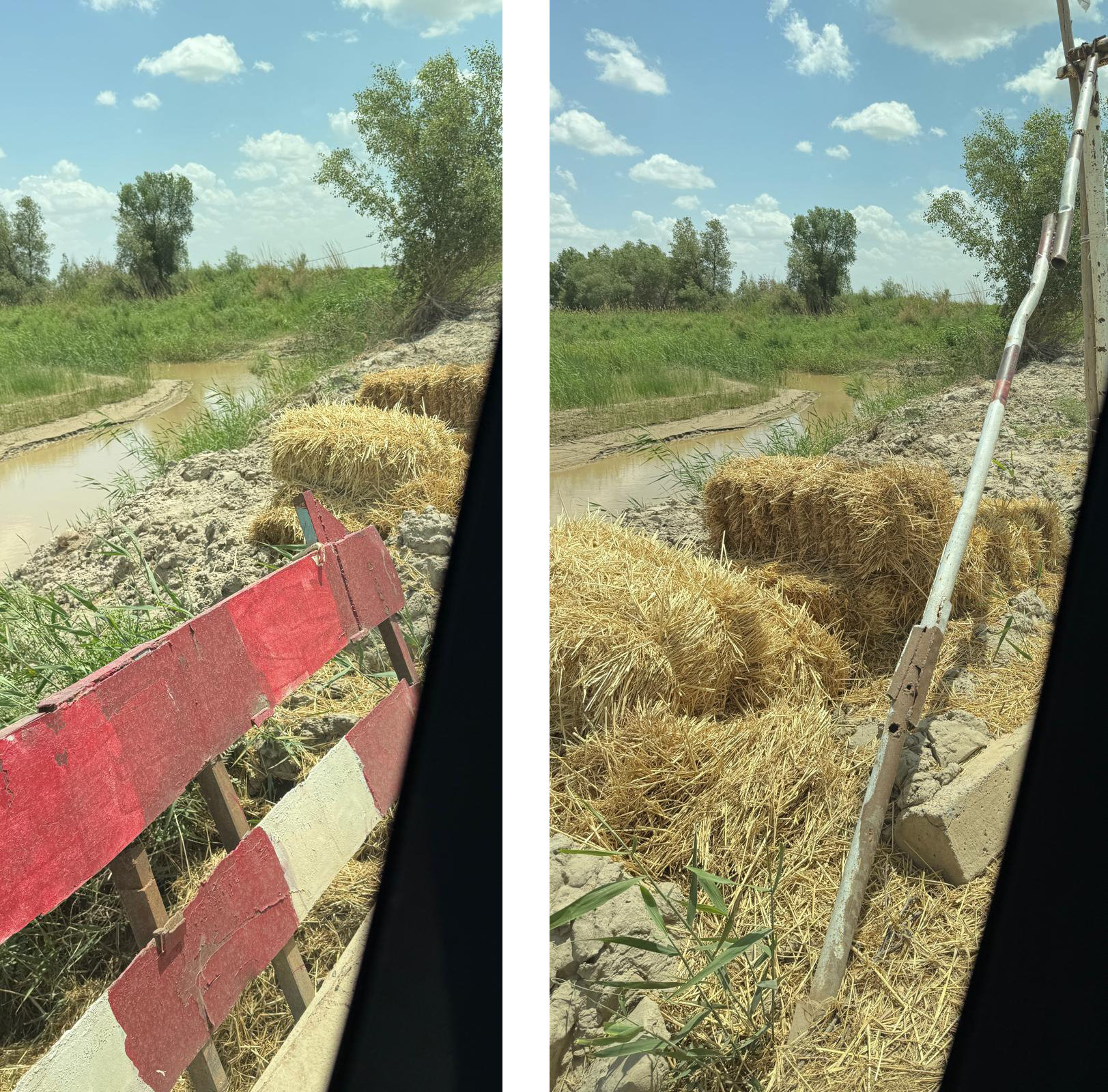
However the last 80km was more problematic. Our plan for lunch failed as all the roadside restaurants were shut due to a bank holiday. As I had probably eaten a whole sheep on the trip so far there was no immediate risk of starvation, but our driver decided to turn off the highway and take a minor road in the hope of finding food. The road descended rapidly from road to cart track with passing places. Instead of the modern 4 lane bridge in Urgench, we crossed the large river on a pontoon bridge, with jury-rigged width restrictors made of hay bales and joins between the tired old pontoons covered by loose steel sheets. Our driver admitted he had never previously used that route! He could have asked me – my map predicted a very minor road, although not the state of the bridge.

To make the round trip workable, we took an internal flight back from Khiva to Tashkent. Check-in at the airport was remarkably easy, with most of the formalities being handled on our behalf by Ganisher, and no complexities around extra baggage fees like in Mongolia. The good news: it was dramatically faster than the 2+ days we spent doing the outbound journey by train and minibus. The bad news: it still takes almost 4 hours, not because of the flying time but because the plane also stops at Bukhara, and the process of disembarking some passengers and then boarding a few more is interminable. There were no refreshments, and we were desperate for a coffee when we arrived.

From the West, Uzbekistan is probably reached most easily using Turkish Airlines via Istanbul. This means confronting two challenges: Turkish Airlines’ complete inability to manage a queue, and the fact that Istanbul Airport is among the most expensive and least comfortable places for a layover. The ideal transfer time is probably 3-4 hours: any less and you run the risk of busting a gut to catch your transfer; any more and it gets very costly. For more details read my blog. Those annoyances aside, the actual flights were smooth and prompt, although I’m not convinced the air conditioning was working on the flight back from Tashkent.

Photography – Subjects

The monumental architecture of the various mosques, madrassas and mausoleums delivers exactly as expected, both inside and out. After a period during Soviet rule when maintenance was neglected, most of the buildings are now in very good condition, although eagle eyes may always spot the odd missing tile. You can capture good shots throughout the day and in any reasonable weather, but as ever the best results are at the ends of the day, especially if the buildings are lit through blue hour. Our evening shoots all worked well, but a couple of the mornings were a little disappointing with expected buildings not lit up.
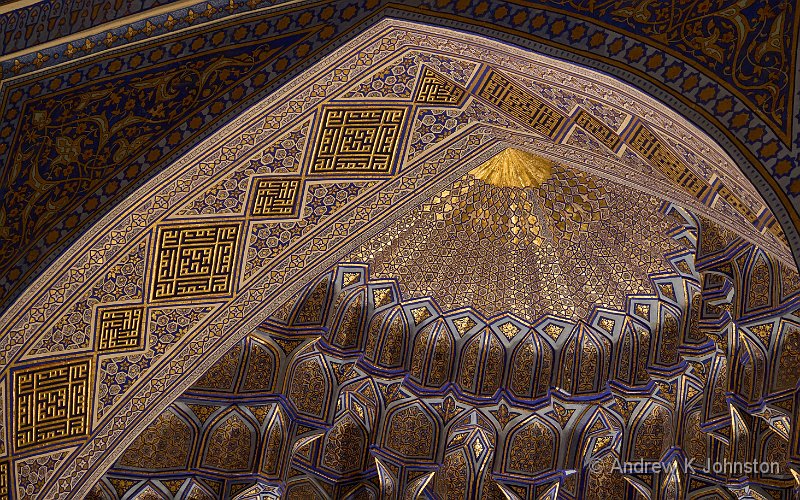
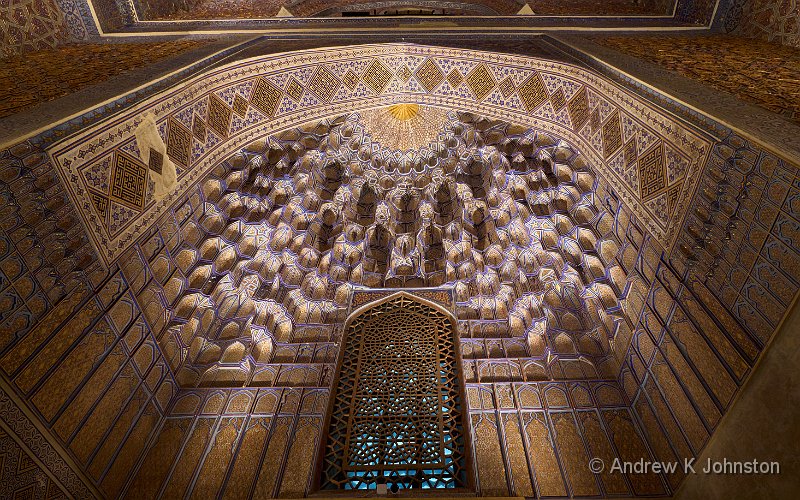
Amir Timur Mausoleum Complex
(Show Details)

At the more popular sites you will have a challenge with other tourists in your wider shots. There’s nothing special about the resolution, you can either accept them as part of the reality, "shoot high" over them, or set up for a shot and wait patiently for a break in the human traffic. On a positive note, I benefited in a couple of cases by "model stealing", shooting a model who was there for someone else. Just don’t start a fight…
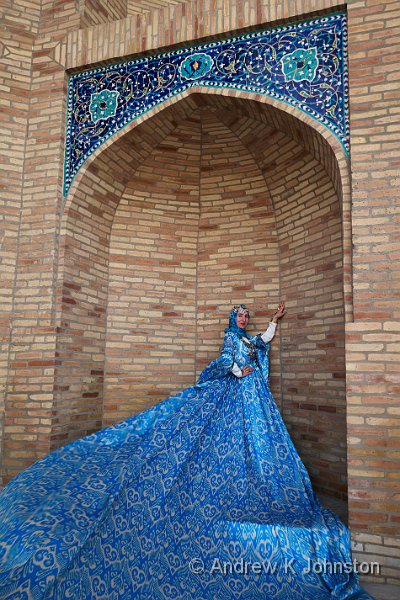
Borrowed model, Khast Imam Complex
(Show Details)

Architecture does not have to be ancient. Many Soviet era and more recent edifices are also worth a photograph. Tashkent was largely rebuilt after a major earthquake in 1966, and provides many interesting subjects.
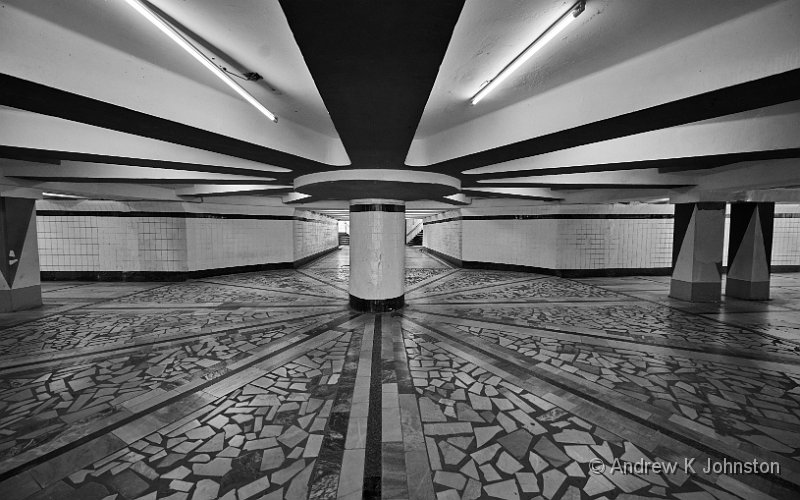
Pedestrian Subway Tashkent (Show Details)

Let’s get one thing out of the way. There’s no scenery. If your mental image of the Silk Road is camels or yaks threading though narrow mountain passes discard it instantly. The Uzbek stretch is flat (think Norfolk / Flanders / Nebraska). Historic Samarkand and Bukhara are built around small hill systems which formed natural fortifications, but most of the time you can calibrate a spirit level by laying it on the ground.

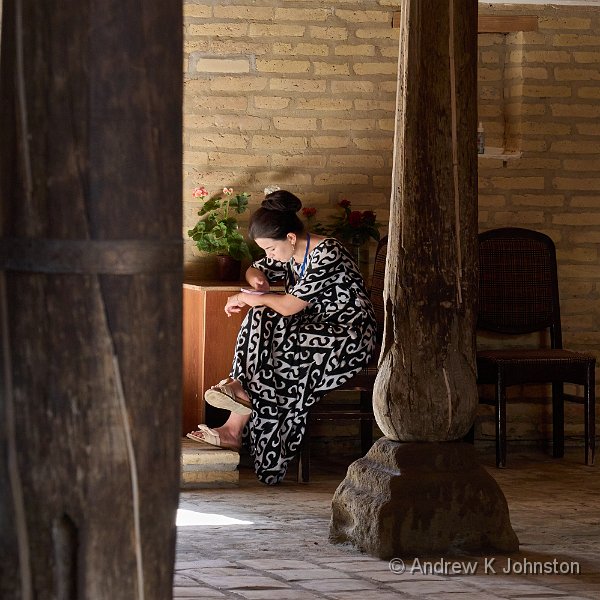
That leaves people. I was hoping that we might get a few appropriately-dressed and cooperative locals, but slightly fearful that as many Uzbeks are Muslim either privacy considerations or religious concerns about portraiture might be an issue. I needn’t have worried. You do need to seek permission for portraits, but I found that eye contact and a "do you mind" gesture is about 90% successful. Just make sure you honour those who seem unwilling or uncomfortable. We didn’t have anyone demanding payment for a photograph, but it’s normal and reasonable to give a small tip for posing or being extra-accommodating.
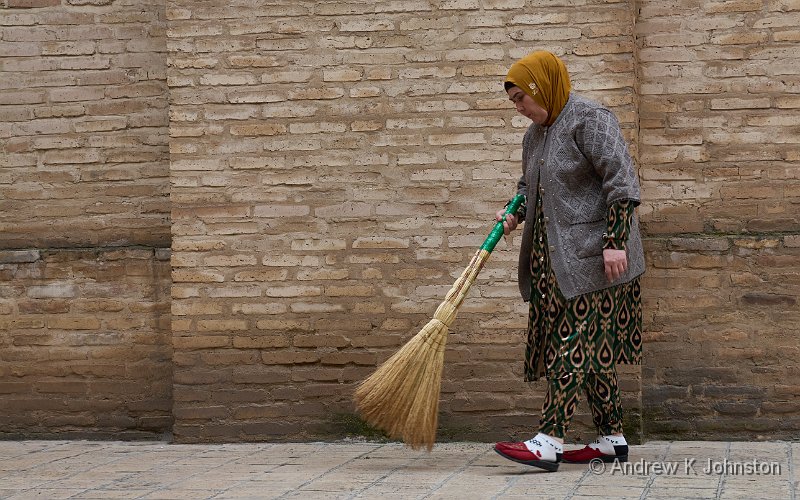
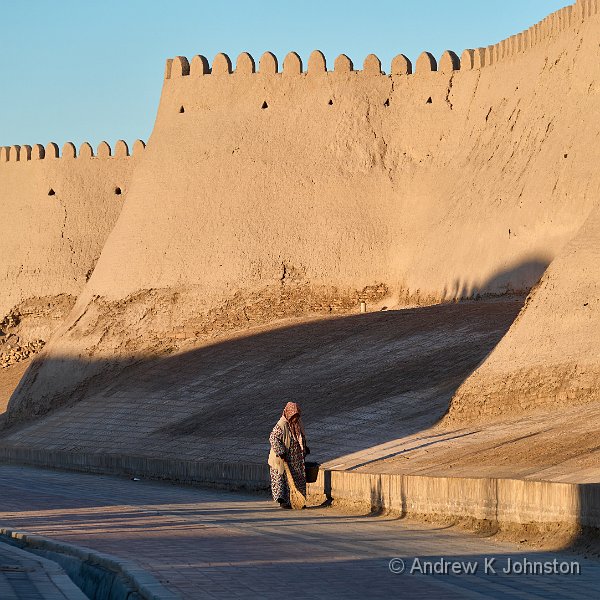
Lady cleaning at the Shah-i-Zinda Necropolis (Show Details)

What I wasn’t expecting was the cultural shows. We attended three very different cultural events, each of which provided very distinct subject matter, but also different technical challenges.

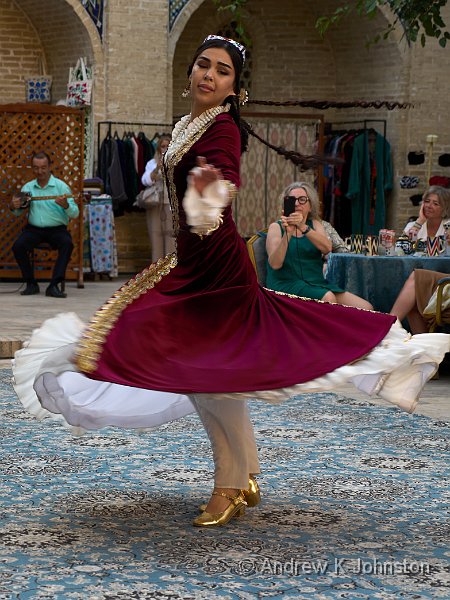
The first was a dance show in Samarkand called Marokand. Courtesy of our guide being one of the theatre’s managers we had unique backstage access while the female dancers applied their makeup, and then front-row VIP seats with no constraints on photography. The dancing and costumes were stunning. The technical challenge was that the various backdrops are projected digital video, and all the lighting is LED. This means that the fastest possible shutter speed is 1/60s, otherwise your image contains blotchy, stripy backgrounds and odd lighting effects. 1/60s is not really fast enough to capture dance movements. However you may be lucky and capture a moment where the dancer is momentarily still, or maybe facing forward through a turn so her head is not moving even if the rest is.
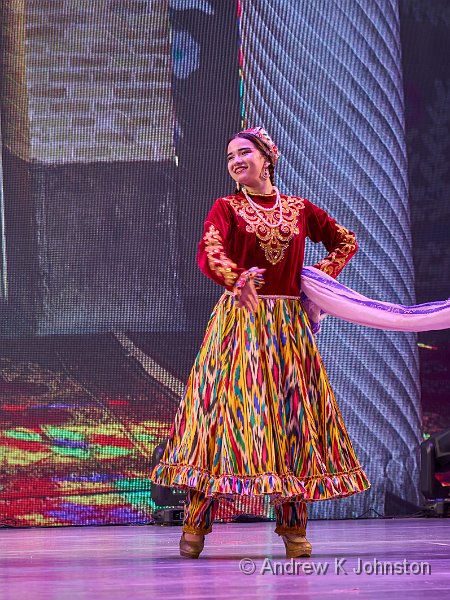
Marokand Show (Show Details)

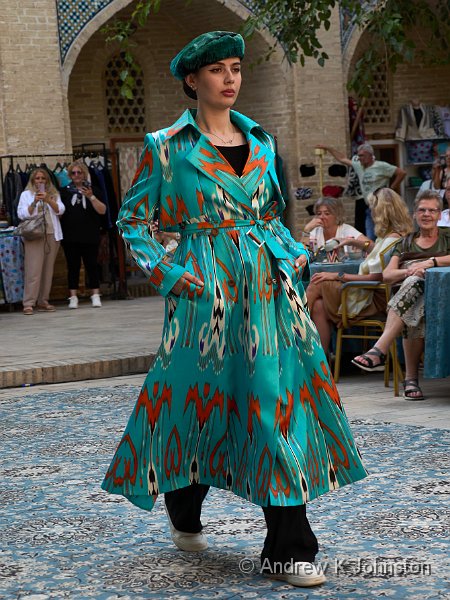
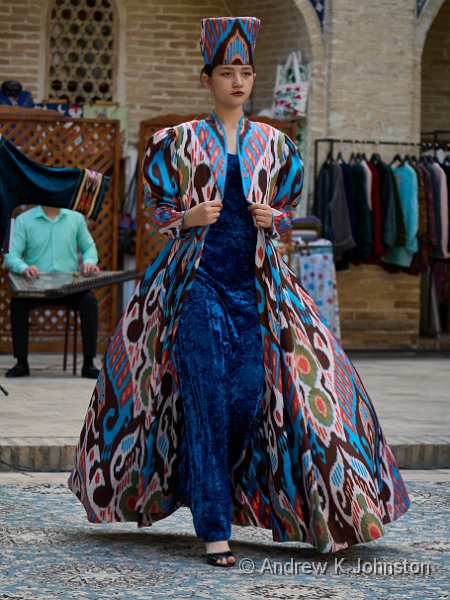
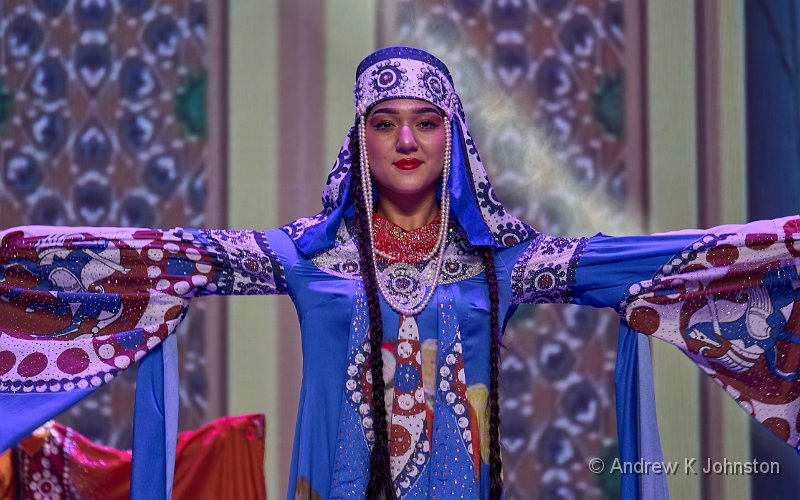
The second was a fashion show in Bukhara. This included some traditional dancing, but was mainly about local designers showing off fashions combining traditional Uzbek shapes and patterns in modern clothing. The cabaret setting provided the challenge of photographing the models but minimising the distracting background, and I also discovered a shortcoming of Panasonic’s subject tracking autofocus. This accurately tracks the girls as they come towards you, but fails immediately the dancers spin or the models turn around, especially if they are wearing unusual-shaped clothes or making odd arm gestures, and focus flips to a random member of the audience in the background. At least I could use my go-to shutter speed of 1/250s to freeze movement "just enough".
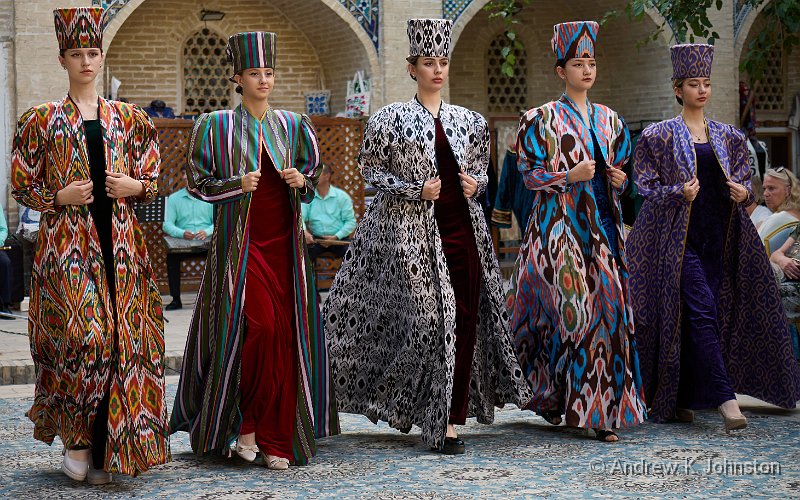
Bukhara Fashion Show (Show Details)

Finally in Khiva we had a short concert of traditional music and dance. This was photographically straightforward, the only challenge was our leader and guide battling to keep other non-paying from barging into shot.

Generally you will find plenty of people who want to either show off their wares, or a particular skill, and are happy to do it for the camera in exchange for a suitable tip. That’s where having a good guide comes in useful. For example in Bukhara we went to the workshop of a blacksmith family who have a particular "crowd pleaser" stunt which generates a dramatic shower of sparks.
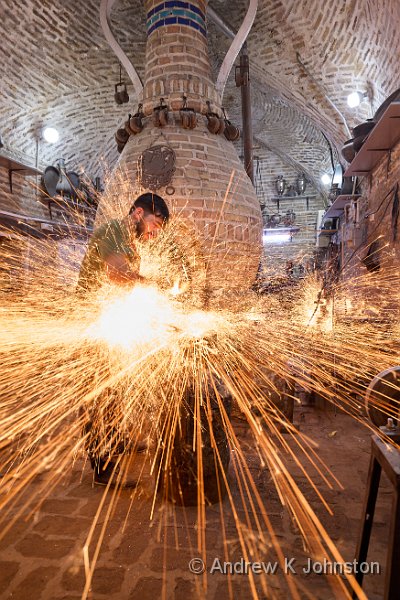
Blacksmith’s Workshop (Show Details)

Photography – Kit & Technique

I took three camera systems to Uzbekistan. As always the main system was my Panasonic G9ii. I realised in advance that I was unlikely to need a long telephoto, and that was correct. Most shots were taken using the 12-35mm zoom (24-70mm equivalent), with the 35-100mm used extensively for both the shows and details. While I packed my 100-300mm it was almost unused, and most of the time I left it in my luggage most of the time in favour of the diminutive 45-175mm. That was quite long enough, and saved some space and weight (it’s about the size of a toilet roll tube, and weighs only 210g).
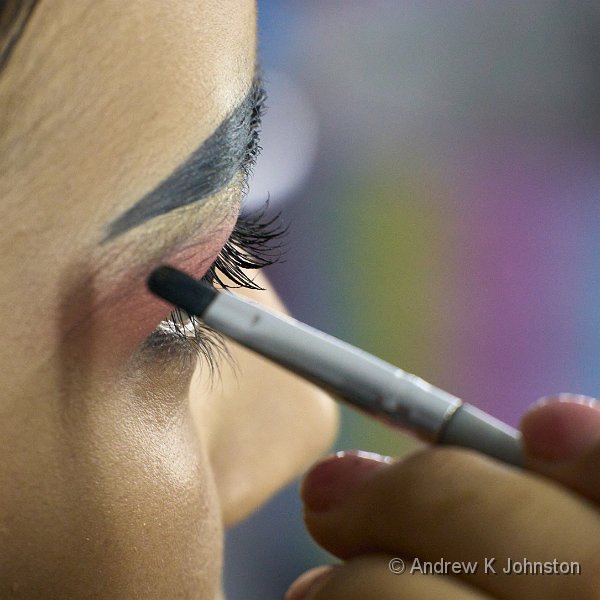
Make-up for Marokand Show (Show Details)

The weight saving on the G9ii kit was just as well, as most of the time I was also carrying a full-frame system: the Panasonic S5D with 14-28mm and 20-60mm lenses. I agonised about whether I needed the extra complexity and weight, but Mehmet persuaded me that it might be beneficial, with its high-ISO capability, dynamic range and wider zoom, for the interiors and blue hour shots. He was right: it captured the wonderful interiors beautifully, and as a side benefit was easier to protect when we photographed the blacksmith’s workshop.
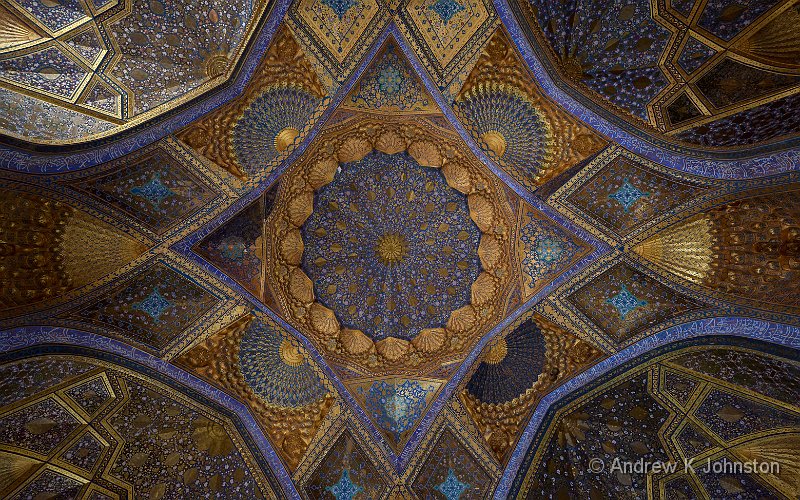
Ak-Saray Mausoleum (Show Details)

Finally, as I’m short-sighted I can’t use my phone to take photos when I’m wearing my "distance" glasses, so if I’m not carrying a larger camera the Sony Rx100vii with its excellent little EVF is always in my pocket. While it couldn’t cope with the very wide or faster action shots, it continues to shine as a general-purpose backup camera. Most people will use their phone in a similar role.

Did I need both the micro-four-thirds and full-frame systems? Possibly not: I could have focused on the G9ii, leaning into its amazing dual stabilisation and faster lenses to just shoot the interiors at ISO 1600. I could have supplemented the full-frame system with a medium telephoto and accepted a marginal speed limitation for the action subjects, although that would have required buying another lens (and a spare body). However I wasn’t the only person wandering around with two camera bodies, and the combination worked very well. Both bodies, the selected lenses and all filters and other paraphernalia disappeared into a Lowepro AW 190 shoulder bag which worked very well in the urban environments.

In terms of zoom range, ideally you need to cover from 14mm to 300mm in full-frame terms. Limiting yourself to 200mm at the long end wouldn’t be a major loss, but try to make sure you can go wide enough. Even 16-18mm would limit a few opportunities, and in turn I was on a couple of occasions jealous of the member of our group who had a 12mm wide lens. Stitched panoramas work fine for exterior subjects, but don’t work very well for interiors.

Apart from deep into blue hour I worked hand-held. Few other shots required an exposure more than 1/5s on the G9ii (holding ISO to 1600 or lower) or 1/40s on the S5D. Neither of these is an issue with wide-angle lenses and image stabilisation. The tripod was just an extra thing to carry, and wouldn’t have been practical in the busier interiors anyway. As always, YMMV.

You will need access to a tripod for blue hour or night time shots. Even I can’t hand-hold a full-frame camera for 2s! I took my lightweight Frankentripod, but on at least one occasion when I needed its support (well after sundown in Samarkand) it wasn’t tall enough to get over the barrier. Meanwhile Mehmet was carrying his tripod and I had a spare Arca Swiss plate, so we just took turns using his. That may be a good solution for a small group, as often there’s only one ideal position for the tripod and camera to get a balanced composition.

One thing to beware of is flare, particularly in dark interiors where there are a few shafts of sunlight. A standard lens hood won’t do much good if sunlight is falling directly onto your lens. A hand or hat may help, but the best solution is to get a colleague to stand in the way!

Drones are banned by default in Uzbekistan, and I left mine at home. However there were definitely some areas such as the centre of Bukhara which would have rewarded a higher viewpoint, and I’ve been told that if you work through the permit application system the success rate is quite high. If you are a keen drone flyer it may be worth the effort, but don’t try importing or using a drone without a permit.

Over 8 days I took a total of around 5500 images, and after initial filtering I have around 1600 which are worthy of further review. Most of the volume came from the dance and fashion shows, although by no means all. Make sure you pack enough cards and batteries.

People

Uzbekistan is a dynamic young country with wonderful old buildings. The overall feeling was a country which is modernising, with its face towards the West, as quickly as possible, and trying to right the limitations imposed during the Soviet era.

Notable among these were the constraints on education. Uzbeks were essentially told "your job is to grow cotton, you don’t need much education to grow cotton, so why should we bother educating you". I’ve come across other examples of similar oppression, but few in the living memory of people younger than myself.

Historically these cities were centres of learning which still impacts on our lives today. Ibn Sina was a native of Bukhara. He was a pre-eminent physician, who in many ways founded modern medicine. The "cine" in "medicine" comes from his name. Mathematician Muhammad ibn Musa al-Khwarizmi was born in Khiva. His most famous work gave us a language in which to express and manipulate mathematical problems: "Al-Jabr", or algebra. Part of his name, the place of his birth, gave us our term for methods to systematically solve such problems: "al-Khwarizmi", or "algorithm".

Today Uzbeks are honouring their heritage with a strong focus on education. I’m used to getting somewhat senior and well-qualified local guides on photo tours – they are often treated as "flagship" events which attract extra effort and the "boss’s" personal involvement. However I think this is the first time I’ve had a guide with two degrees, who personally sits on national tourism committees, and who is currently doing a PhD in related matters.

The vast majority of those who interact with tourists speak good English. Kids playing in the street want to practice their English with you. Older people may need help with anything complex, but for simple transactions gestures usually work, and prices are just typed out on a calculator or phone.

Generally I felt welcome, with polite and friendly nods or a "Salam alaikum" even from random strangers. Stall-keepers don’t seem to have a problem with browsing or taking photos, although as ever you should reward real service. If you do make a purchase there seems to be little requirement to haggle, or benefit from doing so, but that may mean I just wasn’t doing it right! However beware that once a shop-keeper has you as a captive audience they will put some effort into selling you more stuff. That’s just shopkeepers, not specifically Uzbek ones…
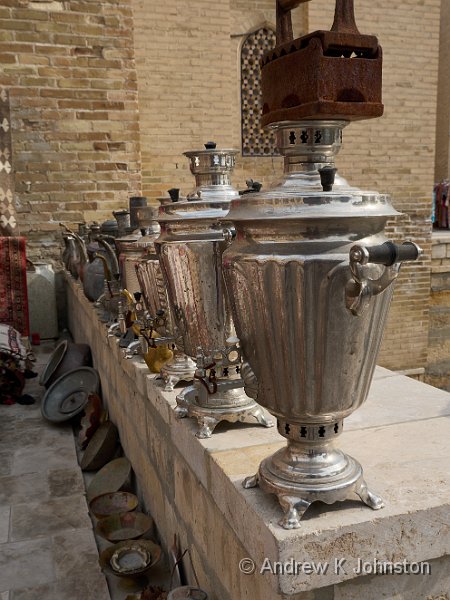
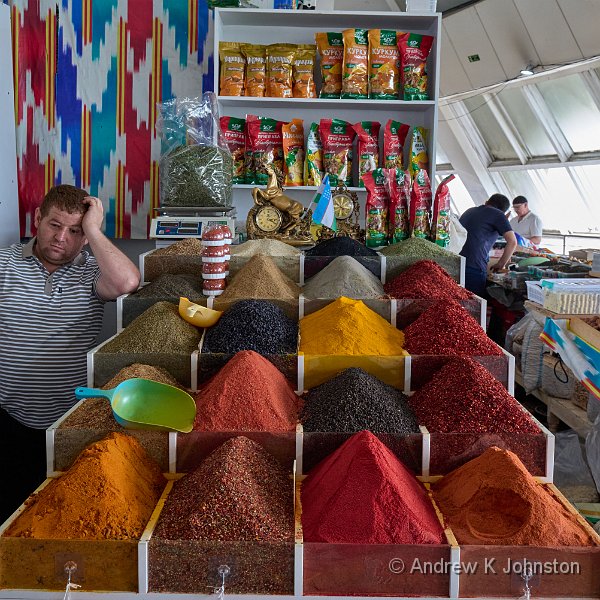
Bukhara bazaar display (Show Details)

One thing which is really heart-warming is to see even quite small children playing in the street, running errands, interacting with adults, just being allowed to BE, not locked away somewhere with only a screen for company. In Khiva there was one particular little girl of maybe 5 in a pink dress who we saw all over the city and on the route down to our hotel, usually carrying a bag of stuff with a determined expression on her face. Her mother obviously keeps her busy when she’s off school running little errands, but I suspect it’s growing a sense of self-reliance which will be valuable later. If I have to guess which environment will create the more capable young adults, it won’t be ours.
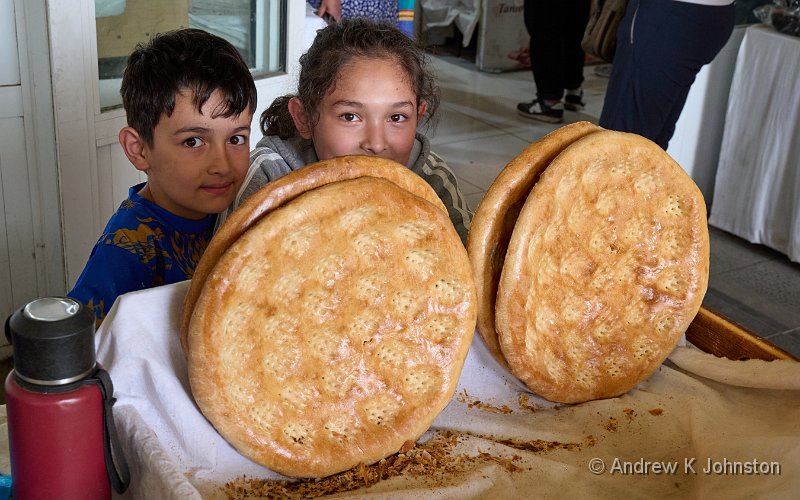
Chorsu Bazaar
(Show Details)

Money

Hotels, larger shops and restaurants may take cards, and things like hotel laundry might be quoted and paid for in dollars, but in practice you’ll pay for most things in the local currency, the Som. Like many Asian currencies, it has a very high exchange rate to major Western currencies. There’s the normal daily variation in those rates, but as of mid-2026 they are suspiciously convenient at almost exactly 12,000 Soms to the $1, 14,000 to €1 and 16,000 to £1.

The maths isn’t too bad, but do count the zeros. The largest note is common circulation is 100 000 Soms, which is about £6 / $8. As always, try and keep a collection of smaller notes for low-value interactions, as some vendors may struggle to make change. At one point I purchased a 7 000 Som bottle of coke and proffered a 10 000 Som note, but the lady only had two 1 000 notes in her till. Rather than a load of shrapnel I got a couple of packets of sugar in lieu of the remainder. One suspects Uzbekistan is a year or two away from copying Mongolia and just getting rid of three of the noughts by moving to something like a "kSom" base unit.

You must change foreign currency at an official exchange. Unofficial exchanges are frowned upon and potentially attract significant punishments, but there’s no evidence of a "dual rate" arrangement, so you might as well follow the rules. As well as banks, there are usually booths in larger hotels, but also ATMs into which you can feed well-known western currencies and receive Soms back.

Effort, Safety and Security

At least in tourist areas, there really is no issue regarding personal safety and security. I never felt that there was anyone eyeing up me or my possessions, and, packets of sugar as small change notwithstanding, everyone with whom I interacted financially was scrupulously honest and accurate. There are no gangs of young men on street corners – they are appear to be gainfully employed. Road traffic is very careful around pedestrians, and drivers usually give way if you’re trying to cross the road. The centres of Bukhara and Khiva are pedestrianised. I got the impression that the female members of our group didn’t feel any more exposed than I did.

One reason for this is the Uzbek Tourist Police. They are a distinct branch of the police force, whose primary role is to ensure the safety and security of visitors to the main tourist locations. They are deliberately visible, both in person and through clearly-marked cameras. The upshot is a feeling of absolute personal security when wandering around tourist centres, and a clear point of contact for any services. At one stage our we discovered a card left by a previous user of an ATM, and less than 100m away was the obvious place to hand it in. It was also the Tourist Police who give me a chance to use my carefully-practiced "Wa’alaikum Assalam", most interactions being rather less formal!
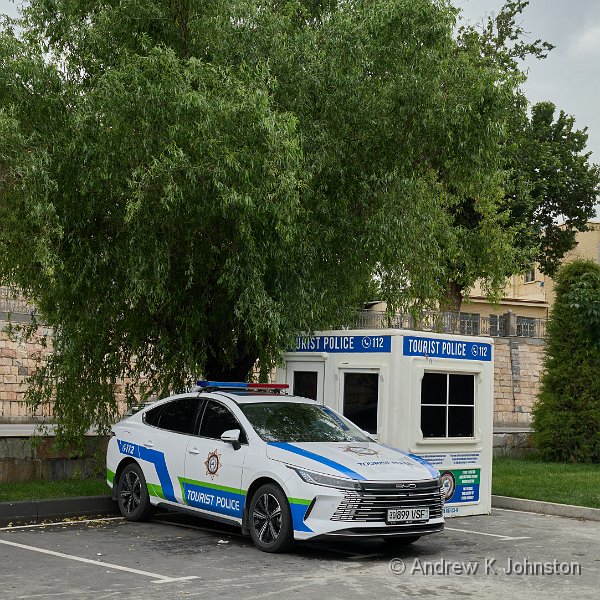
The Tourist Police (Show Details)

You do need to carry your passport and most of your cash with you. The passport is a legal requirement, and there may be a fine if you can’t produce it. Most hotels don’t have in-room safes, so the bulk of cash is probably safest on your person.

At a practical level, you will do a lot of walking. I recorded an average 14k steps a day. Most walking is on good surfaces but there are occasional steep steps, especially up to the fortifications in Bukhara and Khiva. Handrails and guard rails are provided on an intermittent basis, so watch yourself around edges.

Communications

Most of our hotels offered good, free Wifi, although the service was occasionally slow or limited to core web-browsing services. The same was true of some restaurants, and areas like the airport lounge.

If you want to maintain connectivity the best option is to purchase a local SIM on arrival in the baggage hall of Tashkent airport. These are cheap (£6 for 100GB and unlimited local calls & texts) and registration takes only a few minutes, with none of the complexity often imposed. Once loaded into my phone I was rarely without connectivity, and most of the time I had a strong 5G connection. Several times I ended up using my phone as a hotspot in preference to the hotel Wifi.

If your phone doesn’t support dual SIMs then eSIMs are another option, and seem to work fairly well, but I didn’t try that personally.

Food and Drink

Food has a lot in common with Eastern Mediterranean and Persian fare. The default meat dish is shashlik: a kebab of pieces of chicken or lamb, occasionally beef. The food is not highly spiced, allowing one to enjoy the taste of the main ingredients. Uzbek lamb is rightly praised, up alongside the best from Wales or New Zealand, and it would be a shame to smother it in chilli or similar.

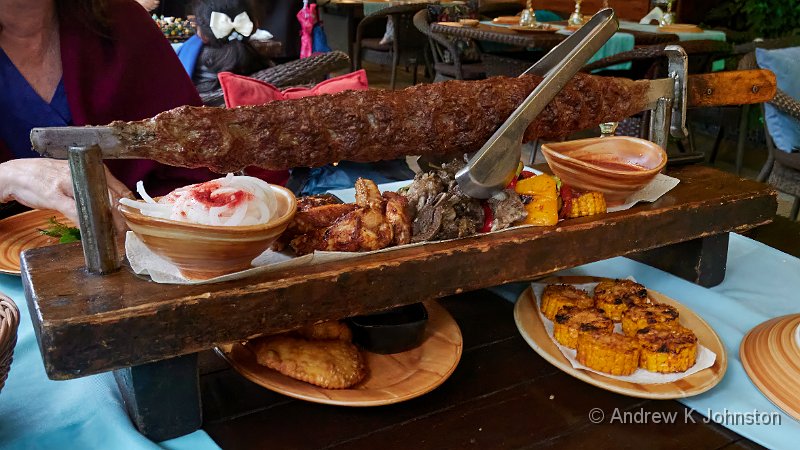
If you order an explicit meat dish then beware that the portion is likely to be substantial (albeit nowhere near the bonkers level in Mongolia). In one restaurant I made the mistake of ordering "Khan’s Sword (small"). They also do a large one!
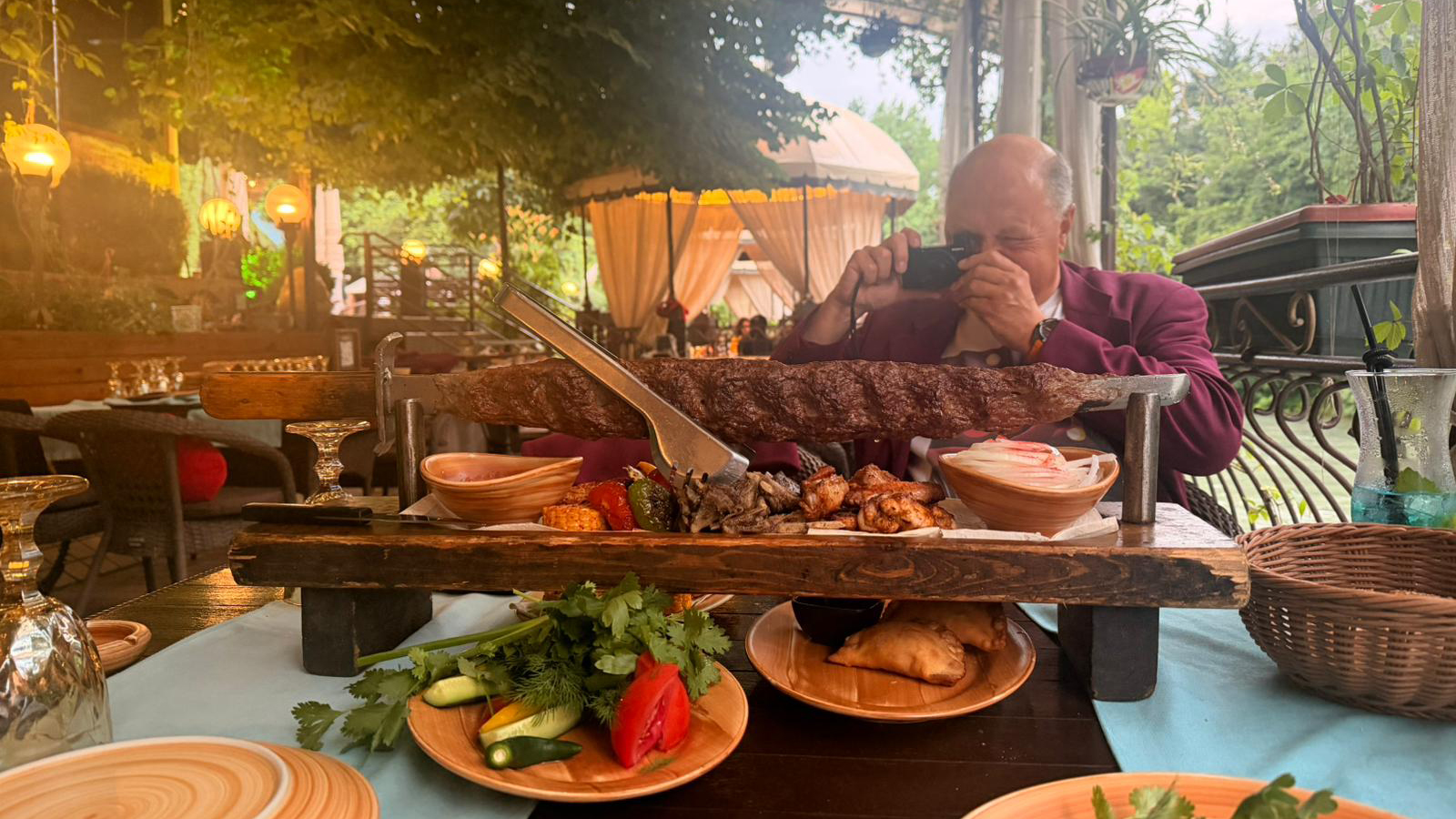
Khan’s Sword (Small) . They also do a large one! (Show Details)

The undisputed national dish is plov (sometimes "pilov"). This is often described as "a slow-cooked feast of rice, meat, carrots, and onions". However in contrast to ordering a meat dish, the couple of times I had plov it was almost entirely rice and vegetables, with little sign of meat. Whether excellent or disappointing the food as served rarely bears much resemblance to the stock pictures in the menus, especially regarding accompaniments.

There are some delightful vegetable dishes: I particularly liked baklajon salat (Uzbek crispy fried aubergine salad). There are also usually a range of uncooked salads on offer, but a few days into the trip I had a touch of tummy trouble and went on the "Bottle & Burger Diet"™ (don’t drink anything which didn’t come out of a bottle, don’t eat anything which hasn’t just been cooked), so from that point on salads were of only academic interest to me.

Each region has its own distinctive bread, or non. The loaves are torn apart rather than cut with a knife, and you have to honour the bread by, for example, not putting it upside down. With apologies to the other cities, the Tashkent bread featured above is delicious, light, and easily the best!

Obtaining drinks can be entertaining. Beer is straightforward – the main local beer is Sarbast, brewed by on offshoot of Carlsberg, and I can highly recommend it. Wine is more of a challenge. On one occasion we were given "French Wine" – literally that’s almost all it said on the label, in a spirit of "get the problem out of the way in the title". Most of the rest of the time we had a locally-bottled Merlot, easily recognised by the large red "Me" on the label.

One evening we’d had our usual four beers, and decide to also get a bottle of wine. We tackled the young waiter, and said "can we please see the wine list". He disappeared off for several minutes, and then turned up and proudly announced "we have red wine, and we have white wine"! Suspecting we were not going to get any more information we sent off for a bottle of red wine. Fortunately it was the "Me" merlot, perfectly drinkable but obviously the concept of grapes and vineyards seemed to be bypassing our hosts. (In fairness, most are Muslim, so it’s not of direct interest to them.)

The "secular but Muslim" reality also tripped us up another way. The last few days of our trip coincided with the Eid al-Adha (Jacob’s Sacrifice) Festival, which takes place over four days in Uzbekistan. This affects food and drink availability in two ways: it takes people out of the supply chain (e.g. all the closed restaurants on our drive to Khiva), but it also reinserts them on the consumer side. By the last day we could see clear evidence of digging deeply into food and drink reserves. Our supposedly top restaurant for the last group meal had waiters circulating with a printed list of "what’s off", including, for example, the whole page of soups except broccoli and lentil (yeuch). It wasn’t a disaster, but might be worth avoiding the long festivals if you have a choice.

With the exception of a few posh restaurants in Tashkent money goes a long way. In a typical restaurant serving tourists and locals a main course is around £5 and a beer £3. In shops focusing mainly on locals prices are even lower, e.g. about £0.40 for a bottle of coke.

Weather and Clothing

Tourists usually visit Uzbekistan in late Spring or early Autumn. The middle of summer can be uncomfortably hot, and the winters are very cold, witness the sheepskin hats on sale, and the heavy-duty coats at the fashion show.
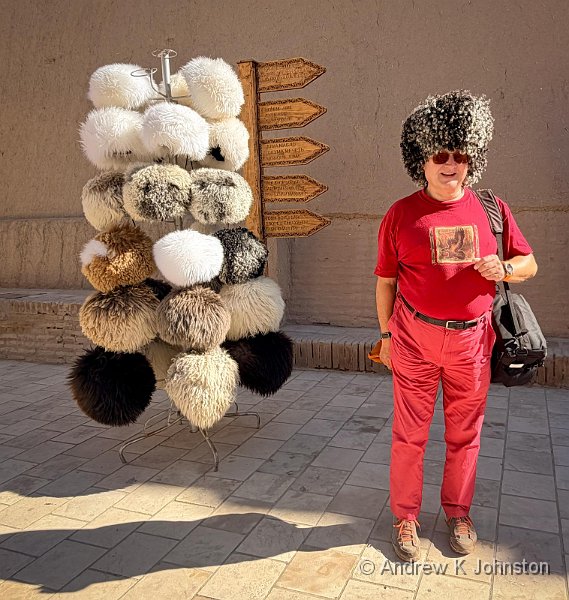
Winter Hat Testing in 30C (Show Details)

I worked on the basis that it would be "shorts and T-shirt" weather similar to the average in a British summer. The T-shirts were fine, but the shorts never came out of the case. The first reason was that Tashkent and Samarkand simply weren’t warm enough – for the first couple of evenings I wore the jacket I’d worn to travel in and was grateful for it. The other reason is that many of the religious monuments have a dress code, and for men T-shirts are OK, but shorts and singlets are not.

Ideally, prepare for rain by carrying a pack-a-mac or similar. We arrived in Samarkand about half an hour before a storm which dumped 29mm of rain, about half an average month’s worth, in 45 minutes. Our guide tried to say it wasn’t typical, but the well-engineered storm drains on the roads and around buildings suggested otherwise. Fortunately we were rescued by an itinerant plastic mac salesman:
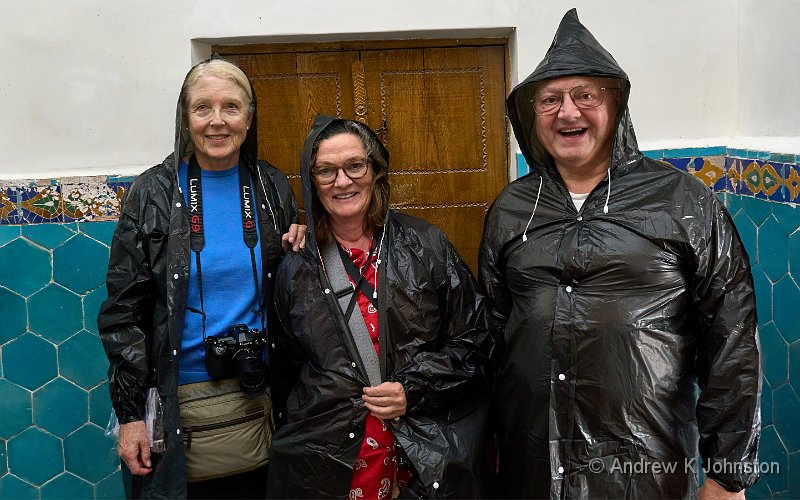
Plastic Mac Sales Are Up! (Show Details)

Summary

Uzbekistan is a safe, welcoming destination with a lot to photograph. It combines a predominantly young, enthusiastic and helpful population with some beautiful historical monuments. It should be possible to visit under your own steam, but the services of a guide will help you get the best from your visit. Highly recommended.
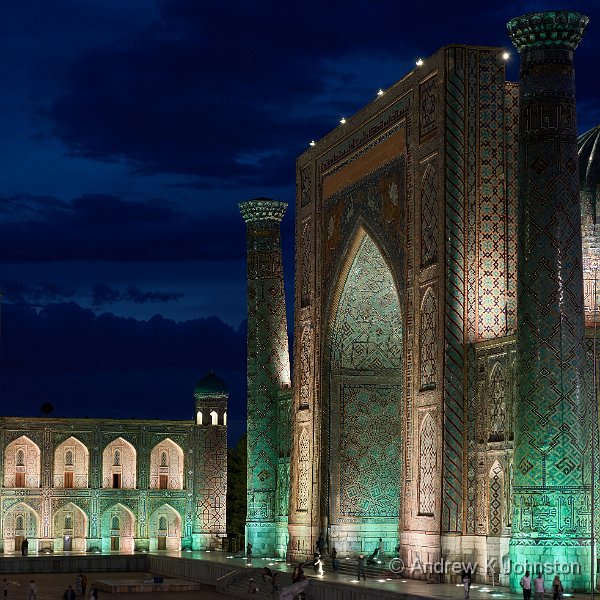
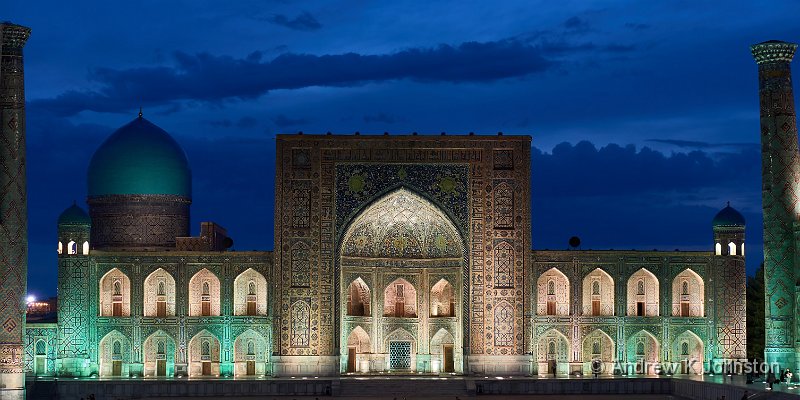
Registan Square (Show Details)
View featured image in Album
Posted in Photography, Travel, Uzbekistan Travel Blog | Leave a comment

The World’s Worst Panorama 2026

The World's Worst Panorama 2026
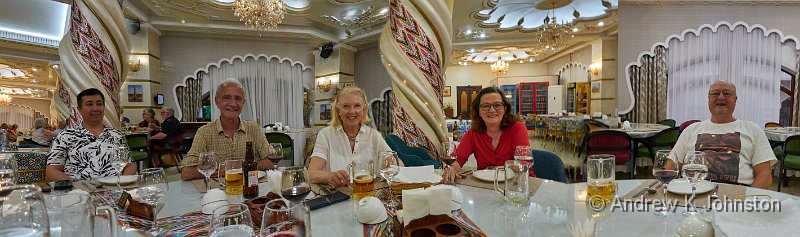
Camera: SONY DSC-RX100M7 | Date: 29-05-2026 19:43 | Resolution: 11364 x 3360 | ISO: 320 | Exp. bias: -0.3 EV | Exp. Time: 1/30s | Aperture: 2.8 | Focal Length: 9.0mm (~24.0mm)

Here’s the usual “Group Panorama”. Left to right: Ganisher, Mehmet, Ingrid, Charlotte, myself.

It was a bit tricky to stitch because of the extreme background changes shot to shot around such a small table, and something happened to the settings half-way round the table so Charlotte is a wee bit blurry!

However I think it still works, as long as you don’t inspect the wine glasses too carefully…

View featured image in Album
Posted in Travel, Uzbekistan Travel Blog | Leave a comment

The Voyage Home

Pedestrian Subway Tashkent
Camera: Panasonic DC-S5 | Date: 29-05-2026 17:02 | Resolution: 6523 x 4077 | ISO: 2500 | Exp. bias: -66/100 EV | Exp. Time: 1/60s | Aperture: 8.0 | Focal Length: 14.0mm | Location: Lotte City Hotel Tashkent Palace | State/Province: Aktepa, Tashkent | See map | Lens: LUMIX S 14-28/F4-5.6

Day 1

We have another moderately early start, as we have to catch a plane back to Tashkent. The staff of the Hotel Bankir once again prove that while the hotel may not have the best-designed rooms, it has a really excellent staff. They go the extra mile by opening up breakfast nearly an hour early so we can travel adequately fed. We then squander this benefit slightly by getting our wires crossed about departure time, and I’m sitting drinking coffee when Mehmet starts sending the "where are you all, we need to go" WhatsApps.

Check-in at the airport is remarkably easy, with most of the formalities being handled on our behalf by Ganisher, and no complexities around extra baggage fees like in Mongolia. The good news: it’s dramatically faster than the 2+ days we spent doing the outbound journey by train and minibus. The bad news: it still takes almost 4 hours, not because of the flying time but because the plane also stops at Bukhara, and the process of disembarking some passengers and then boarding a few more is interminable. There are no refreshments, and we could really do with a coffee when we arrive.

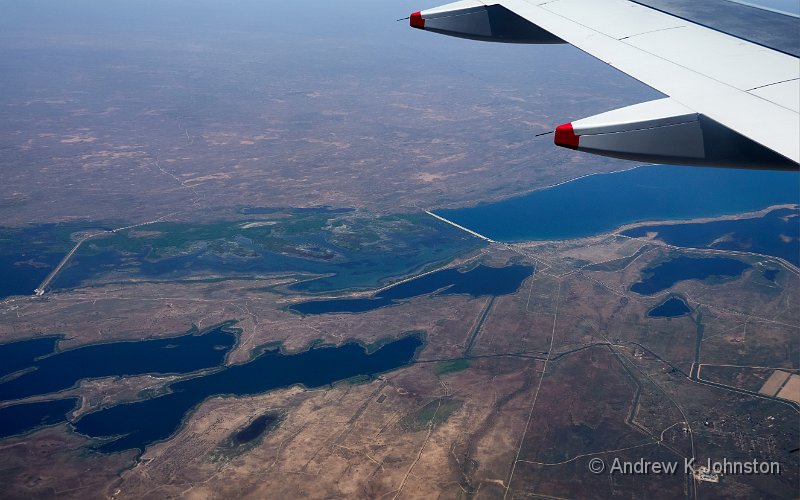
On the leg from Bukhara to Tashkent we fly relatively low, in almost cloudless conditions. Much of the terrain is no more noteworthy from the air than from the roads, but there is one exception, the man-made Aydar-Arnasay system of lakes, a Soviet-era reservoir arrangement. Some are so shallow that from the air you can see distinct colour bands highlighting features in the lake bottoms.

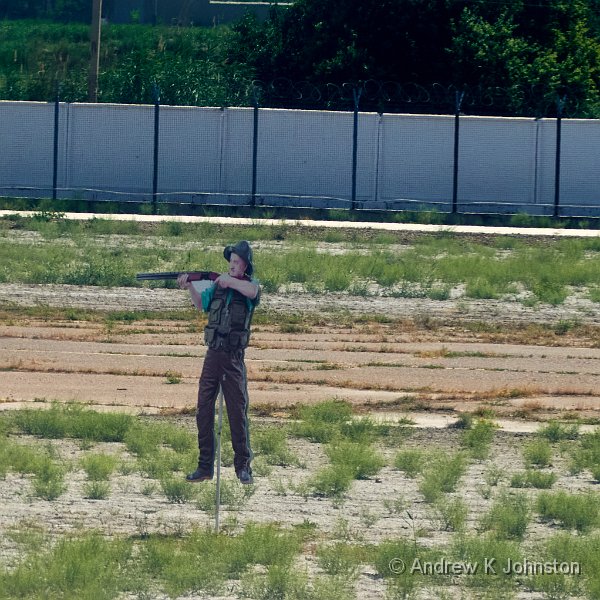
Scarecrow at Bukhara Airport (Show Details)

Aydar-Arnasay from the air (Show Details)

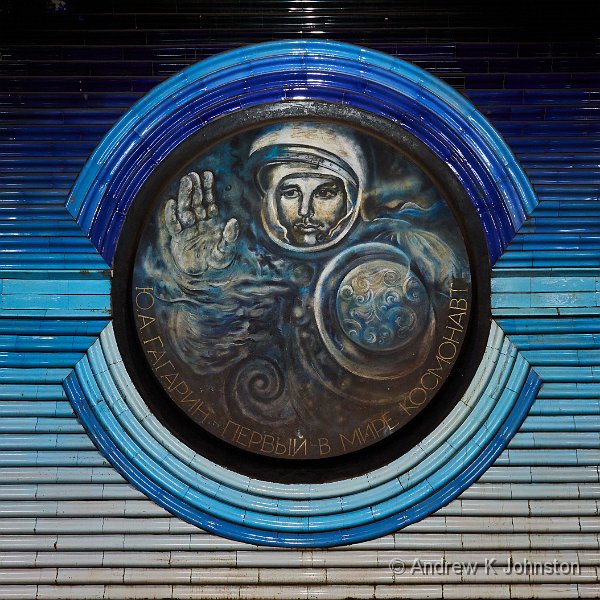
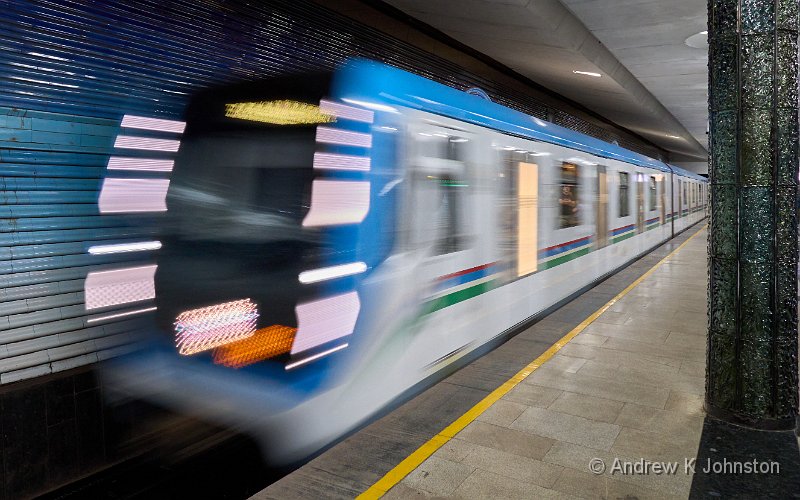
We grab a bite on the way from the airport, check into our hotel (the Excellent Lotte Palace, again), and then head out to photograph the Tashkent Metro. This, like its counterparts in other Soviet cities, is a magnificent, well-decorated tribute to Soviet and Uzbek excellence. We start at Kosmonavtlar (Cosmonauts) station, decorated with images of famous figures in Russian and joint space exploration, and then travel on to Alisher Navoi, named and decorated in honour of a famous Uzbek poet. On the way back we split up, and I spend a happy half an hour chilling with a latte in the park opposite the hotel.

Kosmonavtlar Metro Station (Show Details)

Kosmonavtlar Metro Station (Show Details)

For dinner we have booked into a smart and supposedly posh Turkish restaurant above the new Zarafshan shopping centre. The décor is excellent, but it becomes rapidly apparent that food service may be sub-optimal. The waiters are all circulating with two things: a large laminated menu with pictures of their dishes, and a long printed paper list of "what’s off". There’s a purported range of about a dozen soups, but the only ones available are broccoli, and lentil. Yeuch! The meat dishes have a similar shortfall, and I end up with about my third choice, lamb chops. However they are generous, beautifully cooked, and delicious, which provides some mitigation.

The issue seems to be that we are now towards the end of the Eid al-Adha (Jacob’s Sacrifice) Festival, which takes place over four days in Uzbekistan, and clearly digs deep into food and drink reserves. It’s not a disaster, but might be worth avoiding if you have a choice.

Last Supper taken, we head back to the hotel.

Day 2

We have the morning for a leisurely breakfast and repack, and head off to the airport around noon. The formalities are trouble-free, but amazingly bureaucratic. My passport and boarding card are checked four separate times between the check-in desk and the exit from Security, in a couple of cases only a few meters apart.

Once through one of our number slips off to the Business lounge, leaving Mehmet and myself to find a bar with beer and kebabs. Once again Turkish Airlines have a horribly confused "queue" (not really worthy of the name) through their boarding process, but at least I get on and get my baggage away without problems.

The flight to Istanbul is smooth, but has to be the hottest & sweatiest I have ever experienced. Ladies are all fanning themselves, other large men literally radiate heat as you get within a few feet of them. Either the air conditioning is not working or the cabin crew simply can’t be bothered to set it properly – I certainly don’t hear any apology.

On arrival there is the same lengthy walk and the same confused arrangement re transfer gates as on my flight back from Mongolia. I completely bypassed this complexity on the way out from London. (I have a suspicion, yet to be confirmed, that that is because Turkey and the UK have a visa-free travel arrangement, part of which was "and no two-mile walk to the transfer gates". If so, well done to whoever agreed it.)

My first stop is a Costa, where I am able to purchase an Efes beer. That’s an excellent innovation even if it does cost €15! Welcome back to Istanbul Grand Airport.

My layover is 12 hours, so after a short wander around the "retail opportunities" I get yet another kebab and beer (about ten times the cost of lunch), and then head off to try and get some sleep.

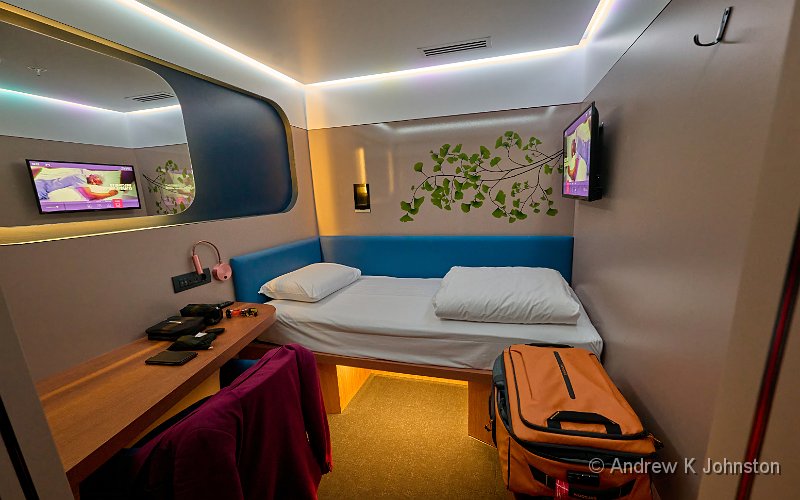
After the disappointment of the lounge, I have splurged slightly over £200 on 8 hours in a "sleep cabin" within the airside Yotel. The sleep cabins (not to be confused with the "sleep pods" which are suspiciously like temporary-use coffins) are single rooms with a proper bed, but linked to a shared bathroom area. Let’s see how this works…

Istanbul Airport sleep cabin (Show Details)

Day 3

The sleep cabin is a fully-ledged hotel room, just small and not en-suite. I get to bed quickly, but take a bit of time to nod off, due mainly to a mattress and pillow which probably qualify as construction materials. However I eventually get several hours reasonable sleep. When I wake up the display on my Fitbit says 5.30am, exactly as I planned. I get a towel from the reception area, and head off for a shower. While the shared bathroom area is not ideal, it’s kept clean and well stocked, and I don’t have any real complaint.

Back in the sleep cabin, I start thinking about moving off, but glance at the TV which has come on for some unexplained reason. The corner of the screen is a clock showing just before 4am. 4AM? WTF? A quick scan of available timepieces reveals that the TV and my watch are in agreement, whereas my Fitbit is still on Tashkent time. Bugger. Back to fitful sleep for another two hours…

Note to Tissot: the T-Touch Expert Solar is almost the perfect travel watch. So why, oh why, did you not make the outer dial markings and hands luminous?

Note to Yotel: if you’re going to charge £200 for a few hours, you could at least provide a clock…

Ominously, the gate for my flight will be announced two hours ahead of departure, so I steel myself for a walk the length of the whole airport (tick), and a long queue (tick). The queue is not actually that deep, but the process is very slow and bureaucratic, with no fewer than 3 separate checks of my passport and boarding bass within about 3m. I’m puzzled why they need the duplicate checks, but then observe someone who has tried to jump the queue and skip one of the steps being escorted back out into the hallway to queue again. One can’t help thinking that a proper queuing system with barriers outside the gate, plus all the document checks being done once, fully, before entry into the gate, might be a better solution?

Flight, arrival at Gatwick and taxi home are uneventful. As Ole’ Blue Eyes sang "it’s nice to go travelling, but it’s nice to come home".

Yes, the travel has been hard work, and I’m certainly no fan of Istanbul Airport, but otherwise it’s been a thoroughly enjoyable and very successful trip. I’ll take full stock of it in the next post.

Andrew in Mono (Show Details)
View featured image in Album
Posted in Travel, Uzbekistan Travel Blog | Leave a comment

We have red wine, and we have white wine

Mosque in Khiwa Shahri
Camera: Panasonic DC-S5 | Date: 28-05-2026 05:56 | Resolution: 4151 x 5534 | ISO: 100 | Exp. bias: -33/100 EV | Exp. Time: 1/60s | Aperture: 8.0 | Focal Length: 14.0mm | Location: Khiwa Shahri | State/Province: Khiva, Xorazm Region | See map | Lens: LUMIX S 14-28/F4-5.6

As in Bukhara, our hotel in Khiva is a few minutes’ walk from the historical centre, but it’s still a 4am start to try and shoot at blue hour. However on this occasion we really could have had an extra half an hour in bed, as it turns out they don’t light the buildings in the morning.

Mehmet does his usual positive tour leader thing and tries to find subjects which can be shot in almost total darkness, but I’m not buying it. Is there a special "photo tour leader course" where they learn how if you turn up and your subject has been buried under concrete and there’s a hailstorm they suggest "why don’t you try capturing the graceful arcs of the hailstones hitting the concrete"?

Khiwa Shahri (Show Details)

Fortunately there is a bit of security and street lighting and I’m free to safely wander the streets for a while until the sun comes up. Once the buildings are naturally illuminated everything changes. We get some great shots, including a nice old street cleaning lady who happily poses for a small tip, and a mosque illuminated by the sun, but where I’m ideally positioned so that my shadow, and those of things around me, form part of a dramatic composition.

Khiwa Shahri (Show Details)

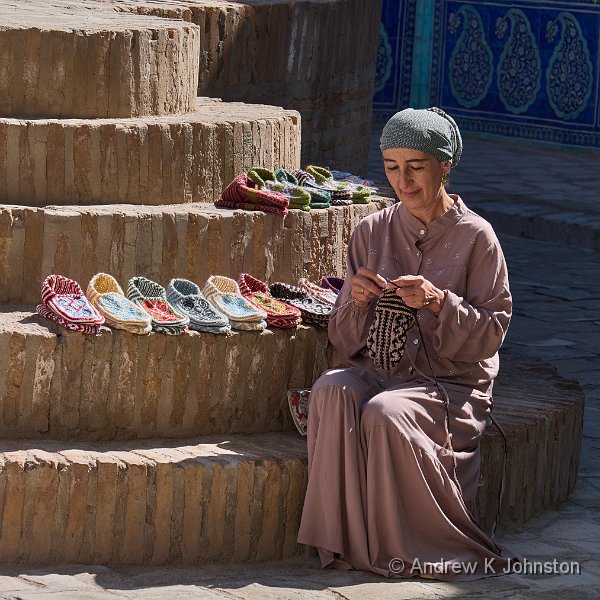
After breakfast there’s considerably more activity. I try on one of the local hats, which is designed for the depths of an Uzbek winter which is allegedly colder than Iceland, but not ideal headwear in over 30C. We explore an old mosque and the Sultan’s palace, where we encounter a lady selling shoes, who is just in a perfect setting and light.

Winter Hat Testing in 30C (Show Details)

The Museum Attendant (Show Details)

One thing which is really heart-warming is to see even quite small children playing in the street, running errands, interacting with adults, just being allowed to BE, not locked away somewhere with only a screen for company. There’s one particular little girl of maybe 5 in a pink dress who we see all over the city and on the route down to our hotel, usually carrying a bag of stuff with a determined expression on her face. Her mother obviously keeps her busy when she’s off school running little errands, but I suspect it’s growing a sense of self-reliance which will be valuable later. If I have to guess which environment will create the more capable young adults, it won’t be ours.

Khiwa Shahri (Show Details)

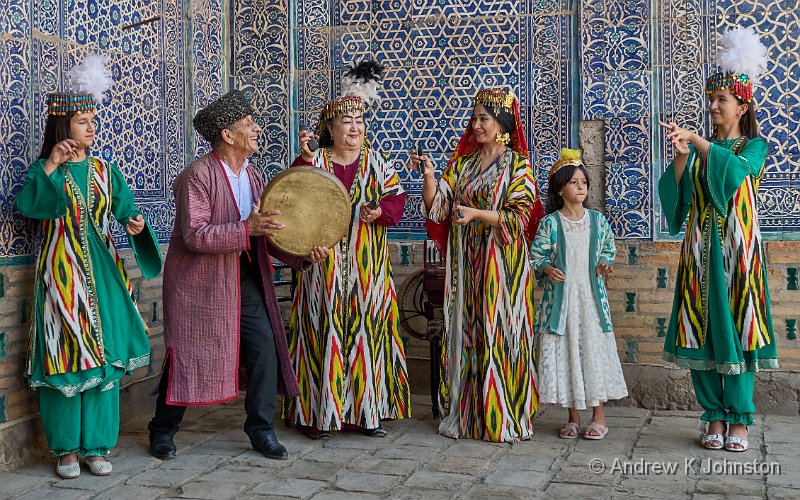
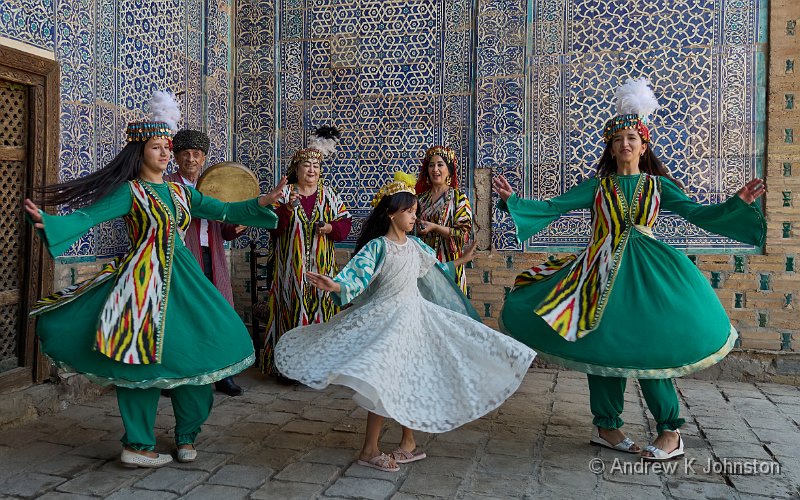
After lunch we go to yet another cultural show. This is very different to the others – it’s a group formed by three generations of the same family, who perform traditional music and dances. It’s much easier to photograph, as we’ve commissioned the performance so we have the best seats, we’re straight on to the performers with a beautiful background, and there’s enough light to capture the movement at a chosen shutter speed. There’s less variety than the other shows, but I still take quite a few shots in the hope of securing particularly photogenic moments.

Khiva Dance Show (Show Details)

Dinner is taken at what is supposedly one of Khiva’s best restaurants. Our guide keenly points out the smartly dressed woman a few tables away who owns the restaurant and many others in Khiva. He’s ordered ahead for us, including the "house special".

Drinks are entertaining. Our usual four local beers to start turn up without a problem, but we decide to also get a bottle of wine. We tackle the young waiter, and say "can we please see the wine list". He disappears off for several minutes, and then turns up and proudly announces "we have red wine, and we have white wine"! Suspecting we’re not going to get any more information we send off for a bottle of red wine. Fortunately it’s the same locally-bottled merlot we’ve been drinking all week, but the concept of grapes and vineyards seem to be bypassing our hosts. (In fairness, most are Muslim, so it’s not of direct interest to them.)

Starter out of the way the house special arrives. My immediate summary is "sausage in a pancake". I am chided that this is being unfair to the local cuisine, and I reframe it as "kofta in a pancake", but after everyone has had a couple of bites my initial assessment is widely accepted. Perfectly acceptable, but maybe not quite as expected.

Early start tomorrow, back to Tashkent.

Khiva Dance Show (Show Details)
View featured image in Album
Posted in Travel, Uzbekistan Travel Blog | Leave a comment

Quick, Quick, Slow

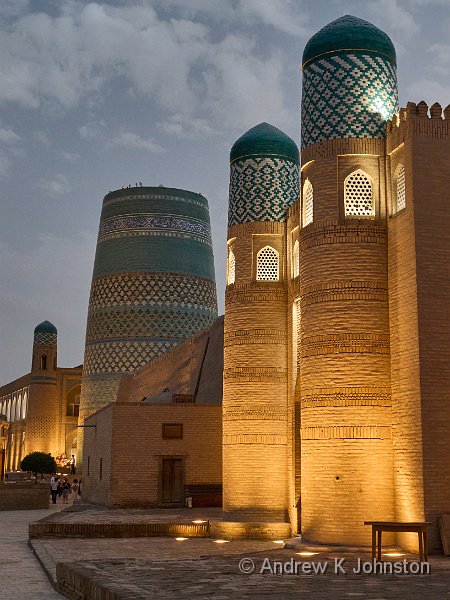
Khiva after sunset
Camera: Panasonic DC-G9M2 | Date: 27-05-2026 20:33 | Resolution: 5565 x 3131 | ISO: 1600 | Exp. bias: -33/100 EV | Exp. Time: 1/15s | Aperture: 8.0 | Focal Length: 15.0mm (~32.0mm) | Location: Khiwa Shahri | State/Province: Khiva, Xorazm Region | See map | Lens: LUMIX G VARIO 12-35/F2.8II
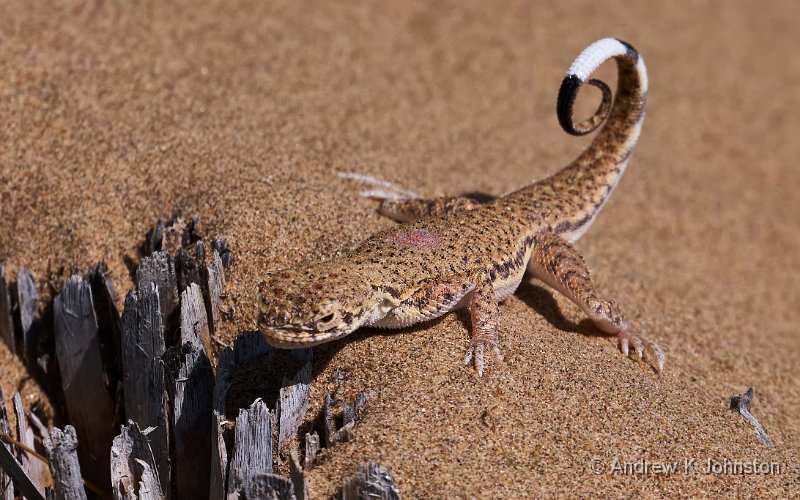
After a calm night and a slightly more relaxed start we set out on 480km drive from Bukhara to Khiva. The first 400km or so pass very quickly and smoothly on an excellent highway, noticeably newer and in better condition than that from Samarkand. We do have to stop for some goats crossing, and also investigate a series of sand-traps used to help keep the road clear, at which I spot an interesting little lizard. However after the coffee stop things almost literally fall apart.

Don’t try this on the M25! (Show Details)

Interesting little lizard (Show Details)

The plan for lunch fails as all the roadside restaurants are shut due to a bank holiday. However as I have probably eaten a whole sheep so far this week there’s no immediate risk of starvation! At the same time we reach the end of the good road, and revert to a bumpy single carriageway.

I’m following our progress on the map and am expecting our route to follow the main road through Urgench, over the river on the big bridge, and into Khiva. Instead, for reasons never entirely explained our driver decides to turn off the highway and take a minor road. This descends rapidly from road to cart track with passing places. The bridge over the large river has a toll, jury-rigged width restrictors, and turns out to be a series of pontoons, some of which have seen better days, with the joins covered by steel sheets. Our driver admits he has never previously used that route! I have been following on the map, and I predicted a very minor road, but not the pontoon bridge.

Pontoon bridge construction details
(Show Details)

We find a supermarket doing a roaring trade due to being the only one open for miles around. Bank Holiday Uzbek cuisine: Lays crisps (US), Bounty bar (Birmingham), Banana (somewhere tropical) & Uzbek beer (brewed by Czechs). Oh well, more lamb tonight!

We eventually reach Khiva, although not without some further diversions as like the other cities it’s undergoing massive construction. Total of almost 8 hours on the road, including only three short stops amounting to maybe 1 hour. I may be unimpressed by Amit’s map-reading, but his endurance is impressive!

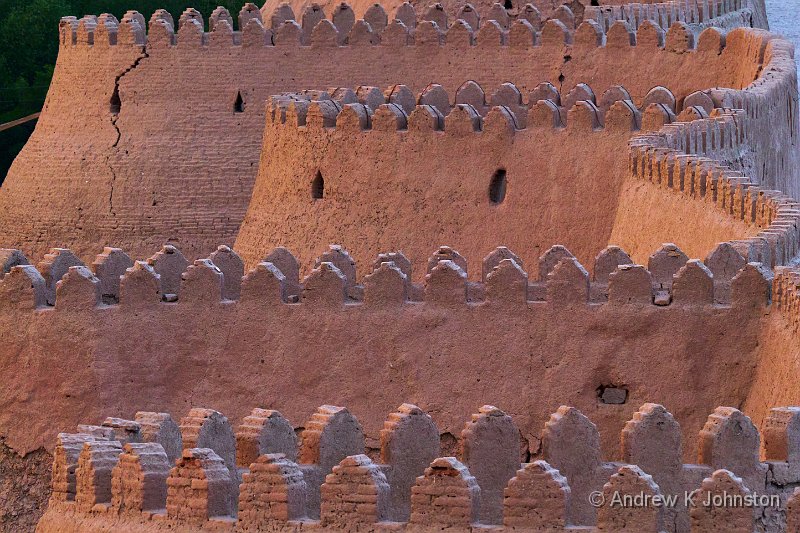
After a short pause we gather for dinner (lamb, now there’s a surprise) and then climb up the observation tower to take photos of the wonderfully serpentine walls of the old fort at sunset. We are almost stymied by rainclouds (and a couple of short showers), but our luck holds out and for about 20 minutes before sunset the sun shines below the clouds and bathes the walls in great light.

Khiva fortress walls at sunset (Show Details)

We’re in a new boutique hotel (the Bankir Khiva) which Mehmet has not previously used. This has made an odd design choice – rooms of a reasonable size, but each is almost completely filled by the most enormous (expletive deleted) huge bed I have ever seen, leaving effectively no room for fripperies like, for example, luggage. Also my room opens onto the car park – noise is not really a problem but the curtains only cover about 50% of the window, so my sleep is regularly interrupted by car lights being turned on. And the bedding is too heavy… This is all a shame as the hotel is well located and staff are friendly and helpful, but more focus on the basics would help.

Khiva after sunset (Show Details)
View featured image in Album
Posted in Travel, Uzbekistan Travel Blog | Leave a comment

Fashionably Early!

Bukhara Fashion Show
Camera: Panasonic DC-G9M2 | Date: 26-05-2026 17:47 | Resolution: 5846 x 3654 | ISO: 160 | Exp. bias: -33/50 EV | Exp. Time: 1/250s | Aperture: 2.8 | Focal Length: 35.0mm (~70.0mm) | Location: Bukhara Fashion Show | State/Province: Bukhara, Bukhara | See map

We have a 3.40 start to walk into historical Bukhara before sunrise. Any initial grumpiness fades rapidly as we realise how beautifully the main buildings are lit. A small courtyard with a dingy green pool becomes a source of fascinating reflections. The main mosque complex is lit in a slowly changing combination of blue, purple and red to set off the dark blue of the aptly-named blue hour sky.

Gokshon Madrassa (Show Details)

Poy Kalan Complex (Show Details)

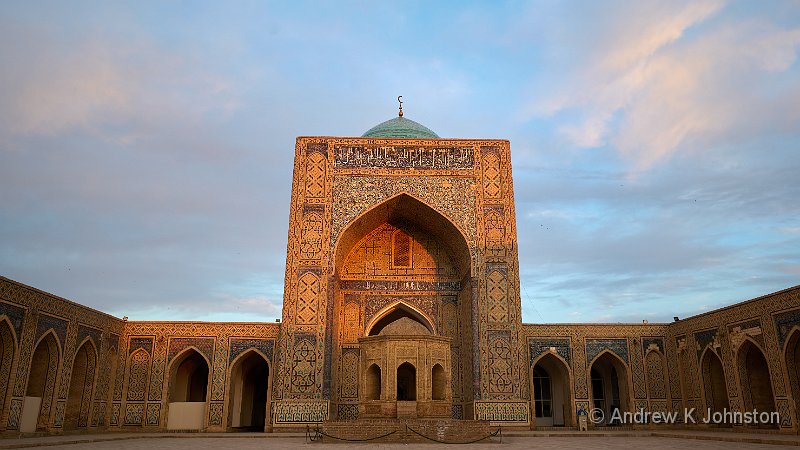
The lights are switched off on the dot of sunrise, but then we can move into the mosque courtyard to capture its buildings in the rich glow of the rising sun.

Poy Kalan Complex (Show Details)

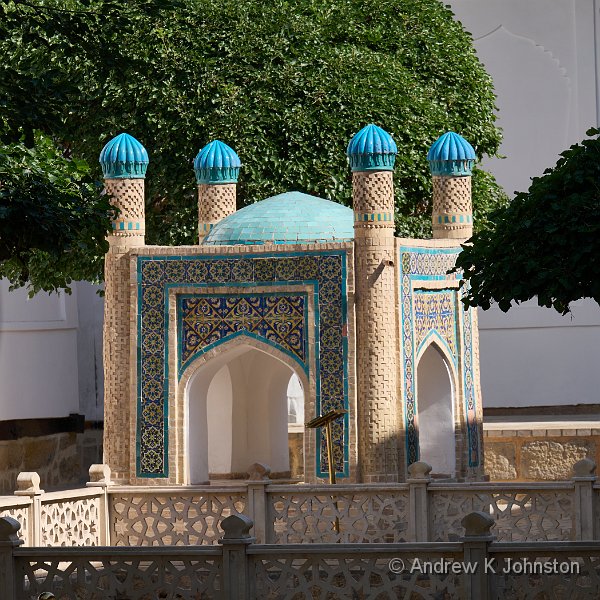
After breakfast we drive out of town to the Mausoleum of Naqshbandi, a famous Islamic teacher. They have his most famous sayings up on posters in various places. As a card-carrying atheist there is one about Allah which don’t really relate to me, but otherwise they all make a lot of sense. Moral guidance aside, his followers have created a calm, aesthetically pleasing space which provides a number of equally pleasing images.

Mausoleum of Naqshbandi (Show Details)

We have a few hours off and a late lunch, then it’s off to the blacksmith’s workshop. One family has run a metalworking business in Bukhara for seven generations. You can browse their sculptures and watch the latest son working, but we’re down for something special. This is a "crowd pleaser" display in which a piece of hot steel is folded, covered in hardening powder, reheated and then hit hard on the anvil creating a massive shower of sparks. Using a suitable combination of wide angle and relatively slow shutter speed, the images are dramatic.

Blacksmith’s Workshop (Show Details)

After the blacksmith we have time for the short cart ride to the Chor Minor Mosque, a tiny mosque with four minarets, then it’s back to the centre for another "culture show". This has a very different character to Marokand: played "cabaret style" in a small courtyard with live music and alternating dances and catwalk fashion show.

Bukhara Fashion Show (Show Details)

The combination of the cabaret setting and the movements particularly in the fashion show segments present an odd focus challenge. Tracking mode with human subject recognition works perfectly as the girls come towards you, but fails immediately the dancers spin or the models turn around, especially if they are wearing unusual-shaped clothes or making odd arm gestures. Then focus flips to a random member of the audience in the background and the girls go out of focus. I spend some time experimenting with different settings, but fail to find a fool-proof set-up. At least I can use my go-to shutter speed of 1/250s to freeze movement "just enough".

In terms of the fashion itself, it’s a fascinating fusion. The shapes owe a lot to traditional Central Asian forms of dress, but thoroughly modernised, and arguably Westernised. However the fabrics, with their bright colours and dramatic geometric patterns featuring stripes and long curves, are very typically Uzbek.

Bukhara Fashion Show (Show Details)

Tally from the fashion show: a mere 1081 images totalling 44GB, and another large memory card filled. At this rate Uzbekistan, which was expected to be mainly monuments and portraits, could generate more than the 300GB from my wildlife shoot in Zimanga!

Bukhara Fashion Show (Show Details)
View featured image in Album
Posted in Travel, Uzbekistan Travel Blog | Leave a comment

Onward to Bukhara

Poy Kalan religious complex, Bukhara
Camera: Panasonic DC-S5 | Date: 25-05-2026 17:54 | Resolution: 6210 x 3881 | ISO: 100 | Exp. bias: -66/100 EV | Exp. Time: 1/400s | Aperture: 9.0 | Focal Length: 14.0mm | Location: Bukhara Market | State/Province: Bukhara, Bukhara | See map | Lens: LUMIX S 14-28/F4-5.6

Our day starts with the long drive from Samarkand to Bukhara. As I now expect, it’s a modern, divided multi-lane highway. There are no craters (so a distinct notch up on Mongolia) although in places the surface has been repaired badly and bouncy progress means I have to abandon typing my blog. The road is open to all traffic, which means fast electric cars mixing with donkey carts. Direction of travel is observed, but not necessarily lane control and it’s a bit disconcerting to see the fast cars and large trucks all moving to the right to pass a donkey cart, or lad on a bike, in what would normally be the "fast" lane.

I am impressed how clean the road is. There are regular roadside bins, clearly both used and reliably emptied. If you look carefully you see the odd abandoned bottle or packet, but none of the dreadful rubbish you usually see roadside in countries both poor and richer.

What is noticeable is the number of abandoned or incomplete roadside services. This looks suspiciously like what happened as Britain’s road network expanded in the 1960s – a large number of people invested in facilities in the hope of a good profit, but the market became saturated, and stabilised only when competition drove out the excess capacity.

Along the way we stop at a caravanserai, think truck stop for 11th century camel trains. This is followed by my making the obligatory Santana purchase from Amazon Music. Yes, it’s still a great album.

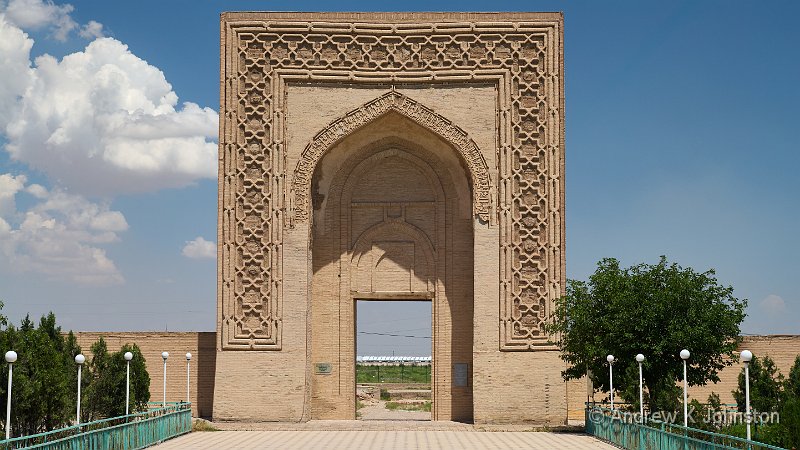
Rabat Malik Caravanserai Portal (Show Details)

On the way into Bukhara Ganisher talks about some of the famous citizens of the city. History teaching has moved on from the position when I was young that nothing much happened to human knowledge between the Romans leaving Britain and the Renaissance. We acknowledge the founding role of Islamic scholarship, but it’s often still vaguely credited to "Arabs" as if it must have happened somewhere around the Mediterranean. Nothing could be further from the truth.

Ibn Sina was a native of Bukhara. He was a pre-eminent physician, who in many ways founded modern medicine. The "cine" in "medicine" comes from his name.

Mathematician Muhammad ibn Musa al-Khwarizmi worked in Bagdhad, in Arabic, but was born in Khiva (our next stop). One of his most famous treatises was "Al-Jabr", from which we get the name for algebra, and his own name became the term we use for systematic solutions to mathematical problems, algorithms.

We get to Bukhara in time for lunch followed by exploration of the historical centre. We see some great market displays, and also get some architectural shots in the old madrassa and mosque. Later on we take an electric cart drive to the fort, and watch sundown over the city, although clouds mean the light isn’t ideal.

Bukhara bazaar display (Show Details)

Bukhara bazaar display (Show Details)

We then descend and rejoin our cart, which takes an interminable back street route to a restaurant situated both walking distance from our hotel, and probably only 5 minutes from the fort. Pedestrianisation of the centre has both upside and downsides!

Bukhara historic centre (Show Details)

Poy Kalan religious complex, Bukhara (Show Details)
View featured image in Album
Posted in Travel, Uzbekistan Travel Blog | Leave a comment

More Mausoleums

Ak-Saray Mausoleum
Camera: Panasonic DC-S5 | Date: 24-05-2026 17:13 | Resolution: 6239 x 3899 | ISO: 6400 | Exp. bias: -66/100 EV | Exp. Time: 1/50s | Aperture: 9.0 | Focal Length: 19.0mm | Location: Ak-Saray Mausoleum | State/Province: Samarkand, Samarqand Region | See map | Lens: LUMIX S 14-28/F4-5.6

We skip the dawn shoot because it’s raining again, albeit not as dramatically as the previous day. I got some stick over dinner from the non-Brits for my use of the BBC Weather App, but they then have to acknowledge it provided the most accurate forecast for the morning, so there!

It is amazing how quickly things dry out here. Even by the previous evening there was little evidence of the biblical conditions at lunchtime, and now even with further rain overnight there’s only the occasional puddle. The excellent draining provided for roads, paths and car parks has quietly done its work and retuned things to normal.

First stop of the day is the Shah-i-Zinda Necropolis, a mausoleum complex built on a hillside reached by a very steep stone staircase. While the individual buildings are not on the same scale as the Amur Timur mausoleum, there are a few with very beautiful decoration, and there’s the added dimension of shooting the spaces between the buildings, especially if you can find a gap with no people, or just locals in local dress.

Shah-i-Zinda Necropolis (Show Details)

Lady cleaning at the Shah-i-Zinda Necropolis (Show Details)

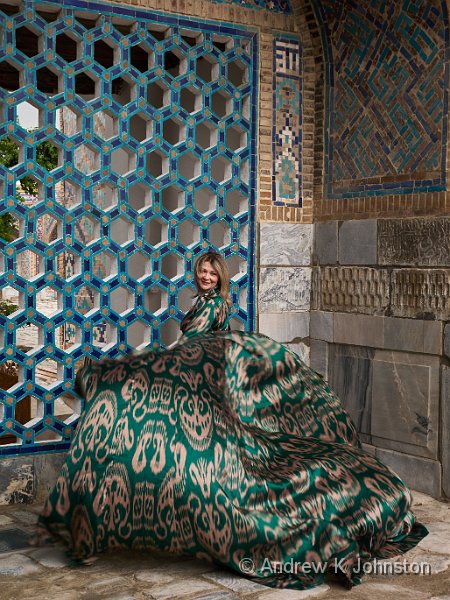
The necropolis explored, we return to Registan Square, and this time enter the square to explore the buildings. Both interiors and exteriors provide a rich source of targets, and I also get a further opportunity to engage in some casual model stealing, with a young lady trying on another of the long-trained dresses, this time in a rich dark green which is again a great match for the buildings’ tiles.

Lady in a green dress (Show Details)

On the way out of the square our attention is stolen by a fairground barker, and we spend 5 minutes watching an impressive performance by a young fakir/strongman/gymnast, whose primary skill appears to be lying on sharp stones while people stand on him.

It’s worth mentioning at this point the Uzbek Tourist Police. This is a distinct branch of the police force, whose primary role is to ensure the safety and security of visitors to the main tourist locations. They are deliberately visible, both in person and through clearly-marked cameras. The upshot is a feeling of absolute personal security when wandering around tourist centres, and a clear point of contact for any services. We discover a card left by a previous user of an ATM, and less than 100m away is the obvious place to hand it in. It’s also the Tourist Police who give me a chance to use my carefully-practiced "Wa’alaikum Assalam", most interactions being rather less formal!

The Tourist Police (Show Details)

We short-cut what would have been a long walk to lunch by taking an electric cart ride through the park. After lunch we get back to the road via a market and I find the perfect t-shirt for the trip, embroidered with the names and best known attractions at the four cities we are visiting. That’s a significant improvement on the wipe-out in Mongolia.

We take a short diversion to Konigil Village, a "heritage village" where they practice a number of crafts including the making of "silk paper" (it’s actually made from the bark of mulberry trees). After that we return to the centre.

When we get back to the complex including Amur Timur’s Mausoleum the buildings are bathed in beautiful golden afternoon light, and we can do proper justice to buildings we previously only saw under dark clouds, or through bucketing rain.

Mausoleum of Tamerlane (Show Details)

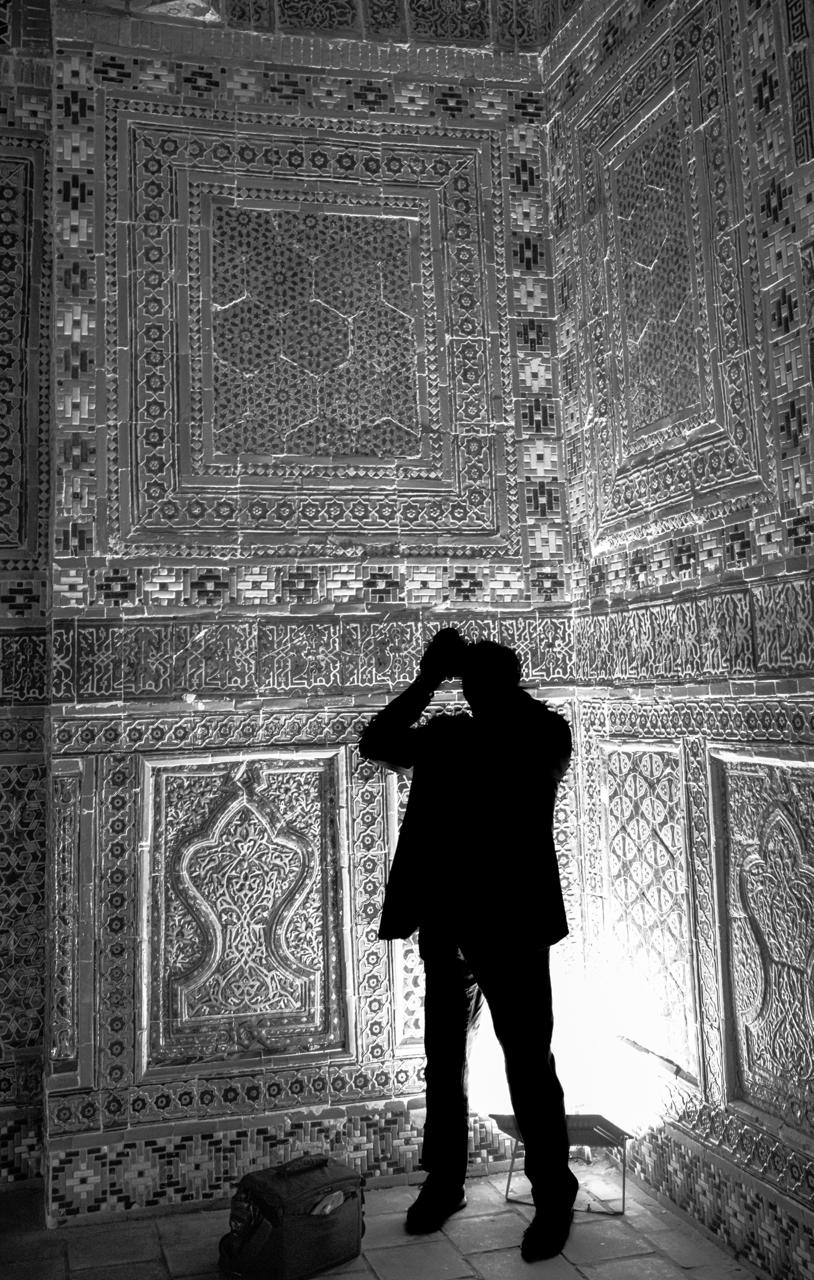
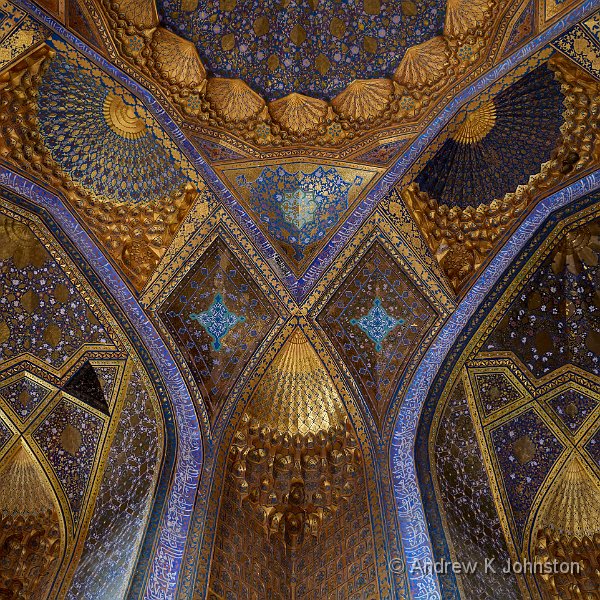
We then wander around the site to the small but wonderful Ak-Saray (White Palace) Mausoleum. We have this jewel to ourselves. The warden is well-organised for photographic visitors, including a thick mat on the floor directly under the apex of the roof, and a small shield he can hold up to help manage flare from beams of sunlight reaching the sides of a wide-angle lens. Unfortunately his well-meaning efforts prove unable to match the lighting conditions we encounter, and we have to press my well-documented width and opacity into service, acting as possibly the largest lens hood in history, but it’s very effective.

Ak-Saray Mausoleum (Show Details)

A longs day’s shooting complete, it’s back to the first restaurant for a well-deserved and now fully-illuminated dinner!

View featured image in Album
Posted in Travel, Uzbekistan Travel Blog | Leave a comment

Train To Samarkand

Amir Timur Mausoleum Complex
Camera: Panasonic DC-G9M2 | Date: 23-05-2026 11:34 | Resolution: 5856 x 3660 | ISO: 1600 | Exp. bias: -33/50 EV | Exp. Time: 1/40s | Aperture: 5.6 | Focal Length: 64.0mm (~133.0mm) | Location: Amir Timur Mausoleum Complex | State/Province: Samarkand, Samarqand Region | See map | Lens: LUMIX G VARIO 35-100/F2.8II

We have an early start to catch the train to Samarkand. The name romantically conjures an elderly steam train, or maybe an elegant Pullman service along the lines of the Orient Express, but of course it’s actually a modern electric "bullet" train. It’s officially called the "high speed train", but the maximum commercial speed of the line is 130mph, only 4mph faster than The Mallard, powered by steam, achieved in 1938. Plus ca change…

The ride is quick and smooth, and by 11am we are in Samarkand. The drive across the city confirms a suspicion about Uzbek drivers. If you listen to an elderly soldier talking about firing an anti-aircraft gun, they say something like "you don’t aim at the plane, you aim at where the plane is going to be". Uzbek drivers use a variant, they don’t aim for where a gap is , they aim for where a space will be. Sometimes it isn’t.

It doesn’t help that the minibus’ seatbelts are clearly regarded as a low-value decoration. Each row of 3 seats only has one belt, and only one of them with a working reel. Brace!

We start at the tomb of Amir Timur (also known as Tamurlane). It’s a rather magnificent edifice both inside and out, but the exterior shots are somewhat marred by the enormous black clouds gathering overhead, which render all the colours a dark grey. A few minutes after we go in the heavens open with a dramatic thunderstorm and borderline monsoon rain.

We therefore spend quite a lot of time photographing the mausoleum interior. Fortunately it’s absolutely spectacular, and rewards both wide views and zooming into the details. I have decided to carry both camera systems, the full-frame one with its high-ISO capability and ultra-wide 14-28mm lens works well for the wider view. In the interests of keeping overall weight down I’m only carrying the ageing and diminutive 45-175mm telephoto lens for the micro four thirds system, but it performs beautifully for the details. It’s not an obvious choice up against the longer lenses, but sometimes, like Goldilocks, it’s "just right".

Amir Timur Mausoleum Complex (Show Details)

Amir Timur Mausoleum Complex (Show Details)

We exhaust the subject matter and emerge into the lobby of the mausoleum. It’s still bucketing rain. There’s a young chap with a handful of plastic macs. I buy one, for 75 000 Soms (about £4.50). Then he realises that he has control of limited supply in a seller’s market, and attempts to put the price for Charlotte and Ingrid up to 100 000! We get him down to 150 000 for two, but seems to be getting the higher price from other visitors. Something about right place at the right time….

Plastic Mac Sales Are Up! (Show Details)

The roads and pavements are all engineered with big storm drains, but the rain has been so heavy and prolonged that they are being overwhelmed, and we drive through deep standing water to lunch. This turns out to be by candle light as the power is out.

Although the weather has settled down, after lunch progress around Samarkand is still impeded by standing water. It takes us an hour to drive a distance we are told could be walked in about 15 mins. However we do get to the hotel and have a chance to settle in before the next adventure.

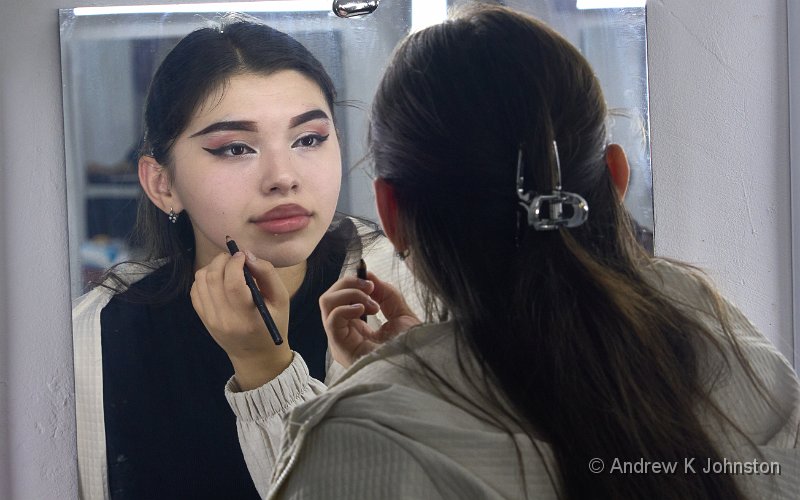
Our guide, Garnisher, is also manager of a recently-revamped theatre, currently being used for a nightly dance show, Marokand, showcasing both the local dance talent, and the culture and history of Samarkand. We have a special back-stage pass and are invited into the room where the female dancers are doing their make-up and hair. The young ladies are remarkably good natured and tolerant of being photographed in such an intimate setting, and we get some great shots. At the end I give a little thank-you speech on behalf of the two older men.

Make-up for Marokand Show (Show Details)

Make-up for Marokand Show (Show Details)

Then we have the show. The dancing and costumes are stunning, and we have front-row VIP seats, and no constraints on photography. Unfortunately there’s a technical challenge: the various backdrops are projected digital video, and all the lighting is LED. This means that the fastest possible shutter speed is 1/60s, otherwise your image contains blotchy, stripy backgrounds and odd lighting effects. 1/60s is not really fast enough to capture dance movements. However you may be lucky and capture a moment where the dancer is momentarily still, or maybe facing forward through a turn so her head is not moving even if the rest is. I leave you to judge how well this works.

Marokand Show (Show Details)

Marokand Show (Show Details)

Between the make-up session and the show I shoot 2104 images, a total of 81GB more than filling one of my fast memory cards. Based on a very quick scan to select the above samples, I’ll probably delete 95% and keep around 100 worth processing. Let’s see.

Finally, as if all that wasn’t enough, we go to Registan Square, one of Samarkand’s classic vistas, for the blue hour. We focus on the view from the road straight down to the three madrassas. There’s little trace now of the apocalyptic earlier weather, and we’re treated to a clear blue sky balancing the well-lit buildings. A great end to an "entertaining" day.

Registan Square (Show Details)

Registan Square (Show Details)
View featured image in Album
Posted in Travel, Uzbekistan Travel Blog | Leave a comment

Very Important, or Very Naughty!

Khast Imam Complex
Camera: Panasonic DC-S5 | Date: 22-05-2026 20:12 | Resolution: 3223 x 3223 | ISO: 3200 | Exp. bias: 0 EV | Exp. Time: 2.0s | Aperture: 22.0 | Focal Length: 14.0mm | Location: Khast Imam Complex | State/Province: Qoraqamish, Tashkent | See map | Lens: LUMIX S 14-28/F4-5.6

Over breakfast I meet Mehmet, the tour leader, and then Ingrid, the final guest in this rather select tour. After breakfast I decide to go out and explore the park in the centre of Tashkent, which isn’t far from our hotel.

Exiting the hotel and walking to the end of the block is uneventful, but then I get caught up in what feels like a major security operation with dozens of police holding the traffic, shouting at people, blowing whistles, marshalling pedestrians and so forth. Of course I don’t have enough common language to be sure what’s going on, but it becomes fairly apparent when an enormous number of police vehicles come through the junction at high speed. Now I’ve seen The Queen drive down The Strand (one Rolls Royce and a couple of police bikes), and when we were in Washington DC we saw President Obama’s motorcade (about 20 vehicles), but this one has that topped. The central characters are either very important, or very naughty, or possibly both! Based on the absence of limousines and presence of a couple of armoured vans I’m tending toward the "naughty" theory. Unfortunately I don’t get photos – when it’s apparent that I’m not going anywhere for a few minutes I take out my camera and long lens, but a very large and stern-looking policeman makes me put it away again…

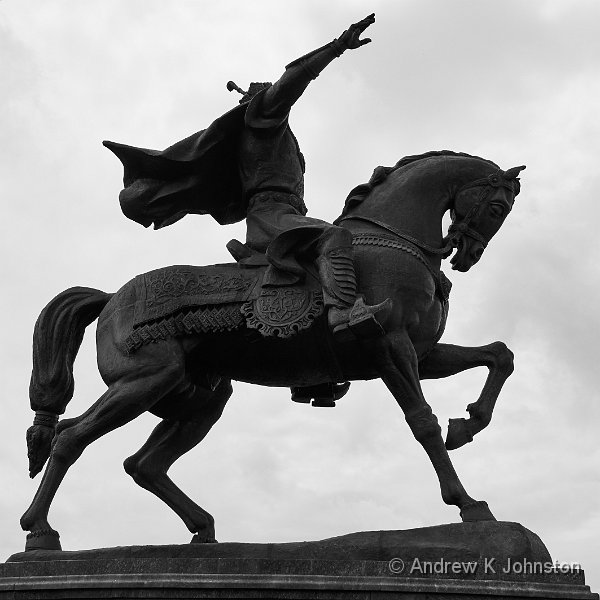
Drama over I wander up to the park, which has at its centre an enormous statue of a bloke on a horse (Amur Timur, distant relative of Ghengis Khan, who’s Wikipeida entry can be summarised as "brutal and deadly patron of the arts"). The park is beautifully laid out and coiffed, and around it are a number of rather spectacular municipal edifices. Tashkent suffered a major earthquake in 1966, and in its wake the Soviets rebuilt with a large number of grandiose structures. The habit appears to have extended into the modern era.

Amir Temur Statue
(Show Details)

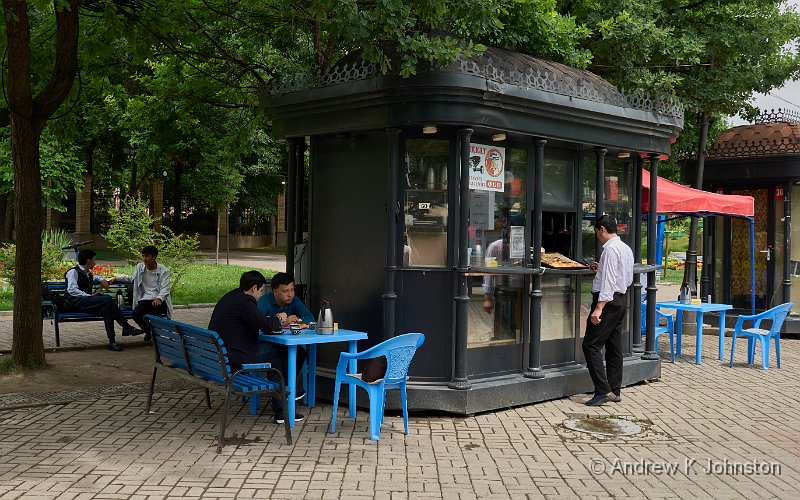
So far my impression of food and drink prices is "quite cheap", but I discover that those are the inflated tourist prices! For lunch I grab a pasty and a bottle of coke from a café in the shopping centre. Total is 20 000 Uzbek Soms, which equates to about £1.20. My cash should go a long way here,

Street Food Kiosk, Sailgokh Street
(Show Details)

Back at the hotel we meet the final member of our party, local guide Ganisher. We head out for an afternoon’s shooting. First stop, the Chorus Bazar, a market area centred around an enormous domed structure. We have a happy hour photographing the fruits, nuts, spices and their vendors, and then a working bakery corner producing the delicious local "Non" bread.

Chorus Bazaar
(Show Details)

Chorus Bazaar
(Show Details)

After that, we head to the Khast Imam religious complex. This is built around two large squares, one of which houses an ancient mosque and madrassa, the other of which hosts a brand new (and not yet officially open) cultural centre. Both are dramatic, but difficult to photograph well. Both are full of other tourists. The madrassa complex is laid out in such a way that the old mosque to some extent obscures the other buildings. The cultural centre has slightly odd proportions, making it difficult to capture both the dramatic portals and the blue dome. However with a bit of effort I get acceptable results.

Khast Imam Complex
(Show Details)

I have more success with a bit of brazen "model stealing". In front of the madrassa two attractive middle-aged Uzbek ladies are posing for photos in dresses with very long trains. They seem happy to include us in the photographic experience, and their official photographer tolerates it without complaint. We discover later that the two models are twin sisters, and the other lady managing the costumes, hair and makeup is a third sister, so it’s quite possible they paid the photographer rather than the other way around. Regardless we all have a nice chat and I come away with some great shots.

Borrowed model, Khast Imam Complex
(Show Details)

We take dinner just down the road, then return to the complex to make more photographs at blue hour, which has materialised in spite of the cloudy weather for much of the day. With fewer people around, and a bit of expert guidance from Mehmet, I capture a couple of my "must do shots" and retire happy.

Khast Imam Complex
(Show Details)
View featured image in Album
Posted in Travel, Uzbekistan Travel Blog | 1 Comment

The Silk Road Saga

Khan's Sword (Small)
Camera: SONY DSC-RX100M7 | Date: 21-05-2026 19:14 | Resolution: 4713 x 2651 | ISO: 2500 | Exp. bias: -0.3 EV | Exp. Time: 1/30s | Aperture: 4.0 | Focal Length: 11.3mm (~30.0mm) | Location: Khan Chapan | State/Province: Qoraqamish, Tashkent | See map

To read more, please use the next/previous links or visit www.andrewj.com/blog/uzbekistan

I’m off on my travels again, this time in the footsteps of Marco Polo, visiting Uzbekistan and four cities along the Silk Road.

Uzbekistan is a former Soviet republic, independent since the 1990s, south of Russia and North of Iran and Afghanistan. It’s one of only two "double land-locked" countries in the world – completely surrounded by countries which are themselves also land-locked. If you need it for a pub quiz the only other is Lichtenstein, a principality within Switzerland about the size of Guildford…

Uzbekistan is famous for its spectacular architecture. You probably have a mental picture of "somewhere in central Asia" with large Islamic buildings covered in blue tiles. That’s Uzbekistan. I’m sure there will also be people and activities, but I’ll confess it’s the blue tiled buildings which were the initial draw.

Over 8 days we will visit 4 cities along Uzbekistan’s section of the Silk Road: Tashkent, Samarkand, Bukhara and Khiva:

Uzbekistan Trip Map (Show Details)

After a gap of almost 10 years, I’ve returned to Light and Land as tour organisers, and the excellent Hayley Greenall of Travel Counsellors has organised the travel.

As always I’ll operate modified Vegas Rules: what goes on on the photo trip … is all material for Andrew’s blog!

I Like Going Places, But Not So Much the Going

Planning started with a strong sense of déjà vu, as there’s no such thing as a premium economy service between the UK and Uzbekistan, and the simplest solution (at least on paper) is to use Turkish Airlines via Istanbul, just like last year’s Mongolia trip. Chastened by my experiences on that trip I deliberately chose flights with a generous transfer window in each direction.

The first sign of trouble came about 6 weeks out, when Turkish emailed me to say that they were moving me onto an earlier flight from Gatwick to Istanbul. The reason was never given, but it smacked of consolidation to reduce their jet fuel use. The new flight timing wasn’t a big problem, but my "generous" layover had just become a long one.

I was prepared to accept the new timing, but it quickly emerged that in the process my booking had entered some sort of zombie state where I couldn’t manage it properly. It took Travel Counsellors 2 weeks to get it back into a usable state, and a further three to restore my paid-for seat bookings.

Setting aside my taxi deciding to take a very weird back-roads route to Gatwick, when there are perfectly good, straight main roads which do the same thing, travelling from Gatwick was much better than Heathrow T2, where the airport and airlines are conducting a social experiment on "can you run an airport without any people to help the travellers". Boarding and the flight were uneventful, but the plane took a whole half an hour taxiing around the Istanbul airport perimeter including at one point a full 360 circuit of the apron parking area!

Unless you are someone who can shop for 8 hours solid, a long layover in Istanbul presents a few challenges. There is almost no seating in the main departure lounge area unless you pay a restaurant to sit while you eat their food. Above there’s the IGA Premium Lounge which promises a relaxing environment in which to eat, drink, work if you want and sleep if you don’t.

They are not lying about the food and beer. The rest is somewhat misleading. When I arrive there’s a queue around the block to pay to get in, so bang goes my chance of getting my over-65 discount. Instead I use my pre-paid voucher which at least skips the queue. Inside I discover that there are precisely 2 chairs (already occupied) which are comfortable enough to sleep in and not in a main thoroughfare or under an enormous video wall large enough to illuminate the whole lounge. I didn’t get any sleep.

About midnight I left the lounge. For some reason, the gate for my flight would be announced 90 minutes before flight time instead of the customary 60. I soon found out why. The allocated gate was right at the end of the furthest branch of the terminal, and it took most of the extra 30 minutes to walk it. According to my Fitbit I walked nearly 10km at Istanbul Airport!

The Turkish word for airport gate is Kapilari. A capillary is a tiny blood vessel at the end of a long chain of other larger vessels. That sounds about right.

Boarding was the usual Turkish Airlines disorganised melee. First the gate has no visible indication of flight number. There’s a video screen above the desk showing a rolling promotional video rather than something useful like, say, the flight number and destination? You have to go and present your documents, at which point I found out that yet again my seat allocation had been changed under me, and then go back to sit in a seating area shared with other boarding flights and where you can only just hear the announcements. It’s a miracle no-one gets on the wrong plane. When they did call us forward it was everyone together and the token "by row" queueing system rapidly broke down into a bar-room brawl. I decide to take no prisoners and pushed through, but I really shouldn’t have to.

The flight took off at 01.40. You’d think that with such a start time they’d leave us alone to try and sleep but no, at 3am all the cabin lights came on and they served a meal! English canon rightly has no word for such a meal, at least not a polite one. I didn’t sleep much on the flight, either.

</rant>

On a positive note, the arrival in Tashkent was hopeful. In the arrivals hall I got money and a local SIM in straightforward transactions much simpler than the Mongolian equivalents, then my luggage arrived, and I had a friendly taxi driver. We’re staying at a very posh hotel in a smart, leafy area of the city, which looks suspiciously like where they keep the embassies. Promising.

They Also Do A Large One!

It turns out this is going to be a very exclusive tour. A family of four had to cancel at short notice for medical reasons, which leaves a grand total of three paying punters, including yours truly, plus tour leader Mehmet and the local guides.

Charlotte had also arrived early. We didn’t like the look of the hotel restaurant, and were advised to try a renowned Tashkent restaurant called Khan Chapan. Although reached down a slightly dingy side street, it has a delightful frontage on a small river, and we were able to sit outside (although without a blanket I was starting to get a bit chilly by the end of the evening).

Khan Chapan (Show Details)

The menu is generic Eastern Mediterranean / Central Asian fare, but beautifully cooked and presented with a twist. I went for "Khan’s Sword", and deliberately chose the smaller portion. Epic fail, as you can see. It easily fed both of us and provided extra meat for breakfast. And they also do a large one!

Khan’s Sword (Small) . They also do a large one! (Show Details)

Tomorrow I start photographing Tashkent.

View featured image in Album
Posted in Travel, Uzbekistan Travel Blog | 1 Comment

Seeing in the Dark

Ice Halo from the Crane Hotel
Camera: Panasonic DC-S5 | Date: 26-04-2026 10:37 | Resolution: 6514 x 4071 | ISO: 100 | Exp. bias: -1 EV | Exp. Time: 1/1300s | Aperture: 8.0 | Focal Length: 15.0mm | Location: Crane Hotel | State/Province: Crane Hotel, Crane, Saint Philip | See map | Lens: LUMIX S 14-28/F4-5.6

Adding a low-light specialist camera to an established micro-four-thirds kit

Since 2014 my primary camera system has been Panasonic Micro-Four-Thirds (MFT). I’ve worked through several generations, from the 12MP GH2, through GX7, GH4, GX8, G9 to the 24MP G9ii, enjoying the reach of tiny lenses, great depth of field, high speed from small, compact bodies, and progressive improvements in aspects like autofocus. In most circumstances the G9ii is the equal of any comparable DSLR or other mirrorless system, and wins on considerations such as speed, light weight, and stability at low shutter speeds (2s hand-held, no problem).

In most circumstances. The small sensor does have one Achilles Heel: at very high ISO or in lighting conditions with an extreme dynamic range it simply can’t match the image quality of the best full-frame systems. Over the last two years, between the aurora in Iceland, pre-dawn seascapes in Italy, night-time wildlife in South Africa and the night sky in Mongolia I started to become fully aware of the limitations – my images were OK, but not as good as I wanted. With other trips planned which might present comparable subjects, I decided that I had to address the issue.

Now I could just replace my MFT with a full-frame system. Full-frame mirrorless is now mature, and offers most of the capabilities I love in the Panasonic MFT system, and the lenses and bodies have become a bit lighter, if not actually as light as I’m used to. However it would be a compromise, and something of a backward step in terms of size and weight. I don’t want to do that.

The other option is to add a capability. I already have a specialist camera for when the camera needs to fit in my pocket and be almost invisible, but deliver "big camera" capabilities: the Sony RX100. I have a specialist camera for underwater and harsh conditions: the Olympus TG6. I have a specialist camera for getting up high or into places I cannot reach: my drone. I have an infrared-converted camera. So why not add a dedicated low-light and high DR solution?

The trouble is it’s not quite the same as the other cases. This can’t be solved by selectively adding a small additional device to the camera kit – it requires purchasing and then carrying a camera with a full frame or larger sensor, and its lenses, either instead of, or (worse) as well as the MFT system. For a while I agonised about whether this was the right path, and whether I could resolve the issue by simply using a combination of slower shutter speeds and wider apertures to hold the ISO down, but there are just too many subjects I shoot where that’s not viable.

Decision made, the "what" was pretty straightforward: I like Panasonic and the Lumix full-frame S-series get consistently good reviews. Within that range the recently-replaced S5D is practically identical to my G9ii apart from the lens hole and the sensor visible through it, using the same batteries and cards, and almost 90% identical menus and controls. As an older model I could purchase a good used one for relatively little. I deliberately chose a body with moderate-resolution sensor (same 24MP as my G9ii) to get large photosites (roughly each four times the area of those in my G9ii) and maximise the low light and high dynamic range advantages. To match the main expected subjects for this camera, I purchased used 20-60mm and 14-28mm lenses, putting the 18mm f/1.8 on my "buy or rent when I need it" list.

Initial indications were promising: photographing our Christmas Lights I established that although I rarely use the G9ii beyond ISO 1600, I can use the S5D at up to ISO 12800 with few issues, and ISO 25600 images are easily rescuable. The full-frame camera has wider dynamic range, which can be further boosted using the HLG (Hybrid Log-Gamma) mode. On the downside while the dual lens/body stabilisation means I can hand-hold the G9ii at the equivalent of 24mm focal length down to 2s, the body-only IS in the S5D is only good for about 1/4s at best. Also I have to remember that to get the same depth of field the full-frame camera has to be stopped down a whole stop!

Now I needed some extended tests. Fortunately we had a trip to Barbados scheduled, and I packed the S5D alongside my usual kit.

Halo, Halo

Over the years I have seen a few full-circle ice haloes. It may be coincidence, but most seem to be in Barbados, and their frequency seems to be increasing. On this trip we saw three clearly, as well as a couple of partial ones. One occurred when the only accessible camera was the Olympus TG6, and as expected I struggled to balance both the tropical sun in shot, and the deep shadows of other elements in shade. The result was just acceptable, but very noisy.

However on the next occasion I had the full frame camera to hand. I set the metering to automatic with -1 stop compensation, expecting the sun itself to blow out. This put the buildings and foliage deeply underexposed. Here’s one of the in-camera JPGs:

Ice Halo from the Crane Hotel (Show Details)

However, processing the shots in Capture One produced amazing results. This is a similar shot, and all I have done is adjust the HDR slider to 95% highlight recovery, 95% shadow recovery. Only the central sun disk is fully white, and the other elements are all well-exposed, with not a hint of noise. I’ve deliberately left the mid-tones slightly dark to bring out the secondary rainbow, but I would lighten them further if I wished. Tropical sun + deep shadows, no problem.

Ice Halo from the Crane Hotel (Show Details)

I’ve done similar shots with the Panasonic G-series cameras, and the result is always noisy shadows and mid-tones, and I often struggle to recover the highlights acceptably. I gave up using the "highlight metering" setting on the G9ii because the shadows are always problematic, but it should work perfectly with the S5D, especially in higher overall light levels.

Dynamic range even better than expected. Tick.

Into The Cave

Barbados is a coral rather than volcanic island, and one side-effect is a system of caves similar to those found in limestone geologies with plentiful rainfall. Harrison’s Cave was opened up to visitors in the 1980s, but I hadn’t been since my very first visit to Barbados back in 1990. The attraction has been updated in recent years and I was determined to go this year, and it was an obvious test of the S5D’s low-light capabilities.

Sadly the vehicles used in the cave no longer resemble a miniature steam train, but the newer "train" of electric carts are comfortable and have a better seating capacity. The lighting on the featured formations has been updated, and you can probably get acceptable images with a phone.

However for high-quality results you will want to choose a smaller aperture (for depth of field), which will in turn force a high ISO to keep the shutter speed workable hand-held. I found a typical setting on the S5D was ISO 6400, f/8, 1/25s. The resulting images are great. Some had a touch of noise in the shadows, and benefitted from a light touch with Topaz Photo AI, but in reality would have been perfectly acceptable without.

Harrisons Cave (Show Details)

Harrisons Cave (Show Details)

In retrospect I should have been braver and chosen a slightly higher aperture with ISO 12800, to get a bit more depth of field. That’s a learning point.

I could match this with the G9ii by going for a slightly smaller aperture (e.g. f/6.3), ISO 1600 and accepting a slower shutter speed courtesy of the better stabilisation (probably around 1/6s for the same exposure), but that only works because it’s a static subject in good working conditions.

Harrisons Cave (Show Details)

Low light, tick.

So, How Is This Going To Work?

Sadly this complicates matters. Previously if I needed a "proper" camera the choice was easy: the G9ii paired with the "professional" Panasonic lenses. Great for sport, wildlife, landscape. For social settings or street shooting I could adopt a more subtle solution by packing the smaller "kit" lenses I keep as spares. I would just have to live with the limitations in low light or very high dynamic range.

It’s still easy if I need longer lenses, high speeds or high-performance autofocus e.g. daytime sports. That’s the domain of the MFT system.

Arguably the kits are interchangeable if the expected subjects suit wide-angle to normal focal lengths and are likely to be in good light. Flip a coin, take one, and live with either limited reach if I do need telephoto and I’ve got the full frame system, or poorer results if the light goes and I’m packing MFT.

However what if I expect both? What if in one session we’re going to a market, and I need a small, fast system with reach, but after that we’re photographing architecture in the blue hour? This is a real case, which will occur on the first day of my Uzbekistan trip. Do I carry both systems, or choose one? Watch this space…

Harrisons Cave (Show Details)
View featured image in Album
Posted in Barbados, Micro Four Thirds, Photography, Travel | Leave a comment