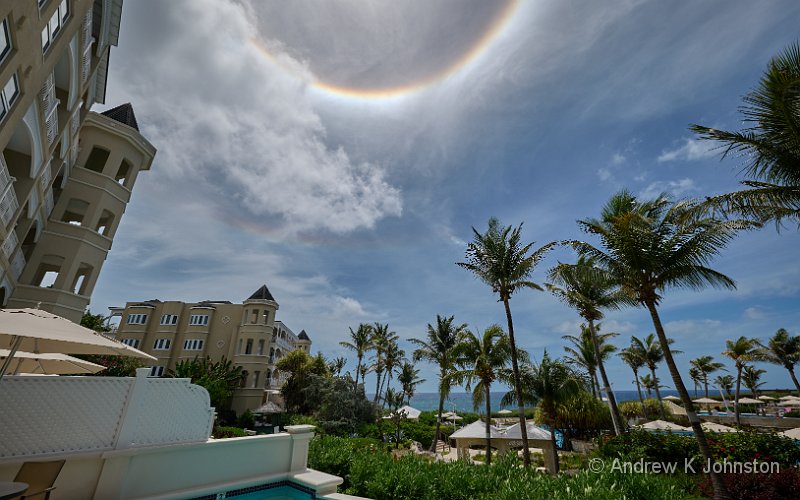
| Ice Halo from the Crane Hotel | |
| Camera: Panasonic DC-S5 | Date: 26-04-2026 10:37 | Resolution: 6514 x 4071 | ISO: 100 | Exp. bias: -1 EV | Exp. Time: 1/1300s | Aperture: 8.0 | Focal Length: 15.0mm | Location: Crane Hotel | State/Province: Crane Hotel, Crane, Saint Philip | See map | Lens: LUMIX S 14-28/F4-5.6 | |
Adding a low-light specialist camera to an established micro-four-thirds kit
Since 2014 my primary camera system has been Panasonic Micro-Four-Thirds (MFT). I’ve worked through several generations, from the 12MP GH2, through GX7, GH4, GX8, G9 to the 24MP G9ii, enjoying the reach of tiny lenses, great depth of field, high speed from small, compact bodies, and progressive improvements in aspects like autofocus. In most circumstances the G9ii is the equal of any comparable DSLR or other mirrorless system, and wins on considerations such as speed, light weight, and stability at low shutter speeds (2s hand-held, no problem).
In most circumstances. The small sensor does have one Achilles Heel: at very high ISO or in lighting conditions with an extreme dynamic range it simply can’t match the image quality of the best full-frame systems. Over the last two years, between the aurora in Iceland, pre-dawn seascapes in Italy, night-time wildlife in South Africa and the night sky in Mongolia I started to become fully aware of the limitations – my images were OK, but not as good as I wanted. With other trips planned which might present comparable subjects, I decided that I had to address the issue.
Now I could just replace my MFT with a full-frame system. Full-frame mirrorless is now mature, and offers most of the capabilities I love in the Panasonic MFT system, and the lenses and bodies have become a bit lighter, if not actually as light as I’m used to. However it would be a compromise, and something of a backward step in terms of size and weight. I don’t want to do that.
The other option is to add a capability. I already have a specialist camera for when the camera needs to fit in my pocket and be almost invisible, but deliver "big camera" capabilities: the Sony RX100. I have a specialist camera for underwater and harsh conditions: the Olympus TG6. I have a specialist camera for getting up high or into places I cannot reach: my drone. I have an infrared-converted camera. So why not add a dedicated low-light and high DR solution?
The trouble is it’s not quite the same as the other cases. This can’t be solved by selectively adding a small additional device to the camera kit – it requires purchasing and then carrying a camera with a full frame or larger sensor, and its lenses, either instead of, or (worse) as well as the MFT system. For a while I agonised about whether this was the right path, and whether I could resolve the issue by simply using a combination of slower shutter speeds and wider apertures to hold the ISO down, but there are just too many subjects I shoot where that’s not viable.
Decision made, the "what" was pretty straightforward: I like Panasonic and the Lumix full-frame S-series get consistently good reviews. Within that range the recently-replaced S5D is practically identical to my G9ii apart from the lens hole and the sensor visible through it, using the same batteries and cards, and almost 90% identical menus and controls. As an older model I could purchase a good used one for relatively little. I deliberately chose a body with moderate-resolution sensor (same 24MP as my G9ii) to get large photosites (roughly each four times the area of those in my G9ii) and maximise the low light and high dynamic range advantages. To match the main expected subjects for this camera, I purchased used 20-60mm and 14-28mm lenses, putting the 18mm f/1.8 on my "buy or rent when I need it" list.
Initial indications were promising: photographing our Christmas Lights I established that although I rarely use the G9ii beyond ISO 1600, I can use the S5D at up to ISO 12800 with few issues, and ISO 25600 images are easily rescuable. The full-frame camera has wider dynamic range, which can be further boosted using the HLG (Hybrid Log-Gamma) mode. On the downside while the dual lens/body stabilisation means I can hand-hold the G9ii at the equivalent of 24mm focal length down to 2s, the body-only IS in the S5D is only good for about 1/4s at best. Also I have to remember that to get the same depth of field the full-frame camera has to be stopped down a whole stop!
Now I needed some extended tests. Fortunately we had a trip to Barbados scheduled, and I packed the S5D alongside my usual kit.
Halo, Halo
Over the years I have seen a few full-circle ice haloes. It may be coincidence, but most seem to be in Barbados, and their frequency seems to be increasing. On this trip we saw three clearly, as well as a couple of partial ones. One occurred when the only accessible camera was the Olympus TG6, and as expected I struggled to balance both the tropical sun in shot, and the deep shadows of other elements in shade. The result was just acceptable, but very noisy.
However on the next occasion I had the full frame camera to hand. I set the metering to automatic with -1 stop compensation, expecting the sun itself to blow out. This put the buildings and foliage deeply underexposed. Here’s one of the in-camera JPGs:
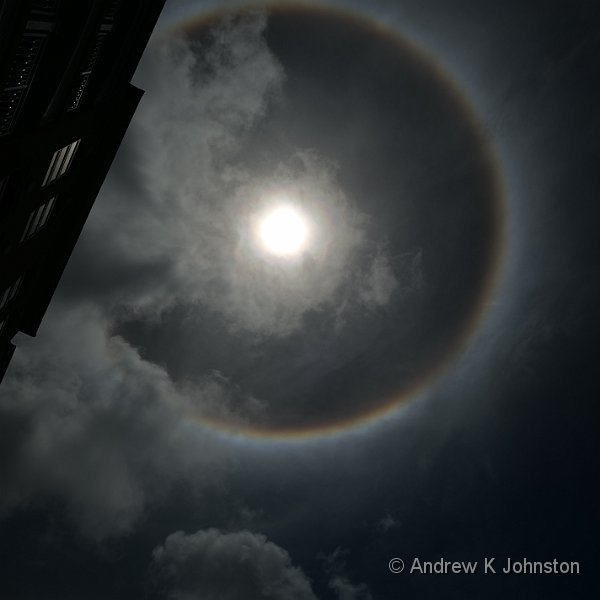
| Ice Halo from the Crane Hotel (Show Details) |
However, processing the shots in Capture One produced amazing results. This is a similar shot, and all I have done is adjust the HDR slider to 95% highlight recovery, 95% shadow recovery. Only the central sun disk is fully white, and the other elements are all well-exposed, with not a hint of noise. I’ve deliberately left the mid-tones slightly dark to bring out the secondary rainbow, but I would lighten them further if I wished. Tropical sun + deep shadows, no problem.
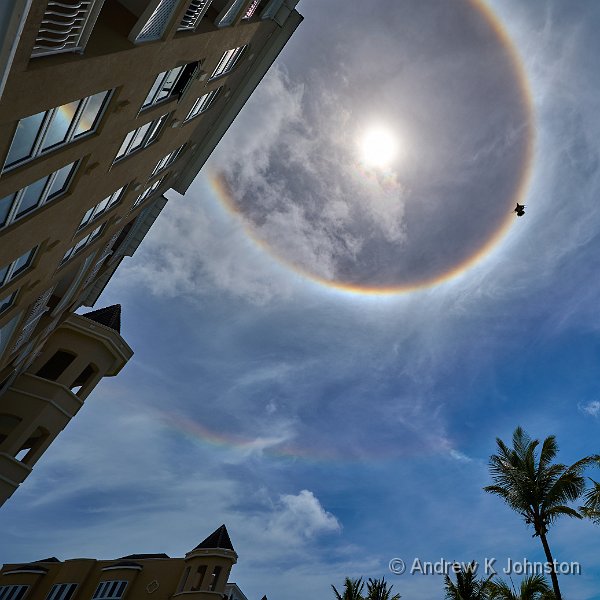
| Ice Halo from the Crane Hotel (Show Details) |
I’ve done similar shots with the Panasonic G-series cameras, and the result is always noisy shadows and mid-tones, and I often struggle to recover the highlights acceptably. I gave up using the "highlight metering" setting on the G9ii because the shadows are always problematic, but it should work perfectly with the S5D, especially in higher overall light levels.
Dynamic range even better than expected. Tick.
Into The Cave
Barbados is a coral rather than volcanic island, and one side-effect is a system of caves similar to those found in limestone geologies with plentiful rainfall. Harrison’s Cave was opened up to visitors in the 1980s, but I hadn’t been since my very first visit to Barbados back in 1990. The attraction has been updated in recent years and I was determined to go this year, and it was an obvious test of the S5D’s low-light capabilities.
Sadly the vehicles used in the cave no longer resemble a miniature steam train, but the newer "train" of electric carts are comfortable and have a better seating capacity. The lighting on the featured formations has been updated, and you can probably get acceptable images with a phone.
However for high-quality results you will want to choose a smaller aperture (for depth of field), which will in turn force a high ISO to keep the shutter speed workable hand-held. I found a typical setting on the S5D was ISO 6400, f/8, 1/25s. The resulting images are great. Some had a touch of noise in the shadows, and benefitted from a light touch with Topaz Photo AI, but in reality would have been perfectly acceptable without.
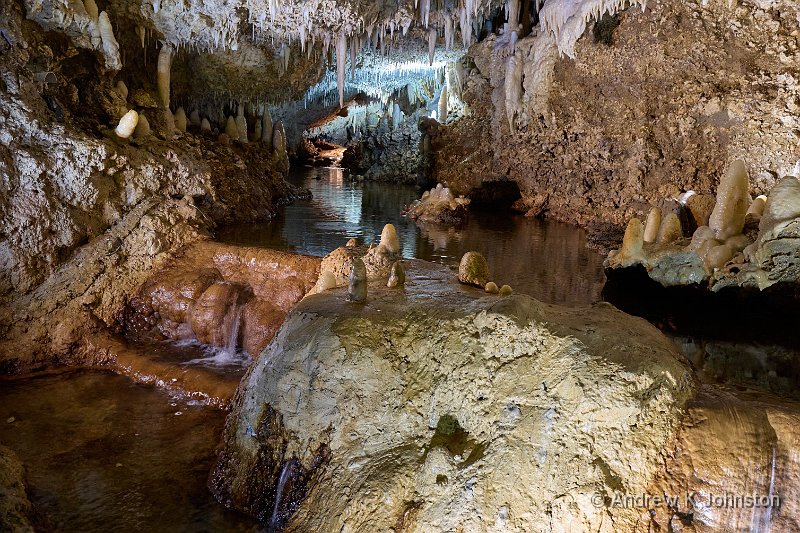
| Harrisons Cave (Show Details) |
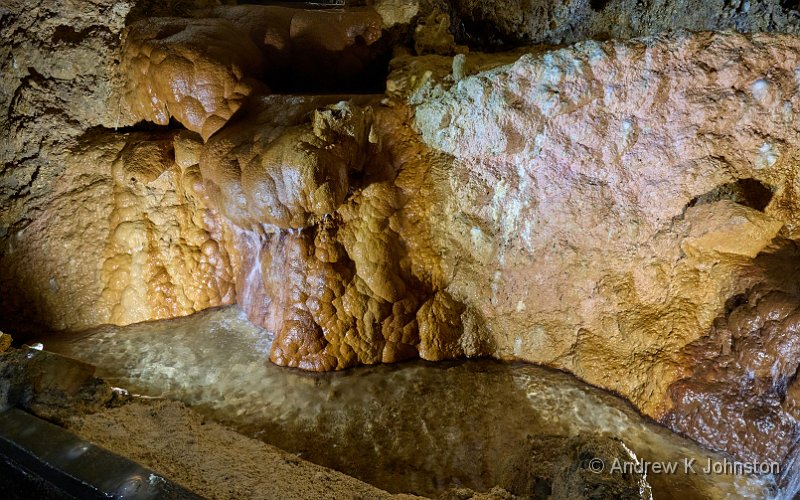
| Harrisons Cave (Show Details) |
In retrospect I should have been braver and chosen a slightly higher aperture with ISO 12800, to get a bit more depth of field. That’s a learning point.
I could match this with the G9ii by going for a slightly smaller aperture (e.g. f/6.3), ISO 1600 and accepting a slower shutter speed courtesy of the better stabilisation (probably around 1/6s for the same exposure), but that only works because it’s a static subject in good working conditions.
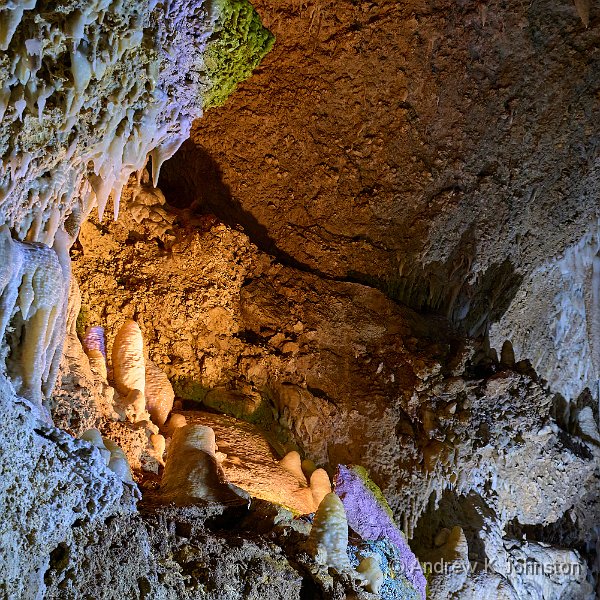
| Harrisons Cave (Show Details) |
Low light, tick.
So, How Is This Going To Work?
Sadly this complicates matters. Previously if I needed a "proper" camera the choice was easy: the G9ii paired with the "professional" Panasonic lenses. Great for sport, wildlife, landscape. For social settings or street shooting I could adopt a more subtle solution by packing the smaller "kit" lenses I keep as spares. I would just have to live with the limitations in low light or very high dynamic range.
It’s still easy if I need longer lenses, high speeds or high-performance autofocus e.g. daytime sports. That’s the domain of the MFT system.
Arguably the kits are interchangeable if the expected subjects suit wide-angle to normal focal lengths and are likely to be in good light. Flip a coin, take one, and live with either limited reach if I do need telephoto and I’ve got the full frame system, or poorer results if the light goes and I’m packing MFT.
However what if I expect both? What if in one session we’re going to a market, and I need a small, fast system with reach, but after that we’re photographing architecture in the blue hour? This is a real case, which will occur on the first day of my Uzbekistan trip. Do I carry both systems, or choose one? Watch this space…
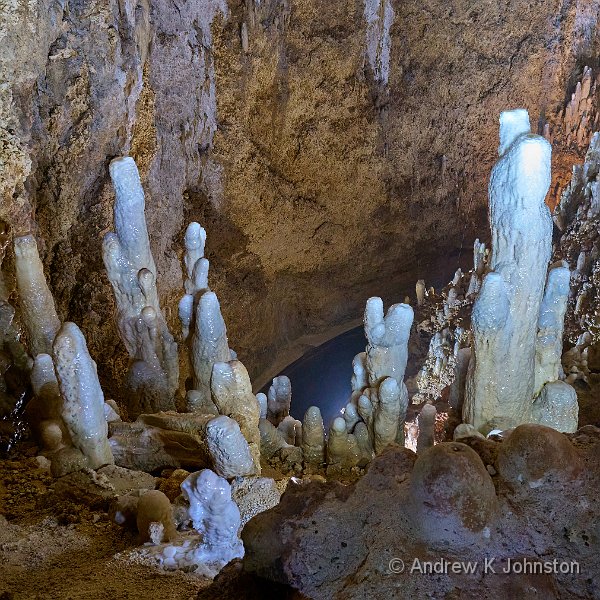
| Harrisons Cave (Show Details) |


 Email me
 Others
 Main feed (direct XML)