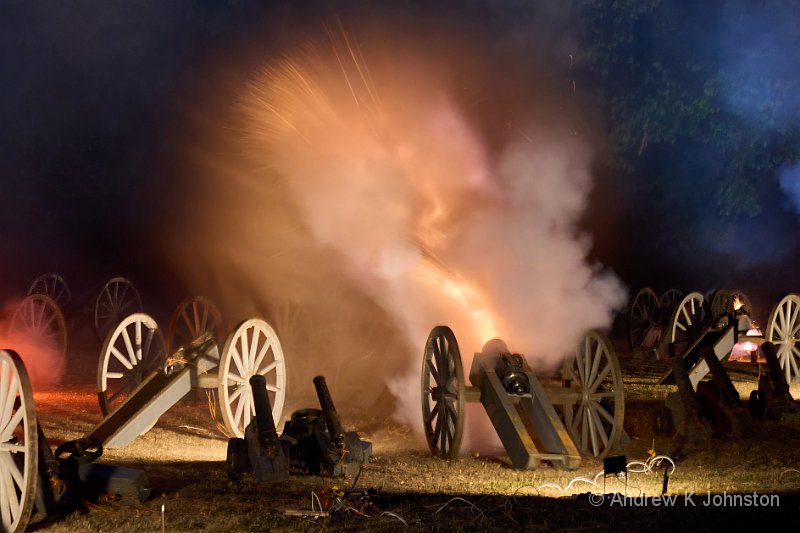
| Cannon Fire at the Hatfield Battle Proms | |
| Camera: Panasonic DC-G9M2 | Date: 18-07-2026 21:56 | Resolution: 3777 x 2518 | ISO: 1600 | Exp. bias: -33/100 EV | Exp. Time: 1/20s | Aperture: 2.8 | Focal Length: 35.0mm (~76.0mm) | Location: Hatfield House | State/Province: Hatfield, Hertfordshire, England | See map | |
We had a great day out last weekend at the Hatfield Battle Proms. The Battle Proms are a series of outdoor promenade "picnic" concerts, featuring music and other entertainments with a broad military theme. Each is staged in a suitably large field attached to a major stately home, we chose to attend the one at Hatfield House. The concerts partner with and raise funds for SSAFA, the Armed Forces charity.
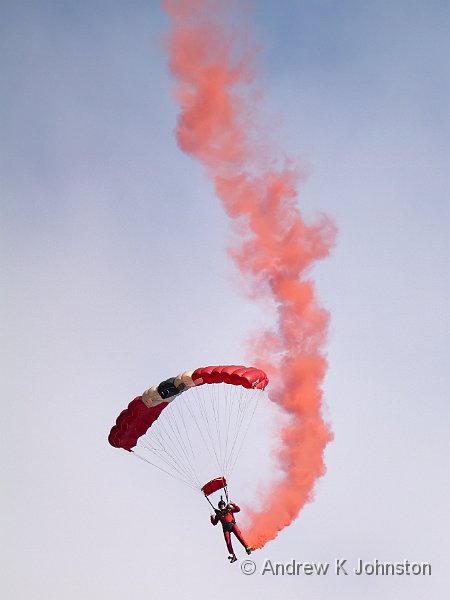
| Red Devils at the Hatfield Battle Proms (Show Details) |
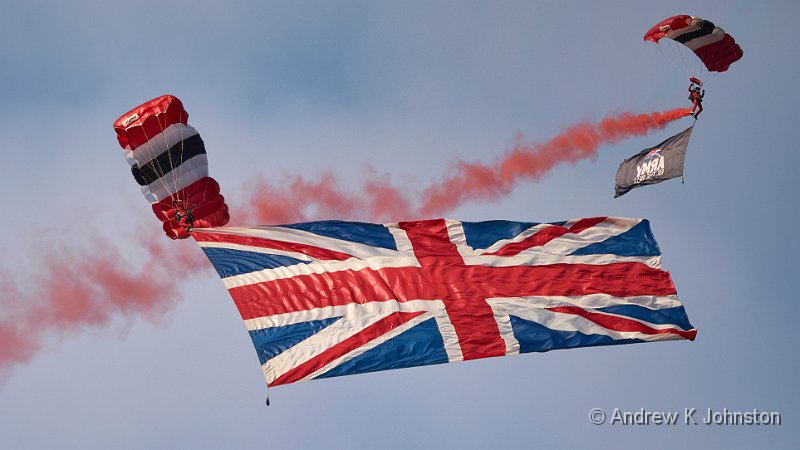
| Red Devils at the Hatfield Battle Proms (Show Details) |
Before the musical entertainment started we were treated to sky-diving by the Red Devils, a Spitfire flying display, and a cavalry event, all of which were excellent fodder for photography, although the staging of the cavalry displays (off to one side of the field with only a short length of the fence having a good view) did impede it a bit.
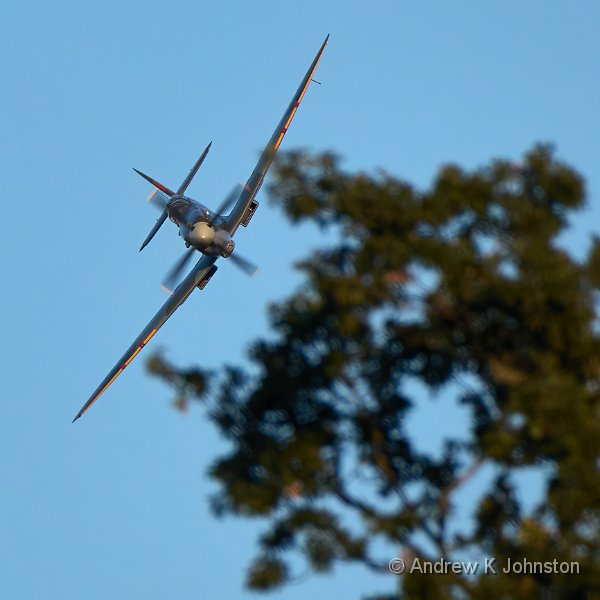
| Spitfire at the Hatfield Battle Proms (Show Details) |
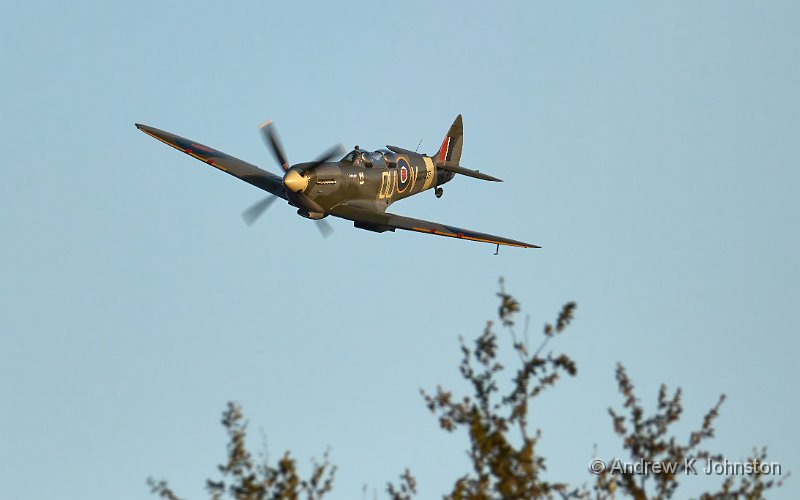
| Spitfire at the Hatfield Battle Proms (Show Details) |
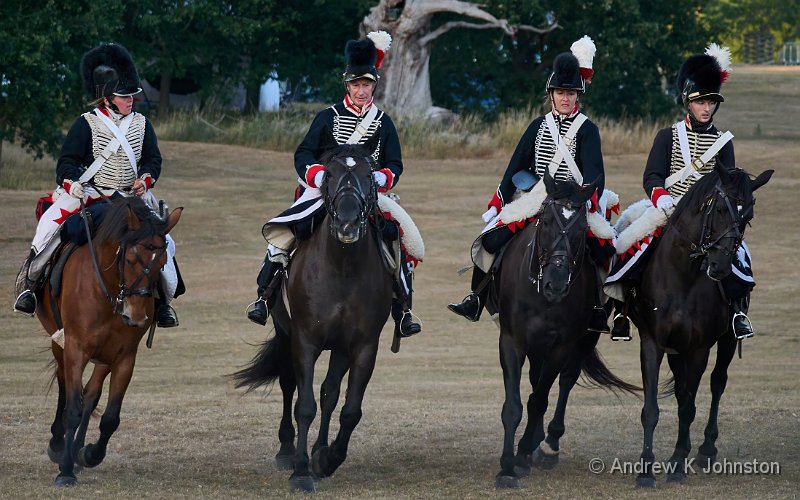
| Cavalry at the Hatfield Battle Proms (Show Details) |
The concert started with music with a WWII theme, two girl groups singing songs made famous by the likes of The Andrews Sisters and Vera Lynn. Then we got into the orchestral section, which featured all the usual crowd-pleasers we know from The Last Night of the Proms, but a couple of more unusual inclusions.
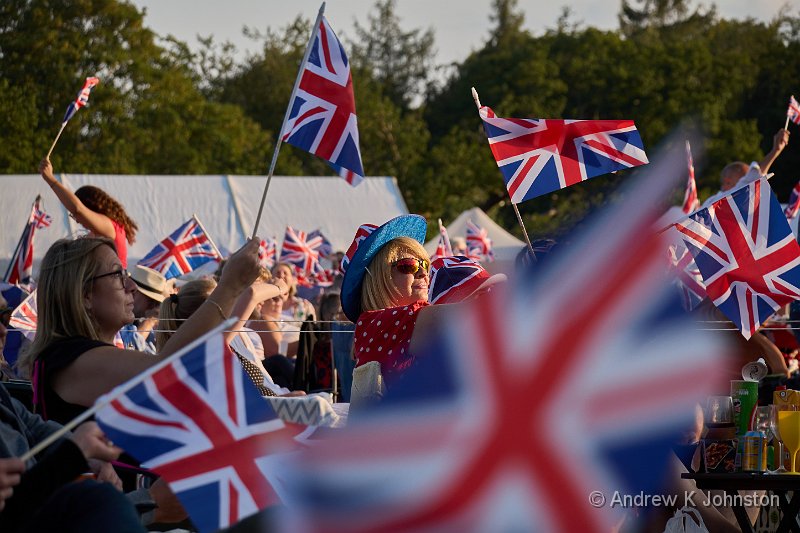
| Hatfield Battle Proms (Show Details) |
The 1812 Overture, written by Tchaikovsky in 1880 to commemorate Russia’s successful defence against the Napoleonic Invasion is well known and a standard in all such concerts. At Hatfield the New English Concert Orchestra did a great job, enhanced by the expected but still stirring thunder of real cannon fire at the end.
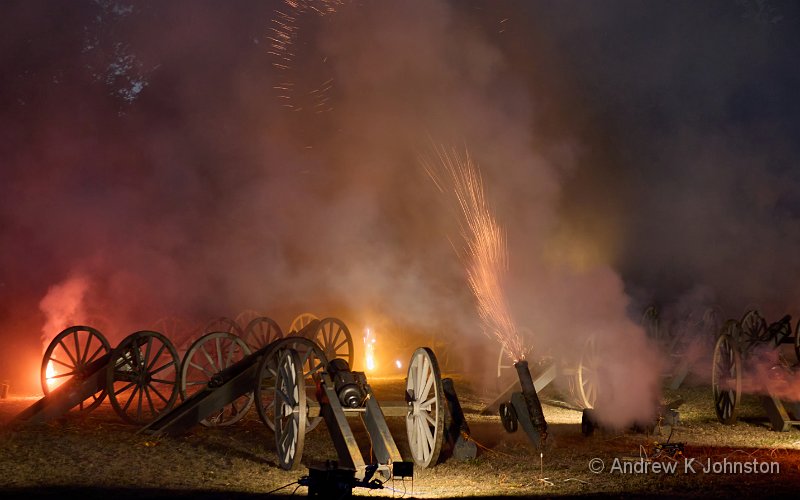
However the real star of the show was a much less well-known piece written by Beethoven in 1813, known as "Wellington’s Victory" or "The Battle of Vitoria". This was written for George IV shortly after Wellington defeated Joseph Bonaparte (Napolean’s brother) in a major battle in Spain. Beethoven was nothing if not ambitious, and his vision for the piece included not only a hundred-piece orchestra, but no fewer than 193 cannons, precision-fired as percussion throughout the piece. The score records his exact vision for them.
At the time this full cannonade was impractical, and usually substituted by more traditional percussion. However that no longer has to be the case. 200 years on from its debut, a well-funded public performance can have 193 cannons, and modern electronic firing systems put them under the precise control of a percussionist. The results were stunning, particularly if you choose, as I did, to go and stand only a few feet away from the cannon to try to photograph them. The first shot knocked me back, and I closed my jaw so forcefully my teeth hurt. The things I do for my art.
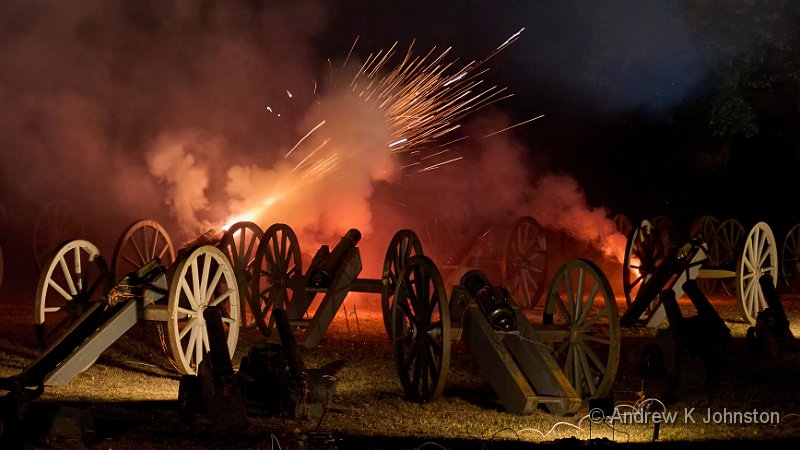
| Cannon Fire at the Hatfield Battle Proms (Show Details) |
Photography was a bit of a challenge, with autofocus constantly hunting in the low light, and the perennial problem of not reacting quickly enough as each cannon fired. In the end I fixed manual focus on the main group of cannons, and switched my camera to use pre-capture, capturing a shot or two from the buffer as I clicked the shutter button. The hit rate was low, but the relatively few successes made up for it. I’m particularly pleased with capturing the small cannon whose recoil was so great it’s completely lifted up into air. Good game.
| Cannon Fire at the Hatfield Battle Proms (Show Details) |
Anyway, the moral of the tale is simple. If you have a great artistic vision, record it even if it currently seems impractical. Time may deliver a way to realise your vision, thrilling future audiences.


 Email me
 Others
 Main feed (direct XML)